


Apple has now responded to a wave of early reports that the iPhone 17 Pro’s finish is scuffing around the camera plateau, saying its anodization process is above industry standard. The company’s defense comes as durability testers and store shoppers post evidence of scratches concentrated along the sharp edges of the new camera shelf, a telltale blemish on an otherwise premium design.
What Apple Says About The iPhone 17 Pro Finish
Apple stressed in a statement to CNET that the anodized aluminum components of the iPhone 17 Pro are manufactured to “a higher standard than most consumer hardware.” The explanation is reminiscent of the anodized finishes on other Apple products like laptops and tablets that have long used dyed aluminum oxide layers for color as well as protection against corrosion.

But there is a significant context gap: the camera plateaus on a phone have regularly gone up against coins, keys, and grit housed in pockets — conditions toward which a notebook or even tablet seldom allows itself to be exposed. And even a resilient finish can begin to wear when sharp geometry, abrasive particles, and repeated contact meet.
How The Scratches Happen On The iPhone 17 Pro Camera
Durability reviewer Zack Nelson of JerryRigEverything found that the 17 Pro stands up to casual rubbing across flat surfaces, but is prone to give if you scratch a coin along any corners or edges around the camera plateau.
That behavior is consistent with how anodization operates. Anodizing creates a layer of aluminum oxide on the surface that can range from a few microns — approximately 10 microns for decorative — to around 25 microns and above for architectural, and up to 150 microns for hard-anodized, in compliance with thicknesses outlined in ISO 7599 and MIL-A-8625. However, the thickness of a coating naturally decreases around tight radii and sharp corners since current density avalanches away from edges during the electrochemical process.
Take that thin edge and join it to a geometry that delivers a nearly knife-line around the entire, large camera shelf, though, and you’ve found your weak point. The oxide itself is very hard — alumina is up there with sapphire on the Mohs scale — but when the layer is thin, or its continuity broken at a sharp corner, metal from a coin can zip through and reveal bright underlayers. “A couple of simple fixes, as Nelson pointed out, would be a slightly larger bevel or a thicker oxide build where possible.”
Evidence From Retail Displays And Early iPhone 17 Pro Units
Photos being shared on social platforms reveal scuffs on demo units grouped where the MagSafe display risers hold onto phones. Apple told CNET and indicated that the risers were being replaced, saying those marks are due to wear on the display fixtures rather than a problem with the finish. While that accounts for store damage, it doesn’t entirely describe the pocket abrasion around the camera plateau described by early buyers.
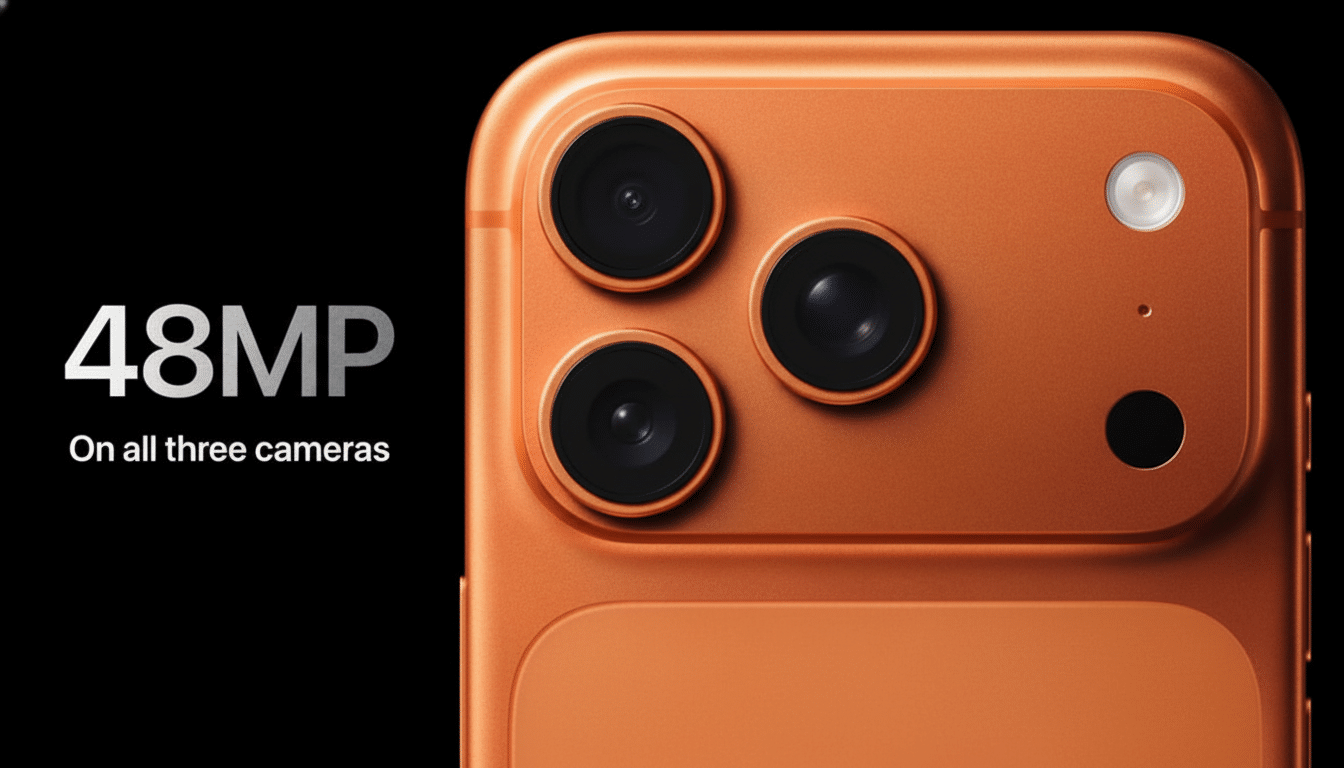
The scratching chatter seems mostly bound to the iPhone 17 Pro models. Normal iPhone 17 glass-backed phones have survived more casual scratch tests, in which everyday keys and coins leave transient metal transfer more often than scratching into the glass. Of course, hard particles like silica dust and hardened steels can scratch more or less anything you put enough pressure behind.
What iPhone 17 Pro Owners Can Do To Prevent Scratches
If you already have a 17 Pro, there are real steps that can mitigate edge wear. A case that has a raised ring around the camera island can protect the plateau’s edge from pocket friction. You could use thin adhesive camera bump protectors, or skins as sacrificial layers as well. Simple habits also help: keep the phone in a different pocket from coins or keys, and once in a while, wipe off grit that accelerates abrasion.
If you’re still shopping, it’s worth trying out how a desired case plays with the camera shelf. Some are cut away at the edges to fully expose them for a sleek, minimal look; on others, the case wraps around the island with its own protective lip to drastically reduce contact.
The Design Trade-Off Between Sharp Edges And Durability
There is a broader lesson here about industrial design. Ultra-sharp chamfers and stark camera shelves photograph beautifully, but they also focus wear at the very lines our hands and pockets make contact with most. This isn’t exclusive to Apple; other phone manufacturers who favor sharp-edged transitions or colored metal accents will often tolerate more cosmetic risk unless they slap on thicker coatings or protective bezels to account for such impact.
That Apple claims its anodization is better than standard may be true on a lab level, but real-world durability comes down to geometry, use cases, and the micro-abrasives we all carry every day. And whether the company subtly refines the bevel, or dials down the oxide build in a future manufacturing run, today’s takeaway is that the iPhone 17 Pro camera plateau edges sit in a scratch-happy zone and preventive protection will prove invaluable.