


Apple’s next iPhone will grab all the headlines in the company’s largest show of the year, and the.Iphone 17 family is expected to give us the most significant lineup refresh in multiple cycles. Here’s the short, expert cheat sheet to what’s to be anticipated — models, pricing, design shifts, camera moves, performance targets and the A.I. story — so you can fade through the noise with your upgrade plan.
Lineup at a Glance
Four models are expected: iPhone 17, iPhone 17 Pro, and iPhone 17 Pro max, and a new ultra-thin iPhone 17 Air. The Air is positioned as the flagship design play – thinner than any current flagship iPhone, with a premium build that fits above the normal model but below the Pro Max when it comes to camera punch.
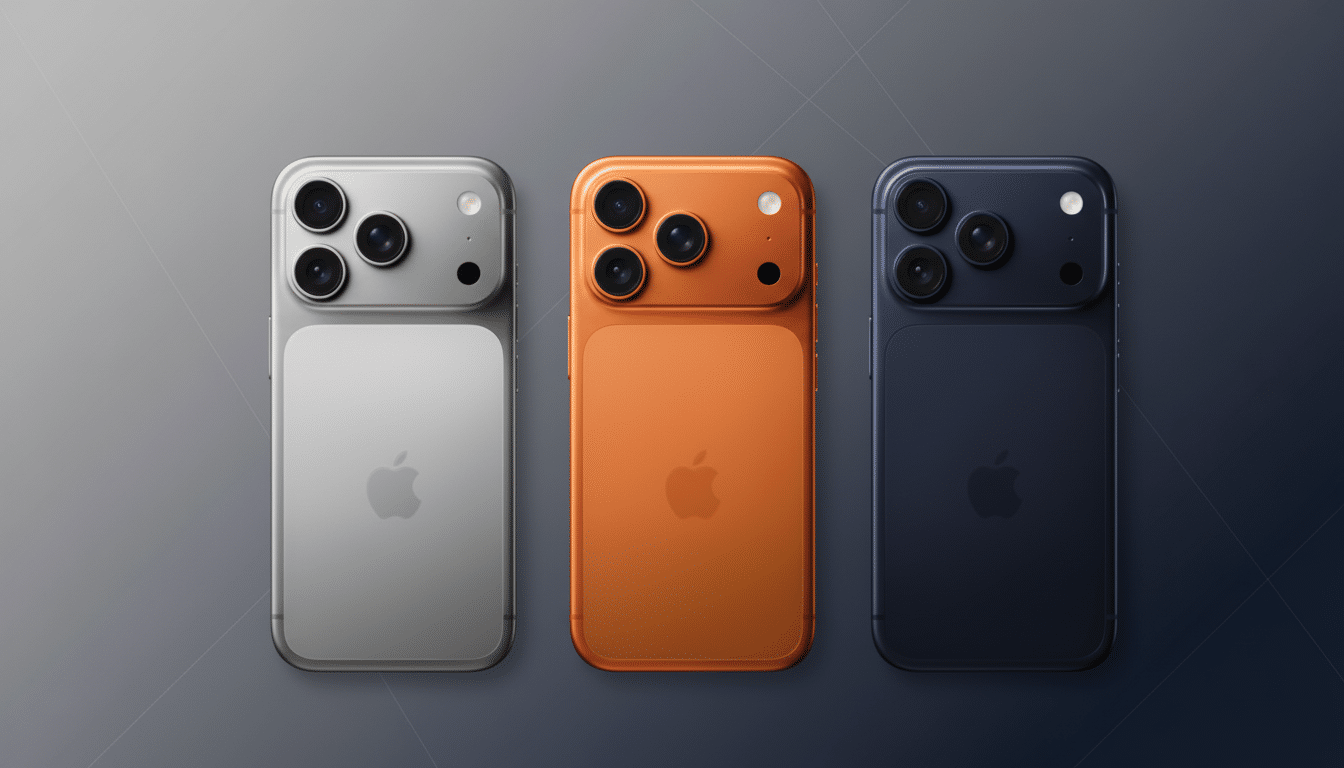
For the Pro pair, that should mean a titanium frame, while the standard and Air models acknowledge thinness, lightness and those battery-density gains that will be delivered through stacked‐cell architecture. There’s word in the industry about a more polished Dynamic Island thing, across the range; Apple isn’t going to – quite isn’t going to – shove all front-facing sensors under the display this round.
Pricing and Storage Outlook
TrendForce predicts that the base model iPhone 17 will stay at a starting price for the entry-level roughly equal to the standard model that Apple was selling last year — at 128GB starting storage. For Pro devices, the company is predicting a move to 256GB as base storage and a small price hike for each tier. J.P. Morgan’s modeling says Apple could start to moderate those jumps on the small Pro to keep the mix healthy.
The strategic lens: Apple has pushed average selling prices higher by bundling hardware upgrades with splashedy features. If it is starting at 256GB, the value story similarly gets more real for consumers who regularly fill more than 128GB today thanks to 48-megapixel photos, ProRes video, and more complex on-device AI models.
Displays and Design Details
Display Supply Chain Consultants anticipate that advanced OLED stacks and micro-lens techniques will be able to further improve on efficiency, resulting in more brightness for the same amount of power used. Pro models should still retain the higher refresh rates, and there’s increasing speculation that the regular iPhone 17 may also adopt 120Hz to continue standardizing the experience—something where competing Android rivals don’t hold back.
The so-called iPhone 17 Air is the design wild card. Consider it a showcase of Apple’s ultra-thin engineering: a lighter casing, trimmed bezels and materials that are stiff at a thinness again lower. If it ships, it’s the thinnest flagship in the Apple line — a response to the “thin and light” trope that iterative buyers still care about even as all day battery life is table stakes.
Camera and Video: Where Each Model Lands
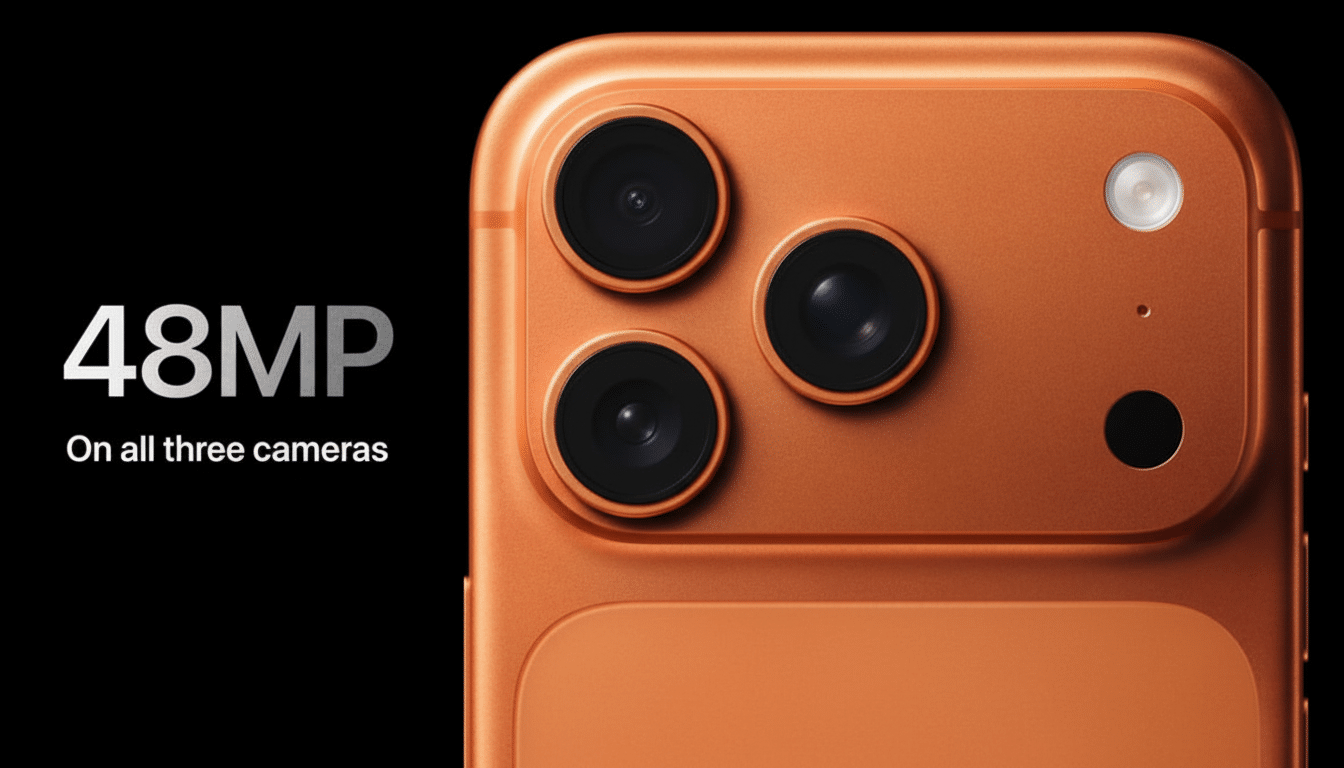
Pro models are anticipated to double down on computational photography while retaining the tetraprism telephoto we saw arrive recently. Supply chain chatter suggests a higher-resolution ultra-wide sensor for the Pro line, which means more detailed macro shots, cleaner 0.5x low-light photos. Expect Apple to fall back on multi-frame fusion and next-gen semantic rendering to draw texture and tone where 48-megapixel sensors can strut.
The standard iPhone 17 would be due for an updated main sensor of 48 megapixels, with improved stabilization and a faster autofocus. Video special sauce — Log profiles, ProRes at higher bit rates, and 4K at high frame rates — are bound to remain Pro territory. The camera system for the Air model is tipped to be in a same ballpark as the model, emphasizing thinness over long-range zoom.
Performance, Battery, and Connectivity
Anticipate new Apple silicon all around, with the Pro line fetching the newest Pro-class chip and an NPU that offers a material increase in on-device AI throughput. Analysts following wafer starts point toward an ongoing drive with 3‑nanometer process improvements, which ideally should result in more performance per watt. In real-life usage: photo pipelines that are snappier, large-language model responses that are faster and longer GPU bursts while gaming, without thermal throttling taking effect as quickly.
There should be incremental advancements in battery life thanks to stacked cells and display efficiency. If Apple goes with a next-generation Qualcomm modem, you can probably count on better 5G power efficiency and more consistent uplink performance. Support for Wi‑Fi 7 is heavily rumored to be across the board for the Pro tier, which is important if you’re streaming gigabytes of video or working with local AI models that shuffle data between devices quickly on fast home networks.
Apple Intelligence: The Feature to Watch
Apple Intelligence—the system-wide AI suite being introduced for modern devices—needs to be at the center of the iPhone 17 story. The winning pitch is hybrid AI: responsive on-device models for privacy and speed, with private-cloud compute being brought in when processes exceed local capacity. Anticipate your favorite features that already leverage the NPU – things like writing tools, image generation and notification triage – to run that much faster on the next NPU, as well as smarter photo edits that are cognizant of subjects, scenes and context.
For buyers, this creates an obvious segmentation: The newer the chip, the betterand the more the real-time AI is unlocked without the cloud handoff, while older devices have to rely more on network round-trips. It’s a real benefit you’ll notice in everyday tasks such as voice commands, drafting messages and visual lookup.
Upgrade Math and Avail Pattern
Counterpoint Research observes that the iPhone replacement cycle has extended beyond three years for many users. If you’re on an iPhone 13 or earlier, the 17 line delivers a multigenerational leap: brighter displays, meaningfully better cameras, a modern AI stack that touches nearly every interaction.
Pre-orders open within days of the event, followed by the move to retail availability about a week later. Pro models may see more constrained initial supply if new display tech or camera modules limit yields; if you’re looking for a particular Pro Max color or the rumored Air, preordering early is a good idea.
Bottom line: The iPhone 17 family appears poised to combine a better look and smarter silicon with sensible pricing moves that make the base model the safe default, the Pro the creator’s pick, the Pro Max the zoom-and-battery champion and the Air the conversation piece for those who especially value thinness but aren’t quite ready to go full Pro.