


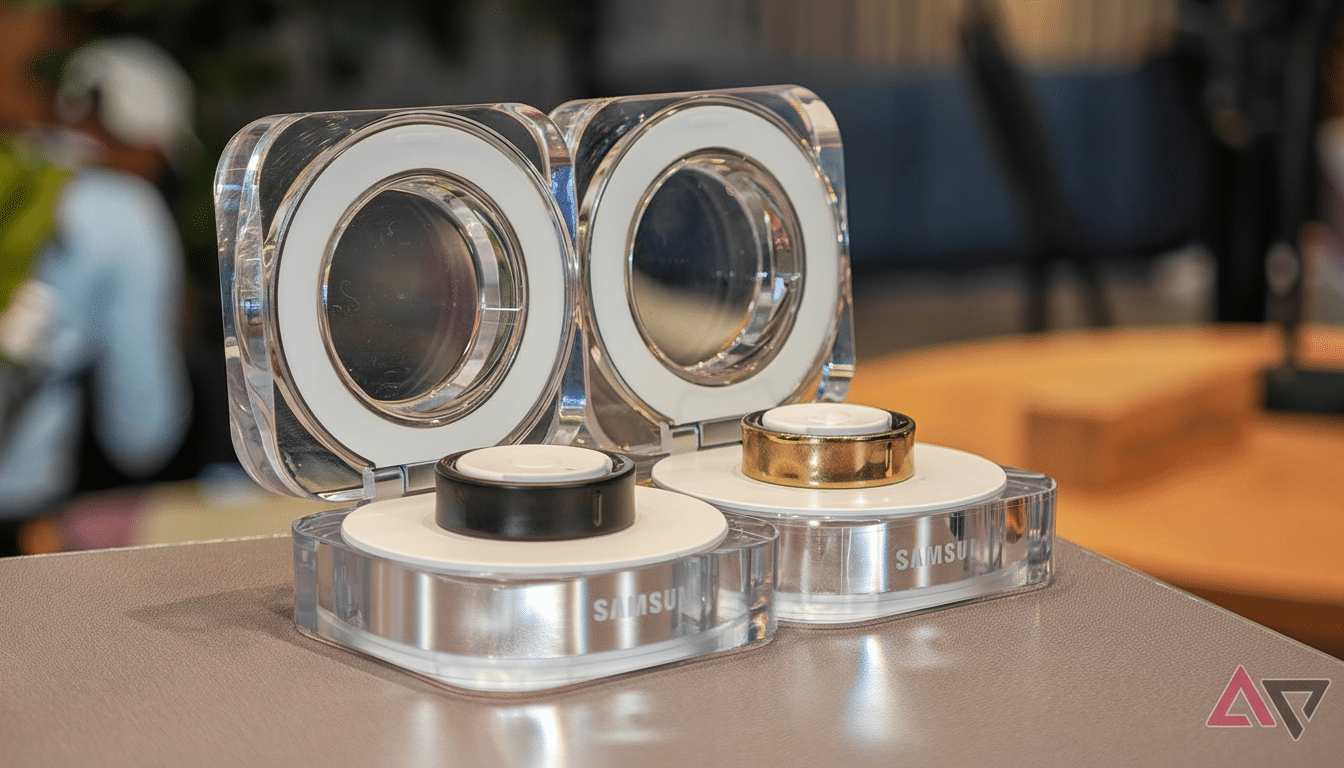
A Galaxy Ring owner who experienced battery swelling while wearing the device has shared new details, aftermath photos, and linked to what looks like a second, similar case reported online. The account provides a new perspective on a flaw that Samsung has characterized in media statements as extraordinarily rare, and it invites questions about battery behavior, water exposure, and early warning signs within compact wearables.
Injury aftermath and the company’s response explained
The tech creator, a user named Daniel, says the company paid for his overnight stay after the incident and arranged to transport the ring back to them shortly afterward for analysis. His finger is healing, with the marks barely visible, and he has been told to expect findings from the investigation once engineering reviews have taken place. This sort of prompt field recovery is a best practice when battery anomalies are observed, ensuring that controlled testing and traceability occur throughout the supply chain.
- Injury aftermath and the company’s response explained
- Unusual device behavior observed before the failure
- Second swelling claim further widens battery complaints
- Saltwater exposure and why IP68 protection has limits
- Why lithium cells can swell inside tight wearables
- What owners should watch for and how to respond
- What comes next as the investigation moves forward
Daniel previously claimed the swelling happened while he was wearing the ring and that he needed hospital help to get it off. He also said saltwater might have played a role. Although the device is rated IP68 — a certification governed by the International Electrotechnical Commission that tests for freshwater resistance and dust ingress — it is not designed for continuous or repeated exposure to ocean water.
Unusual device behavior observed before the failure
Interestingly enough, according to Daniel, the ring’s behavior was unpredictable for months. Suddenly, the battery life would last only about a day, and the unit often refused to power on after being charged for many hours. He says the swelling occurred when the device was not charging. For lithium-ion products, sudden power loss, on-again, off-again issues, or poor retention of charge may indicate that the cells are in an advanced stage of degradation or have water damage.
Second swelling claim further widens battery complaints
The user pointed to a separate Reddit thread where another owner photographed a clearly bulging battery assembly in his Galaxy Ring after wearing it for not quite three weeks. Although most online complaints center around poor endurance and on-again, off-again power, this additional swelling claim appears identical to the failure mode seen in Daniel’s photos, and it shares at least a couple of similar symptoms with Daniel’s account.
Community posts also note that a few users received replacement models because of short battery life but ended up experiencing similar endurance problems. Without teardown-level diagnostics, there is no way to know whether this relates to software, calibration, charging habits, or hardware variance — but such a pattern is sure to be central to the manufacturer’s review.
Saltwater exposure and why IP68 protection has limits
IP68 means it is dust-proof and can be submerged in freshwater under normal temperatures for up to two hours. It is not designed to be saltwater-proof (conductive and corrosive). Chlorides may promote corrosion on surfaces where metals and seals are exposed, and it should also be noted that short, momentary dips followed by trapped moisture could pose a potential risk in small compartments. Several wearable companies recommend against such exposure to saltwater, or at least rinsing and drying devices after a swim in a pool or the ocean, despite whatever they say about being “water resistant.”
In the ring form factor, these stakes are higher: there’s little separation between the device and skin, meaning swelling, heat, or mechanical deflection all become more noticeable and more difficult to remove safely. Something that’s a small bump on your watch might become a choking hazard around your finger.
Why lithium cells can swell inside tight wearables
Battery swelling is generally caused by gas generation inside a cell, which may be attributed to electrolyte decomposition due to physical abuse, manufacturing defects, overcharge, or liquid infiltration. Pouch-style cells, which are popular in small wearables, can expand as gas collects. Even without heat or fire, that expansion can be forceful enough to deform housings and seals themselves. Standards from groups such as UL or IEC (such as UL 1642 and IEC 62133) are intended to mitigate risk, but there is no fail-proof system, especially when operating in unintended environments.
What owners should watch for and how to respond
Users who experience the following should treat those signs as stop-use warnings:
- Fast battery discharge
- Abrupt shutdowns
- Difficulty charging
- Overheating
- Physical deformation, such as bulges
If a smart ring comes into contact with saltwater, rinsing and drying it can help prevent corrosion. Most important of all, if you suspect puffing, remove the device safely and don’t charge it. Consumer safety organizations, including the U.S. Consumer Product Safety Commission, typically recommend that consumers stop using a device and contact the maker if there’s a battery problem.
What comes next as the investigation moves forward
The company’s investigation should clarify whether the issues are caused by environmental exposure, faulty parts, manufacturing inconsistency, or software-charging interactions. Engineering teams usually use visual inspection in addition to X-ray imaging, impedance measurements, and cell-level analysis to track down causes at the source. With only two reported swelling cases that have come to public attention so far, and many reports limited to cosmetic complaints, the general risk might be low, but it’s likely that the brand will share guidance if any trends appear.
Until then, owners can minimize risk by adhering to manufacturer guidance on water exposure, charging, and fit, and by promptly addressing any early symptoms of battery distress. For an instrument that all but disappears on your finger, caution is still your best friend.