


A side-by-side travel test in Italy put Google Fi’s international data against a dedicated travel eSIM, and the difference was not subtle. In everyday use throughout Milan, Venice, Florence, and Rome, Google Fi offered faster, more reliable data access as well as bang-for-your-buck perks that travel eSIMs couldn’t match. For anyone who travels a lot, or just wants their phone to work the instant they land, it’s a no-brainer.
How the test went across four major Italian cities
The comparison stacked up two offerings on the same 5G phone—Google Fi’s Unlimited Premium plan and a Saily eSIM for 30 days with 20GB of data that costs $29, limited to Italy and data-only. The rate tests were repeated several times with different popular testing tools and in busy or quiet environments: train stations, side streets, and indoor sites alike in four of the main Italian cities.
- How the test went across four major Italian cities
- Pricing and plan trade-offs for Google Fi and travel eSIMs
- Results in the field across Milan, Venice, Florence, and Rome
- Why Google Fi won out over travel eSIMs in real-world use
- When you should still buy a travel eSIM for short trips
- Bottom line: a clear winner emerges for international travel
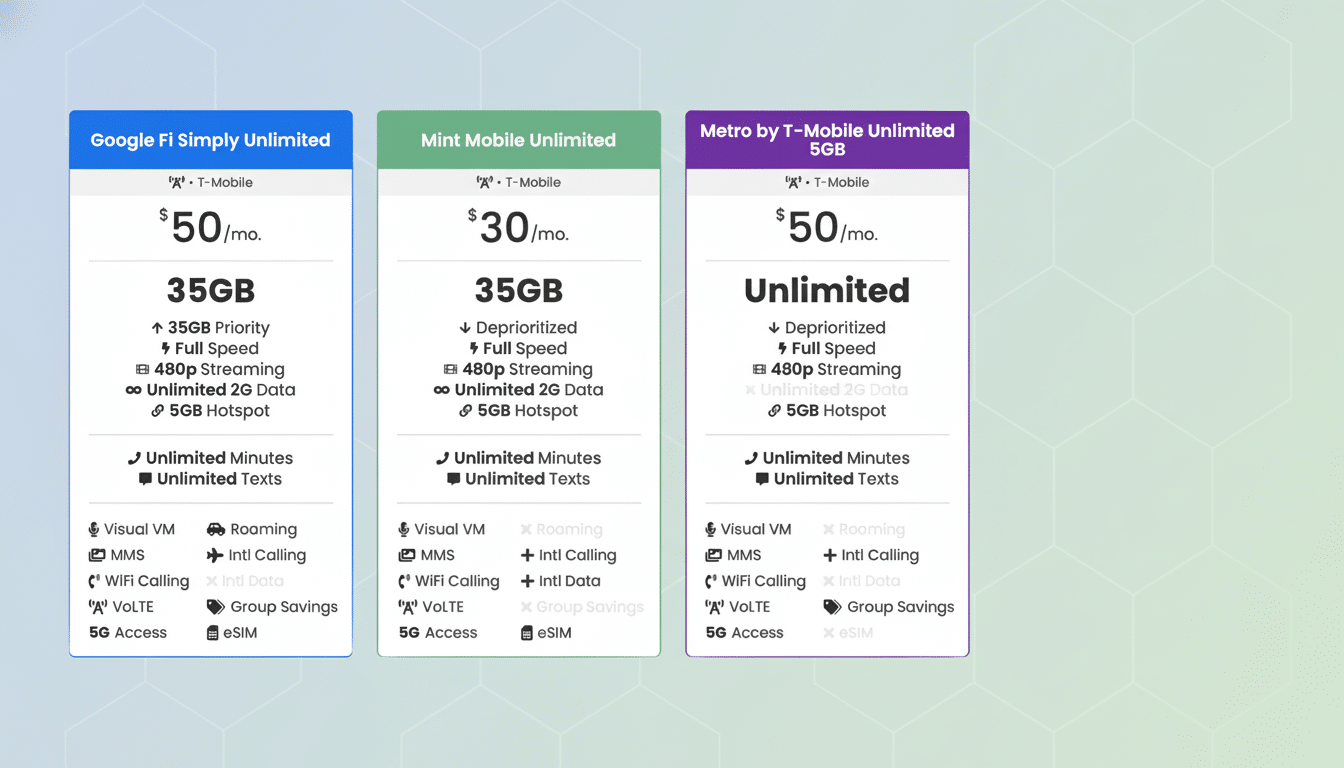
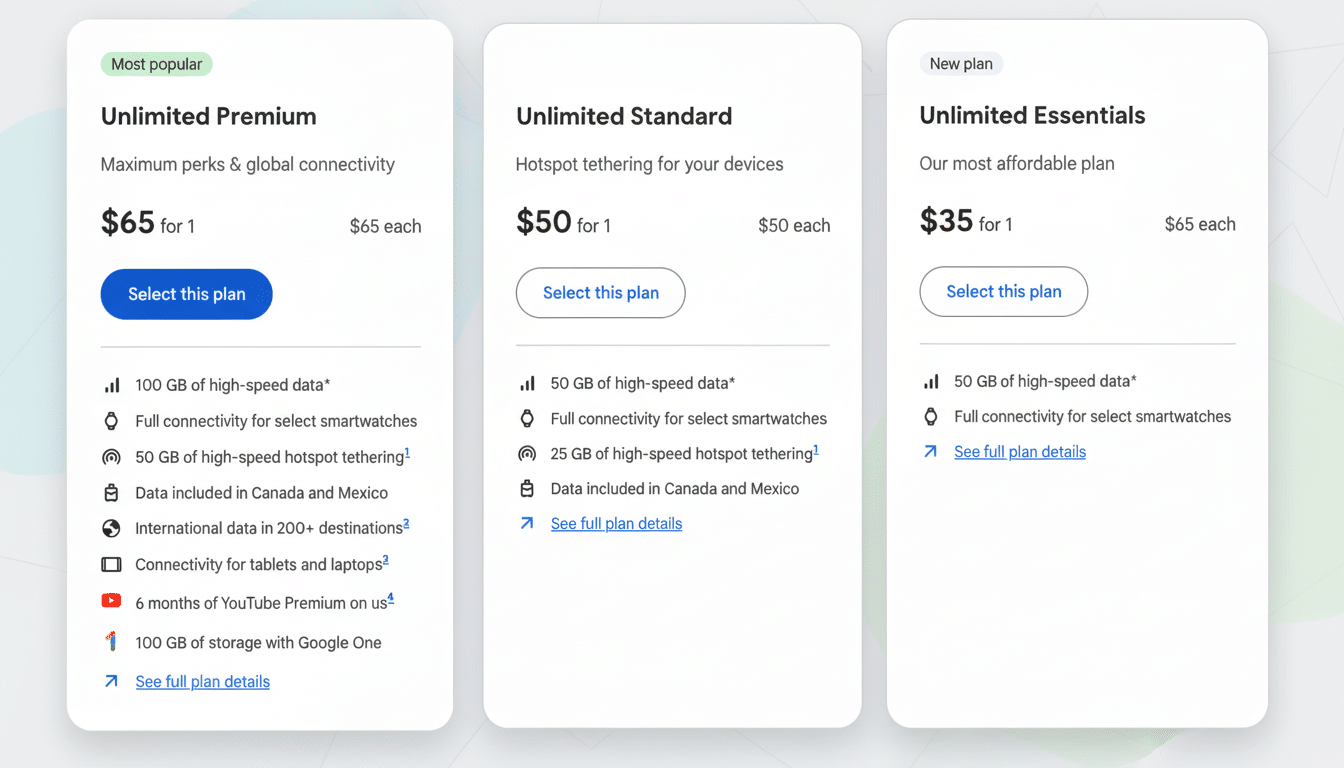
Google Fi’s Unlimited Premium comes with 50GB of high-speed data (then slower after that) and international coverage in 200+ countries. It also throws in free texting to those same regions and free calling to more than 50 countries, which is nice if, for example, you are making coordinated travel or work calls outside the United States.
Pricing and plan trade-offs for Google Fi and travel eSIMs
There’s no getting around the price gap. Google Fi’s Unlimited Premium costs $65 for a single line, whereas the Saily plan used here was $29 for 20GB. But in many cases you can upgrade just for the trip as a Fi subscriber: moving from Unlimited Essentials to Premium costs $30 more, and moving from Unlimited Standard adds $15, which shortens the cost gap and brings you calling and texting.
For super-light users, there might even be an argument for pay-as-you-go options with a travel eSIM instead. (Fi’s Flexible plan charges $10 per GB abroad; Saily sells 3GB for $9.) If all you want is some maps, messaging, and a couple of ride-hail trips over the weekend, that math may be compelling.
Results in the field across Milan, Venice, Florence, and Rome
In the five measured scenarios, Google Fi took three of five download tests and three of five upload tests. The gap varied by city. Closer to Milano Centrale, the eSIM bested Fi by about 20 Mbps up and down. In Florence, results were nearly tied all night long as each side saw the lead seesaw. Venice leaned back to Fi on downloads.
It’s in Rome that Fi ran away with it. And it meant everything felt instantaneous, from navigating the phone to backing up my photos and videos to cloud services or uploading videos for this review. The eSIM put up decent numbers and occasionally held the upload edge, but Fi’s downlink muscle made the day-to-day experience significantly smoother.
Fi was more consistent, however, when passing the phone between congested areas and indoor spaces—a critical thing if you’re juggling transit schedules or translating menu items on the fly.
Why Google Fi won out over travel eSIMs in real-world use
There are probably two reasons for the results. First, network access and priority. Google Fi ties into strong partner networks overseas and will often strike favorable access tiers. Most travel eSIMs operate on a wholesale roaming profile; you’re playing under someone else’s rules, which often means simply being deprioritized in busy stations and tourist hotspots.
Second, traffic routing. (In some cases, international eSIMs route data through gateways far away before breaking out to the open internet, thereby introducing latency.) Fi’s roaming usually breaks out in the local market, slashing the round-trip time for data requests. On paper the difference is negligible, but you will notice it when loading maps, translating text, or multitasking between apps.
And in Italy, the local 5G situation is strong: all the major carriers—TIM, Vodafone, and WindTre—are expanding 5G capacity. Once your profile can actually use that capacity, you start to see the 300 Mbps peaks Fi hit in Rome.
When you should still buy a travel eSIM for short trips
If you’re not a Google Fi user, and your carrier’s roaming is expensive or excruciatingly slow, then obtaining and installing a travel eSIM is still an intelligent, no-fuss option.
It’s also perfect for short trips away (3–5GB is plenty), or if you only want data and have the ability to call over VoIP. Dual-SIM phones allow you to leave your home number in service while a travel eSIM manages data.
Just watch the fine print. The majority of travel eSIMs (especially those which can work in Europe) are on country-based, non-voice-and-SMS plans with rate limiting. If you’re crossing borders, your best option will likely be separate eSIMs or a pricier regional plan.
Bottom line: a clear winner emerges for international travel
For travelers who are already on Google Fi—or for at most a short stint as you pass through the airport—Fi’s Unlimited Premium was the best way to go in this round of testing. It was faster more frequently (with significantly better scores in Rome) and added helpful extras such as worldwide texting, great country support, and a particularly generous 50GB high-speed allowance.
There’s still a place for travel eSIMs with short stays or whilst on a tight budget. But, in the real world—if you care at all about simplicity and performance—the verdict is simple: take Google Fi and go.