


Intel has signed a definitive agreement to acquire Classiq Technologies, moving to add quantum-computing software to a program built around spin-qubit hardware and semiconductor manufacturing. The transaction remains subject to regulatory approvals and customary closing conditions, with Intel expecting it to close in the first half of 2027.
The proposed acquisition is strategically notable because it reaches beyond the quantum processor itself. Intel says it plans to combine Classiq’s algorithm-synthesis platform with its spin-qubit technology and existing quantum software, positioning the company to offer more of the computing stack if quantum systems become commercially useful at scale. The terms announced so far establish an agreement, not a completed acquisition: Intel and Classiq will remain separate and independent until closing.

Software is the missing layer Intel wants to own
Quantum hardware and quantum software solve related but different problems. A quantum processor supplies the physical qubits used for computation, while software tools help developers express an algorithm, turn it into circuits that a particular machine can execute, and manage constraints imposed by the hardware. Classiq’s platform is designed for the algorithm-synthesis portion of that workflow.
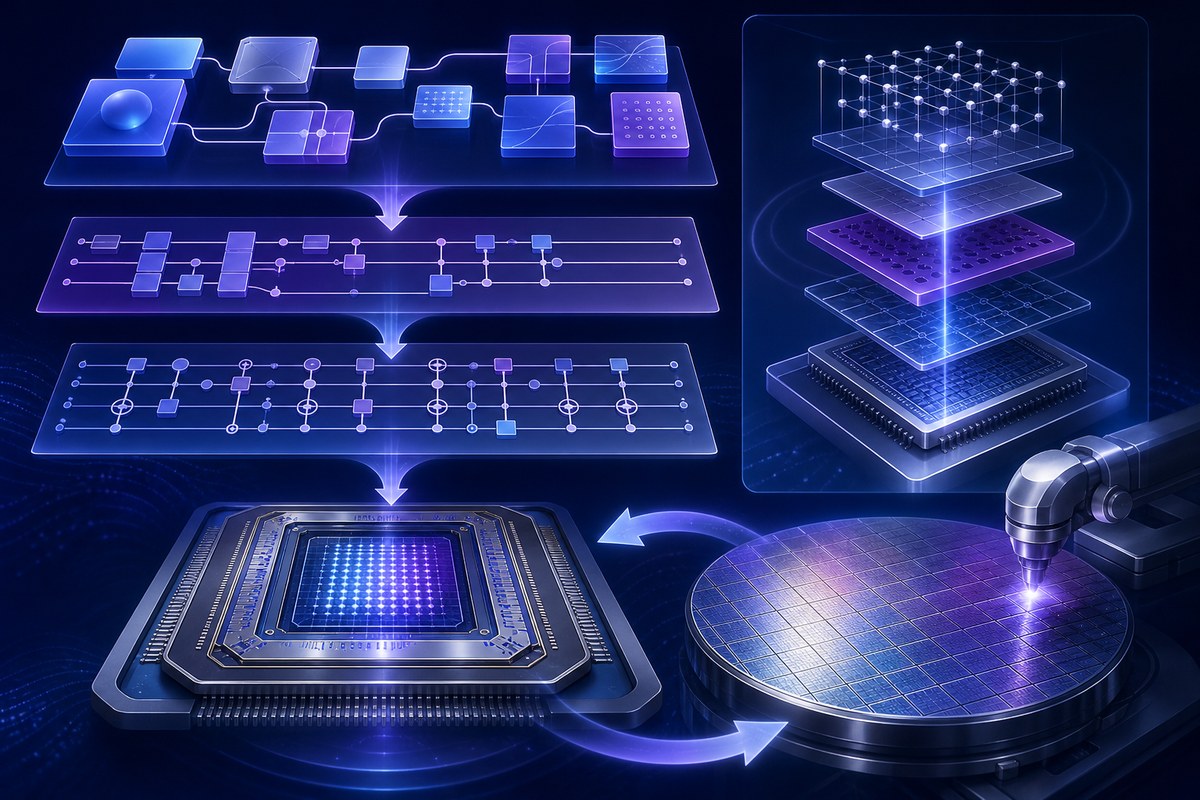
Intel’s announcement, reproduced by Innovation Open Lab, says the company intends to pair that software with its spin-qubit manufacturing effort and broader quantum-software work. Intel has described the combined offering as a route to a full-stack quantum-computing platform, a forward-looking objective rather than a product already in the market.
The move would also extend Intel’s computing portfolio conceptually beyond CPUs, graphics processors and application-specific chips to quantum processing units. That does not mean a quantum processor can substitute for conventional chips. Quantum systems are expected to address specialized classes of problems, while conventional processors continue to handle general-purpose workloads. Intel’s stated strategy is to make the software layer part of its own offering rather than leave it entirely to third-party development tools.
Classiq’s existing positioning is important to that plan. Intel says it intends, after a closing, to continue supporting the company’s multi-platform integrations and preserve a modality- and hardware-agnostic software offering. That commitment suggests Intel is seeking both a proprietary capability for its own hardware program and a software business that can continue to serve users working across different quantum technologies.
The announced agreement is not yet a completed deal
The corporate announcement was published on Oct. 27 and identified the first half of 2027 as the expected closing window. The gap between signing and completion gives regulators and the companies time to satisfy the conditions attached to the transaction. No outcome is assured until those approvals and conditions are met.
A subsequent Oct. 28 item from The Quantum Insider, publishing a law-firm transaction announcement, separately characterized the acquisition as pending and said Hogan Lovells Cadwalader advised Intel. That corroboration reinforces the distinction between a definitive agreement and a closed purchase.
The reported price requires a similar distinction. Silicon Report put the purchase price at $2.2 billion. But the detailed Intel announcement available through Innovation Open Lab does not disclose a transaction value. The $2.2 billion figure therefore should be treated as trade-reporting attribution, not as a financial term confirmed in Intel’s public statement.
That disclosure gap also limits broader claims about the deal’s place in Intel’s acquisition history. Without a company-confirmed price or a fuller set of terms, comparisons with prior transactions cannot be established from the announcement alone. The available disclosures focus instead on the intended product combination, the expected closing period and the conditions that still stand between agreement and ownership.
A manufacturing advantage, if the stack comes together
Intel’s stated rationale rests on combining software with capabilities that a quantum-software specialist does not ordinarily possess: chip design, semiconductor manufacturing and an established compute business. Spin qubits are an approach to quantum hardware that Intel has been developing alongside its semiconductor processes. Bringing the software layer closer to that effort could help Intel tune development tools around its hardware choices as its program evolves.
There are limits to what the deal itself demonstrates. Neither the agreement nor the announcement establishes that Intel’s spin-qubit systems have solved the engineering, scaling or error-management challenges required for broadly useful quantum computing. Nor does the agreement guarantee that Classiq’s tools will give Intel a durable advantage over other software providers or hardware developers. Intel’s claim that the combination can help make quantum computing a mainstream business remains an aspiration contingent on technical progress and customer adoption.
For now, the transaction gives Intel a clearer route to control a larger share of the quantum-development workflow while retaining Classiq’s cross-platform posture. The more immediate milestones are procedural: regulatory review, customary closing steps and whether the companies complete the acquisition within the first half of 2027 window Intel has set.