


Instagram is preparing to remove end-to-end encryption from its direct messages, a sharp pivot that raises practical and privacy questions for millions who opted into protected chats. The company says affected users will see prompts to export messages and media before encrypted threads are phased out, suggesting swift action may be required if you rely on those private exchanges.
What is changing on Instagram DMs and when it happens
According to guidance on Instagram’s Help Center, the platform will stop supporting encrypted chats and will offer in-app instructions to download content from those threads. Encrypted conversations on Instagram were never the default; users had to start a separate encrypted chat to enable the feature, a quieter implementation compared to services that turn encryption on for all messages automatically.
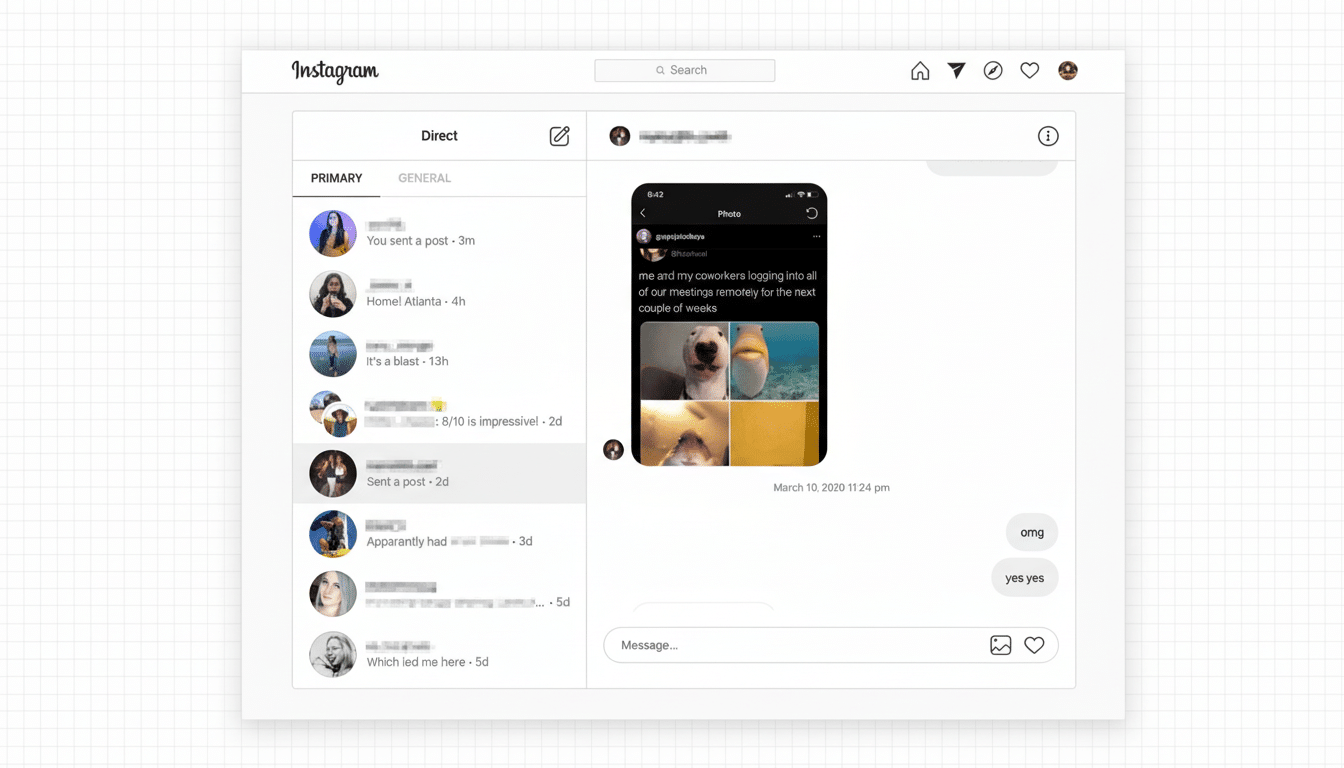
The move contrasts with WhatsApp, which applies end-to-end encryption to 100% of personal chats by default, and with Facebook Messenger, which recently made encrypted messaging the standard for one-to-one conversations. Instagram has not provided a reason for its rollback, leaving users to weigh how the change affects their privacy posture on the platform.
Why this change matters for your privacy and security online
End-to-end encryption ensures only you and the recipient hold the keys to read a message. Even the service provider cannot access the content in readable form. Without it, messages can still be protected in transit, but they are decrypted on company servers for delivery. That creates a theoretical window where the platform could access message content, whether for features such as spam detection or in response to lawful requests.
Privacy advocates such as the Electronic Frontier Foundation have long argued that end-to-end encryption is a cornerstone of secure communication, shielding users from data breaches, rogue insiders, and broad surveillance. Meta, Instagram’s parent company, has previously said people send well over 100 billion messages daily across its apps, underscoring the scale—and sensitivity—of private messaging ecosystems.
How to save your encrypted Instagram chats before they vanish
Instagram indicates it will provide a dedicated in-app flow for users with encrypted threads, prompting them to download messages and media before the change takes effect. Watch for a banner or notification in your DMs and follow the on-screen steps; these are likely tailored to ensure the export includes content that would otherwise be inaccessible later.
If you do not see a prompt, you can use Instagram’s existing “Download Your Information” tool.
- Go to your profile.
- Open the menu.
- Select Your Activity.
- Tap Download Your Information.
- Choose your preferred format (HTML or JSON).
- Specify the data range.
- Submit your request.
Be aware that bulk exports may not capture content from encrypted threads unless Instagram’s special instructions are followed, so prioritize any in-app guidance you receive.
After downloading, verify the export on a secure device and store it in an encrypted archive. If you plan to keep sensitive transcripts, consider using a trusted password manager to maintain strong, unique passphrases for any protected files.
Alternatives with end-to-end encryption and practical next steps
If end-to-end encryption is critical for your communications, consider moving sensitive conversations to services that enable it by default. WhatsApp and Signal are well-known options, while Messenger now offers default encryption for personal chats. On Apple devices, iMessage provides end-to-end encryption in standard form, though cross-platform threads may fall back to less secure protocols.
Also review your backup settings. Even on encrypted platforms, cloud backups can reduce protection if not encrypted end to end; WhatsApp, for example, offers an optional encrypted backup setting that you must enable manually.
The bigger picture and policy context behind Instagram’s move
Instagram’s decision lands amid a complex policy landscape. Lawmakers in several regions have pressed for ways to detect child exploitation material and violent content in private messages, while privacy experts warn that weakening encryption puts ordinary users at risk. The United Kingdom’s Online Safety Act and proposals in the European Union have intensified debate around client-side scanning and the legality of robust encryption.
Meta has publicly committed to expanding encryption across its messaging family, yet different apps are taking different paths. One plausible explanation for Instagram’s reversal is product prioritization while Meta stabilizes default encryption on Messenger and maintains WhatsApp’s mature model; another is the tension between safety tooling and the technical limits of end-to-end design. Instagram has not detailed its rationale, so for now, the prudent move is to secure your archives and choose the right venue for conversations that demand stronger protections.
Bottom line: watch for Instagram’s prompts, export what you need, and consider shifting your most sensitive chats to a platform where encryption remains nonnegotiable.