


Managing import payments is a crucial aspect of bringing goods into the country. Every business involved in international trade needs to ensure that payments to overseas suppliers are timely, secure, and compliant with global regulations. Choosing the right import payment method can significantly reduce financial risks, improve supplier relationships, and ensure smooth operational flow.
Several import payment methods are commonly used in India, each designed to suit specific trade scenarios. Let us understand how these import payment methods help businesses maintain control over international transactions.
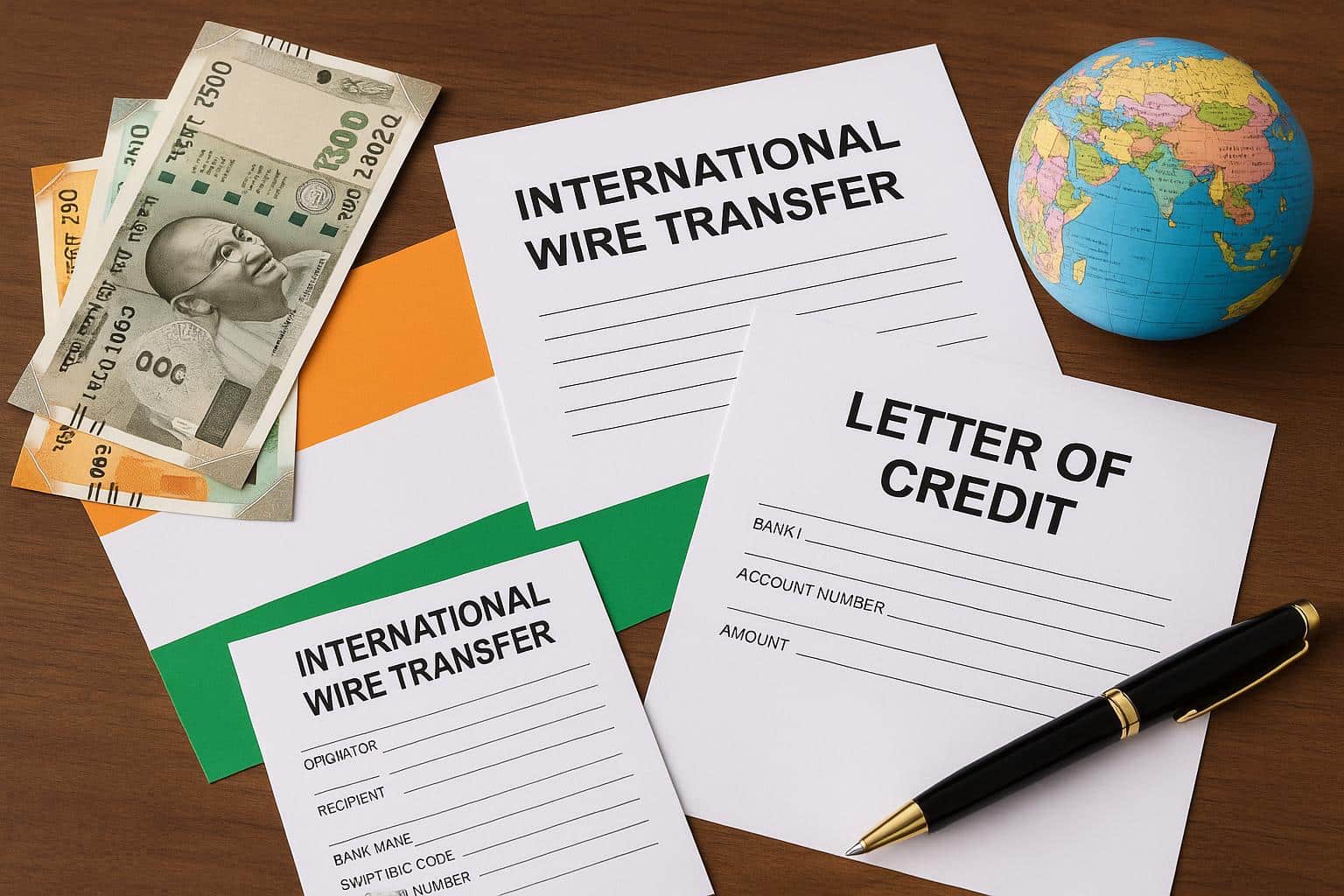
Key Import Payment Methods
Here are the key methods of import payment commonly used by businesses in India:
- Letter of Credit (LC)
A Letter of Credit (LC) is one of the most widely used methods of payment for imports. It is a guarantee issued by a bank on behalf of the importer, guaranteeing that the supplier will receive payment upon submission of the required shipping and trade documents.
Letters of Credit are particularly useful in cases involving new suppliers or high-value transactions. They protect both the importer and the supplier. The importer is confident that payment will occur only after the agreed terms are met, while the supplier is assured that funds will be released upon fulfillment of the LC conditions.
Benefits of using Letters of Credit include:
- Payment is released only when all agreed-upon conditions and documents are in order, reducing the risk of discrepancies.
- Helps mitigate the risk of importer default or shipment issues.
- Ensures compliance with international trade standards such as the Uniform Customs and Practice for Documentary Credits (UCPDC).
- Supports structured trade services, including LC issuance, amendments, and management, ensuring a secure and reliable import payment process.
Businesses that engage in high-value imports or transact with new overseas partners often prefer LCs for the security and assurance they provide. By using this method, importers can confidently manage large transactions while maintaining trust with suppliers.
- Wire Transfer (Telegraphic Transfer)
Wire transfer, also known as Telegraphic Transfer (TT), is another common import payment method. In this method, funds are transferred electronically from the importer’s bank account directly to the supplier’s bank account. Wire transfers are faster and simpler than Letters of Credit, but they require greater trust between parties, as payments are executed immediately.
They are ideal for businesses with established supplier relationships or when urgent payment is required to expedite shipments.
Advantages of wire transfers include:
- Same-day or next-day credit to the supplier’s account, enhancing supplier confidence.
- Detailed transaction records provide transparency and simplify accounting.
- Supports multiple currencies through a global network of correspondent banks, allowing smooth cross-border operations.
Wire transfers offer the advantage of speed and simplicity, making them suitable for routine import payments where the risk of non-compliance is low, and trust exists between the importer and supplier.
- Advance Payment
An advance payment involves sending funds to the supplier before the goods are shipped. This method is commonly used when suppliers require upfront capital to initiate production or dispatch orders. Advance payments are particularly effective when the import timelines are strict, and suppliers need to start processing immediately.
Benefits of advance payments include:
- Suppliers can begin processing orders immediately, reducing lead time.
- Strengthens supplier relationships by demonstrating prompt financial commitment.
- Digital trade platforms and trade services make it easier to track and manage advance payments.
They can be essential in situations where suppliers need upfront funds to maintain production schedules or meet demand. Properly managed advance payments, especially through trusted banks, ensure timely delivery without compromising financial security.
- Import Bill Collection
Import bill collection is a process where the bank helps secure payment from the importer in return for the shipping documents. The supplier sends the shipping documents to their bank, which then presents them to the importer’s bank. Payment is made once the importer accepts the bill of exchange or makes the due payment.
Benefits of import bill collection include:
- Ensures that all import documentation is correctly submitted before payment is released.
- Offers a balance between security and simplicity, protecting both parties.
- Guarantees timely remittance to the supplier while adhering to international trade regulations.
This method is often chosen when Letters of Credit are not necessary, but the importer still requires assurance that payments will be processed only after the correct documents are presented. Import bill collection is a reliable, structured way to manage import payments for medium-value transactions.
Streamline Import Operations with the Right Payment Method
Import payments are critical to the smooth flow of international trade. Options like Letters of Credit, wire transfers, advance payments, and import bill collection provide different degrees of security, speed, and efficiency in operations. Trade services enhance these payments through expert guidance, digital management platforms, and credit facilities.
Financial institutions like HDFC Bank provide comprehensive support for import payments. Their global network, competitive exchange rates, and digital trade management solutions make it easier for businesses to manage international transactions securely and efficiently. By using reliable trade services, importers can ensure timely payments, strengthen supplier relationships, and streamline their import operations.