


A review video can make an unfamiliar electric dirt bike feel easy to understand. You see its size beside a rider, hear the controls being discussed, and watch it cross real ground. Yet a convincing edit can leave important buying questions unanswered. The most useful way to watch is to separate what the footage demonstrates from what the presenter merely claims, then identify which missing details would change your decision.
Begin with your own riding situation. A review filmed on a fast open course may offer little help if you need to understand low speed control in a confined practice area. Write down your likely venue, transport arrangement, and fit concerns before watching. Otherwise, the most dramatic part of the video can become the basis of a purchase that should have depended on ordinary practical details.
Identify the exact machine
Look for the model name, version, and review date. Similar bodywork does not establish that two bikes have the same battery, controller, wheels, or equipment. A prototype, modified bike, and current retail model can look closely related on screen. If the presenter cannot identify which version was supplied, treat precise performance claims cautiously.
Check whether the description discloses a supplied bike, sponsorship, or affiliate links. A commercial relationship does not automatically make a review useless, but it helps explain the context. What matters is whether the reviewer shows limitations, describes the test conditions, and gives enough information for a viewer to judge the conclusion. Enthusiasm alone is not a repeatable test method.
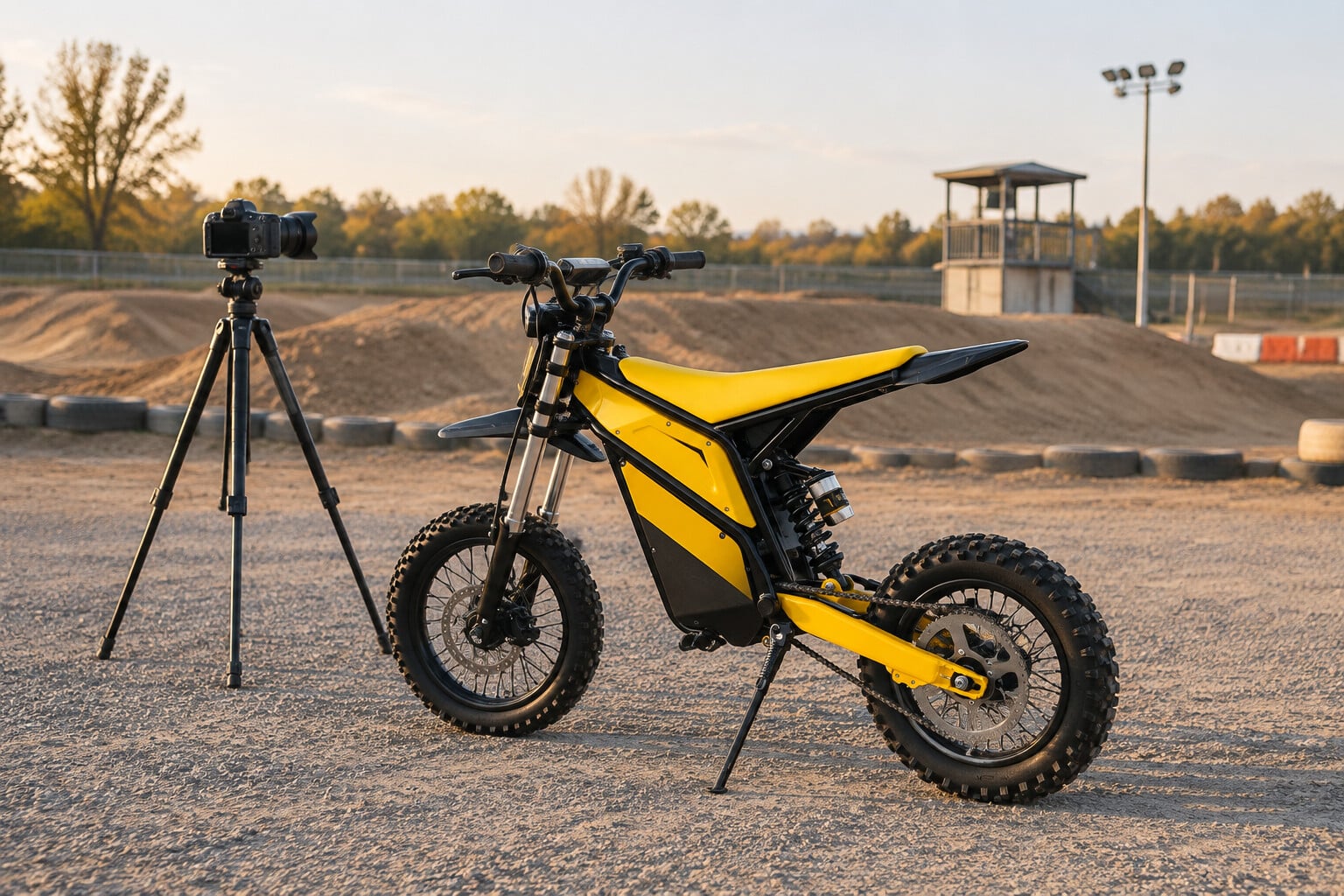
For a compact machine advertised as an electric pit bike, ask what the category label actually tells you. It does not establish rider fit, suitability for a particular track, or permission to ride in a venue’s pit area. Heybike’s current pit collection presents V1 and V1 Pro; compare the individual models rather than assuming that every bike under the heading shares the same dimensions.
Examine the comparison behind a claim
When someone says a bike climbs well, look for the surface, slope context, rider, and starting conditions. A rolling approach on firm ground is different from starting on a loose incline. Footage can demonstrate a particular run without proving how the bike behaves on every hill. The same caution applies to braking clips, which may omit approach speed or surface changes.
Range deserves especially careful reading. Ask whether the video shows a continuous outing, reports a measured distance, and describes the rider and route. A quick ride around a property cannot verify an all-day range statement. If only the manufacturer’s maximum is repeated, record it as an advertised figure rather than a result from the reviewer’s own test.
A clear comparison of electric dirt bikes should also distinguish peak power from the other factors that affect the ride. Control response, chassis fit, and the terrain shown all matter. A headline number can help identify a model, but it cannot explain every difference between two machines. Do not fill gaps in the footage with assumptions about what that number must mean.
Watch the ordinary moments
Pay attention when the rider gets on, puts a foot down, turns slowly, or moves the bike with the power off. These moments may reveal more about everyday suitability than a highlight sequence. However, camera angle and lens choice can distort proportions. A reviewer saying a bike feels roomy is most useful when their relevant dimensions and experience are also stated.
Look for loading, charging preparation, and access to routine service information. These subjects are often omitted because they make less exciting footage. Their absence does not prove a problem, but it leaves a question you still need to answer. A buyer who must transport the bike every weekend should not let a cinematic trail sequence substitute for checking the loading arrangement.
For models found through heybike sports, use the current official product information to verify the review’s model identification and equipment claims. An older video may still explain how its particular bike behaved while showing a name, offer, or component specification that has since changed. Save the date of your comparison so that later changes do not become confusing contradictions.
Turn viewing into a short decision record
After watching, write three brief notes: what the footage clearly showed, what was reported without enough context, and what you need to verify elsewhere. For example, you may have seen comfortable low speed turns but still lack confirmation of vehicle weight for your carrier. That is a more useful result than giving the whole review a simple trustworthy or untrustworthy label.
Compare another detailed source where a missing point matters, and seek a supervised fit check or demonstration when practical. Do not try to recreate a stunt to validate a buying claim. A good review narrows your questions and makes the next check more specific. It should help you choose with clearer evidence, rather than leave you feeling that a polished video has already answered everything.