


Lisa McGee returns to TV with an audacious, pitch-black caper that makes an immediate case to Derry Girls devotees. How to Get to Heaven From Belfast is a whip-smart mystery and a raucous celebration of messy, enduring female friendship — the very terrain where McGee is close to untouchable.
A Mystery Built For Derry Girls Loyalists
What made Derry Girls unmissable — the gallows humor, the unvarnished honesty between women who love and infuriate each other in equal measure — is alive here, just aged up into late-30s chaos. It helps that McGee’s comedy pedigree is now industry canon; Derry Girls earned BAFTA Television Awards recognition and cemented Channel 4’s biggest comedy breakout in years, according to the broadcaster and BAFTA. With that credibility, McGee leans harder into genre play, skewering the “dead girl in a small town” trope while delivering genuine chills and cackles.
- A Mystery Built For Derry Girls Loyalists
- Plot and Tone Without Spoilers: What to Expect
- Cast Chemistry That Sparks From the First Scene
- Ireland as a Character in Every Frame and Scene
- A Needle-Drop Time Machine That Fuels the Story
- Why It Matters Now for Netflix and Northern Ireland
- The Verdict: A Sly, Generous Evolution for McGee
Plot and Tone Without Spoilers: What to Expect
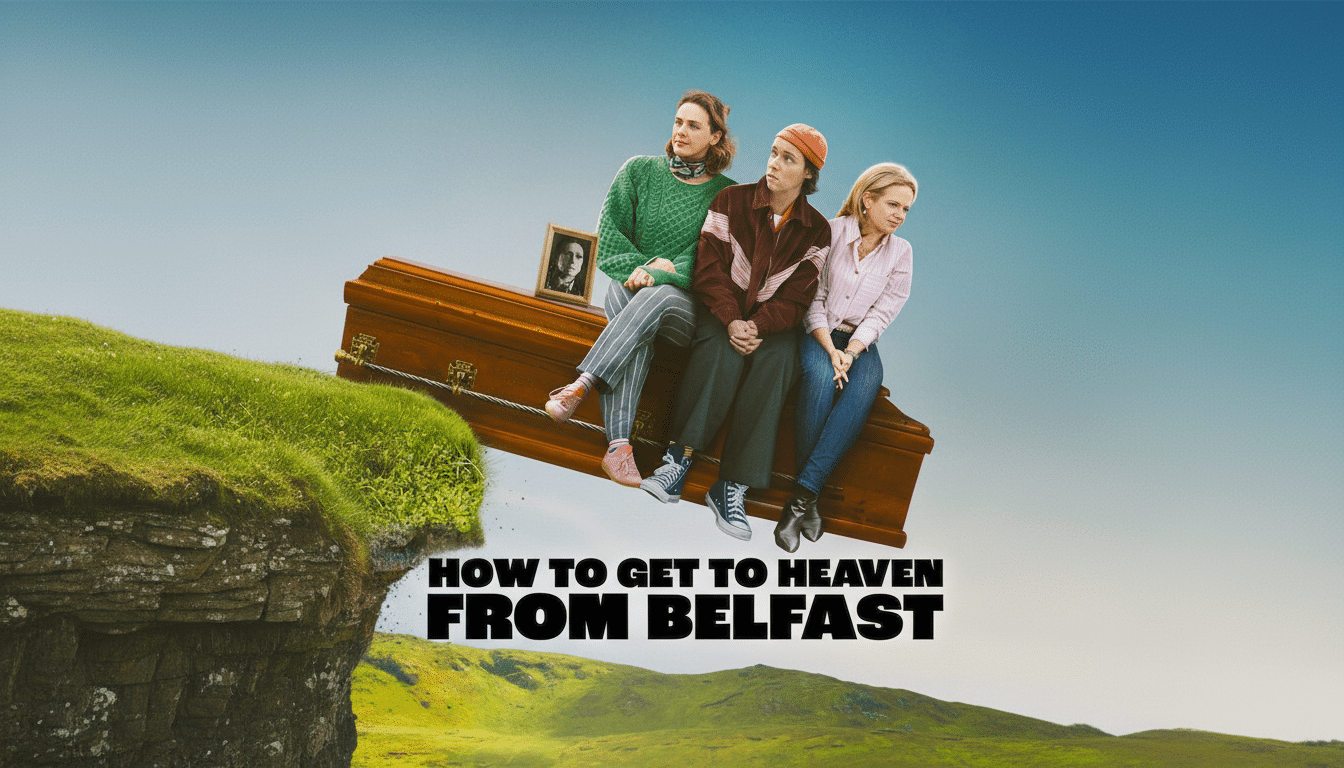
The hook is elemental: a magnetic woman, Greta (Natasha O’Keeffe), dies under suspicious circumstances, pulling three estranged school friends back to their rural Irish roots. The fictional Knockdara — a one-hotel, cow-jammed backwater — doubles as a pressure cooker where long-buried secrets steam to the surface. Though the series nods to classic whodunits, director Michael Lennox (a key force behind Derry Girls) lets the tone swing exuberantly from farce to fever dream, undercutting procedural beats with surreal flourishes and razor-edged punchlines.
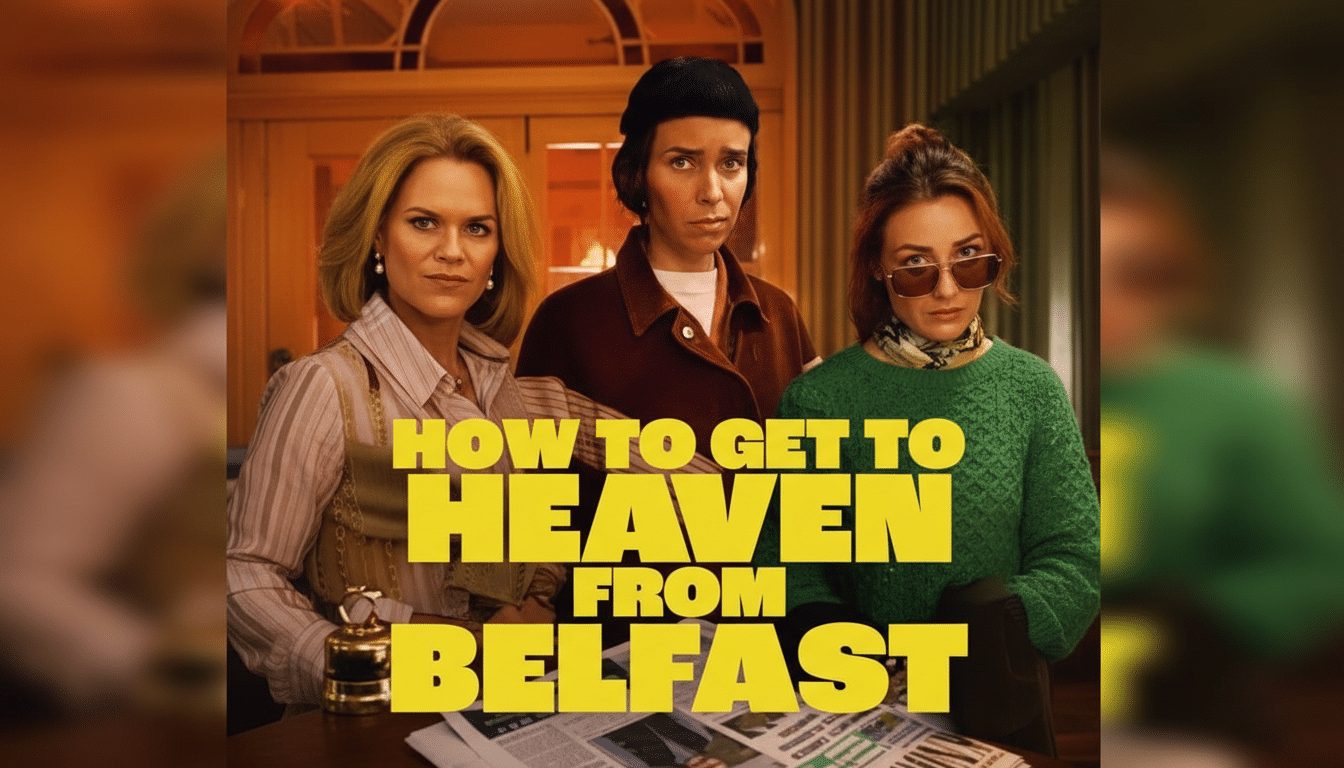
It’s not just who did what; it’s what friendship survives. Saoirse (Roisin Gallagher), a TV crime writer haunted by literal apparitions, can’t resist the pull of the puzzle. Robyn (Sinéad Keenan), a glamour-tough mother of three, treats competence like a weapon. Dara (Caoilfhionn Dunne), devout and guilt-scorched, is the reluctant conscience. Together, they behave exactly like people who insist they’re not getting involved and immediately get involved. The show understands that grown-up hijinks are rarely noble, but they can be redemptive.
Cast Chemistry That Sparks From the First Scene
This trio is lightning in a bottle. Gallagher’s frazzled acuity, Keenan’s volcanic timing, and Dunne’s lethal deadpan create a rhythm that feels lived-in and dangerous. Keenan repeatedly steals scenes with withering, maternal mic drops; Gallagher threads grief, resentment, and curiosity into a single, harried line reading; Dunne’s physical comedy — a glance, a doorway hover, a prayer half-swallowed — detonates quietly and then echoes.
The bench is deep. O’Keeffe gives Greta a spectral gravity that lingers over every flashback. Darragh Hand makes a by-the-book Garda unexpectedly swoon-worthy without ever feeling like a genre gag. Bronagh Gallagher goes full mythic fixer, part Dolly Parton superfan, part No Country for Old Men menace. Saoirse-Monica Jackson turns up in a deliriously off-kilter turn that weaponizes kawaii sweetness. Add Nikesh Patel as a long-suffering agent, James Martin as a flinty petrol-station oracle, and a sharply cast quartet of teen counterparts, and you’ve got a universe that buzzes.
Ireland as a Character in Every Frame and Scene
Shot across Belfast, Donegal, and Cork, the series treats landscape like psychology. Director of photography Ashley Barron swings from soaring overheads to warped fisheye frames and severe Dutch angles, making cliffs, lanes, and neon-lit hotel carpets feel conspiratorial. Production designer Tom Conroy paints Knockdara in heightened pop-noir: thundercloud skies cut by hot pink signage, sodium-lit pubs flushing purple and red, rain-slick roads reflecting a carnival of dread. Costume designer Cathy Prior and hair and makeup lead Robyn Wheeler underline that heightened reality — glam but lived-in, devotional but sly.
A Needle-Drop Time Machine That Fuels the Story
Music supervisor Catherine Grimes raids a millennial memory palace, cueing Girls Aloud, Vengaboys, Nelly, DJ Sammy, Junior Senior, Atomic Kitten, Black Eyed Peas, and B*Witched. These aren’t lazy jukebox stabs; they’re character beats. A banger hits, and suddenly the present cracks open to reveal a bedroom wall of posters, a diary entry, a pact. It’s the emotional shorthand of adolescence deployed with comic precision.
Why It Matters Now for Netflix and Northern Ireland
For Netflix, a female-led, tonally agile mystery from a proven creator is smart business. The streamer’s own reporting has highlighted how twisty, character-first thrillers travel globally, and the British Film Institute has noted how high-end TV has reshaped regional production ecosystems — Northern Ireland included — over the past decade. How to Get to Heaven From Belfast sits at that intersection of exportable genre and hyperlocal voice, never diluting the latter to chase the former.
The Verdict: A Sly, Generous Evolution for McGee
How to Get to Heaven From Belfast is a sly, generous evolution of what McGee does best. It’s funnier than it has any right to be given the body count, warmer than most mysteries dare to be, and confident enough to bend the frame until it fits her heroines. If you treasured Derry Girls for its heart, bite, and sense that friendship can be both salvation and nightmare fuel, consider this essential viewing.