


Dental care is one of the few areas of health where doing very little on a regular schedule beats doing a great deal occasionally. Two cleanings a year, a few minutes of attention every morning and night, and a willingness to mention small changes when they show up will carry most people comfortably through decades.
That is a modest commitment for the return it produces. Across LA and everywhere else, the patients with the easiest dental histories are rarely the ones with the best genetics. They are the ones who kept showing up.
- When Appearance Becomes the Reason for the Visit
- Why Small Problems Are Worth Catching Early
- What Daily Habits Accomplish Between Appointments
- The Connection Between Oral Health and the Rest of the Body
- How Care Changes Across Different Stages of Life
- Comfort and Anxiety in the Chair
- What Precision Adds to Routine Work
- Choosing a Practice Worth Staying With
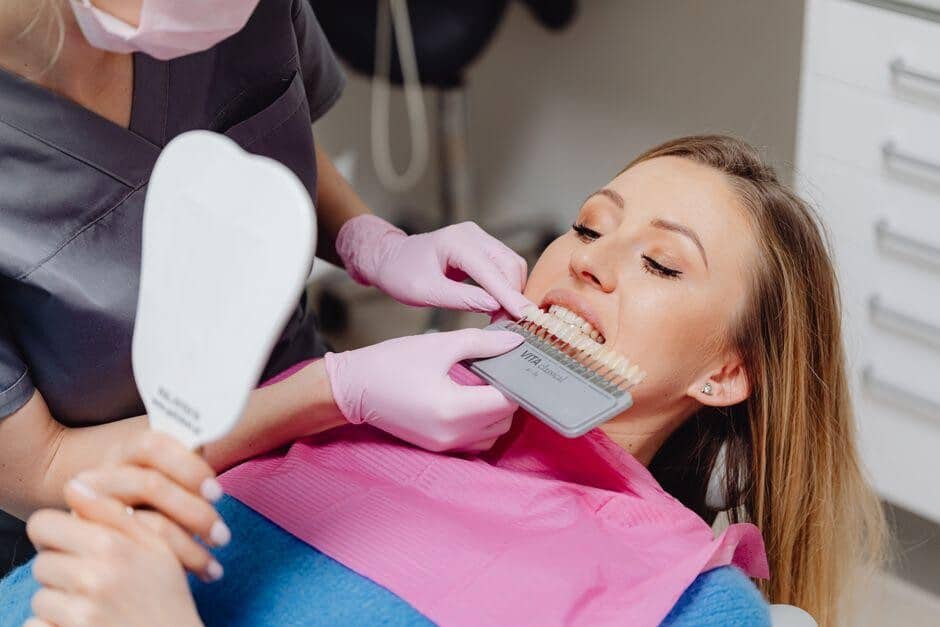
When Appearance Becomes the Reason for the Visit
Regular upkeep handles most of what a mouth needs over a lifetime, but it does not address everything a person notices when they look in a mirror. People who want the appearance of their teeth changed often start by asking a general practice, and a general practice is set up for maintenance rather than for design work.
Appearance-focused dental care is a separate discipline with its own training, its own pace, and its own way of planning a result around a face rather than around a single tooth. Dr. Jon Marashi has spent more than 25 years working as a cosmetic dentist in LA, hand-sculpting each result to match a patient’s own features so the outcome reads as natural rather than obvious.
Why Small Problems Are Worth Catching Early
Most of what goes wrong in a mouth announces itself quietly long before it becomes uncomfortable. A slight sensitivity to cold, a spot that catches floss, a bit of tenderness along the gumline. These are early signals, and they are easiest to resolve at exactly the moment they are simplest to ignore.
Routine visits exist to catch that category of thing. A hygienist and a dentist looking at the same mouth twice a year build a reference point that no single appointment can provide. They know what a tooth looked like eight months ago and can see whether something has shifted. That comparison is the actual value of the schedule, more than the cleaning itself.
What Daily Habits Accomplish Between Appointments
The routine at home does the heavy lifting, and it is genuinely simple. Brushing twice for two minutes, cleaning between the teeth once a day, and rinsing after anything sugary covers the overwhelming majority of what is needed. Technique matters more than pressure. Gentle circular motion at the gumline removes more than hard scrubbing and treats the tissue better while doing it.
Timing helps too. Waiting half an hour after acidic food or drink before brushing gives enamel time to re-harden. Keeping floss somewhere visible makes the daily step happen more reliably than good intentions do. None of this requires special equipment or much thought once the habit forms.
The Connection Between Oral Health and the Rest of the Body
Research has steadily strengthened the link between gum health and general health, particularly around cardiovascular and metabolic conditions. Inflammation in the mouth does not stay in the mouth, and a healthy gumline appears to support the body more broadly than was once assumed.
That connection runs both directions. Certain medications reduce saliva flow, which changes how the mouth protects itself. Pregnancy shifts gum tissue. Blood sugar levels influence healing. A dental team that knows a patient’s full health picture can adjust care accordingly, which is one more reason continuity with a single practice pays off.
How Care Changes Across Different Stages of Life
Children need attention to sealants, spacing, and the habits that will follow them for fifty years. Teenagers deal with alignment and, often, with the first real test of whether the routine holds up without supervision. Adults in their working years face the effects of coffee, stress, and clenching. Older patients contend with wear, receding tissue, and the maintenance of previous work.
Each stage rewards a slightly different emphasis, but the underlying schedule stays the same. Twice a year, every year, adjusted upward if a specific condition calls for it. Practices that see a patient across several of these stages catch transitions early and adapt before anything requires intervention.
Comfort and Anxiety in the Chair
A meaningful number of people postpone dental care because the setting itself makes them uneasy, often from an experience years or decades in the past. Modern practices have taken that seriously. Sedation options now range from mild to deep, and the choice belongs to the patient rather than the schedule.
Beyond sedation, the difference usually comes down to pace. A team that explains each step, checks in during the appointment, and never rushes a nervous patient changes the experience entirely. Many people who describe themselves as anxious find that a single unhurried visit resets their relationship with dental care permanently.
What Precision Adds to Routine Work
Magnification has quietly changed the standard of everyday dentistry. Surgical-grade loupes and high-powered magnification let a dentist see details the naked eye cannot resolve, which improves the fit of restorations and extends how long they last.
That precision compounds over time. Work that fits accurately resists bacteria at the margins and holds its bond for years longer than work that is merely acceptable. For a patient, the benefit is invisible on the day and considerable over a decade.
Choosing a Practice Worth Staying With
The most useful thing a person can do for their long-term dental health is find a practice they will actually return to. Continuity beats credentials on their own, because the value accumulates in the record and in the relationship rather than in any single appointment.
Worth looking for: a team that listens before assessing, explains options plainly, and recommends the least invasive approach that solves the problem. Those qualities are apparent within one visit, and a practice that has them is one a patient will keep coming back to for the next twenty years without having to think about it.