


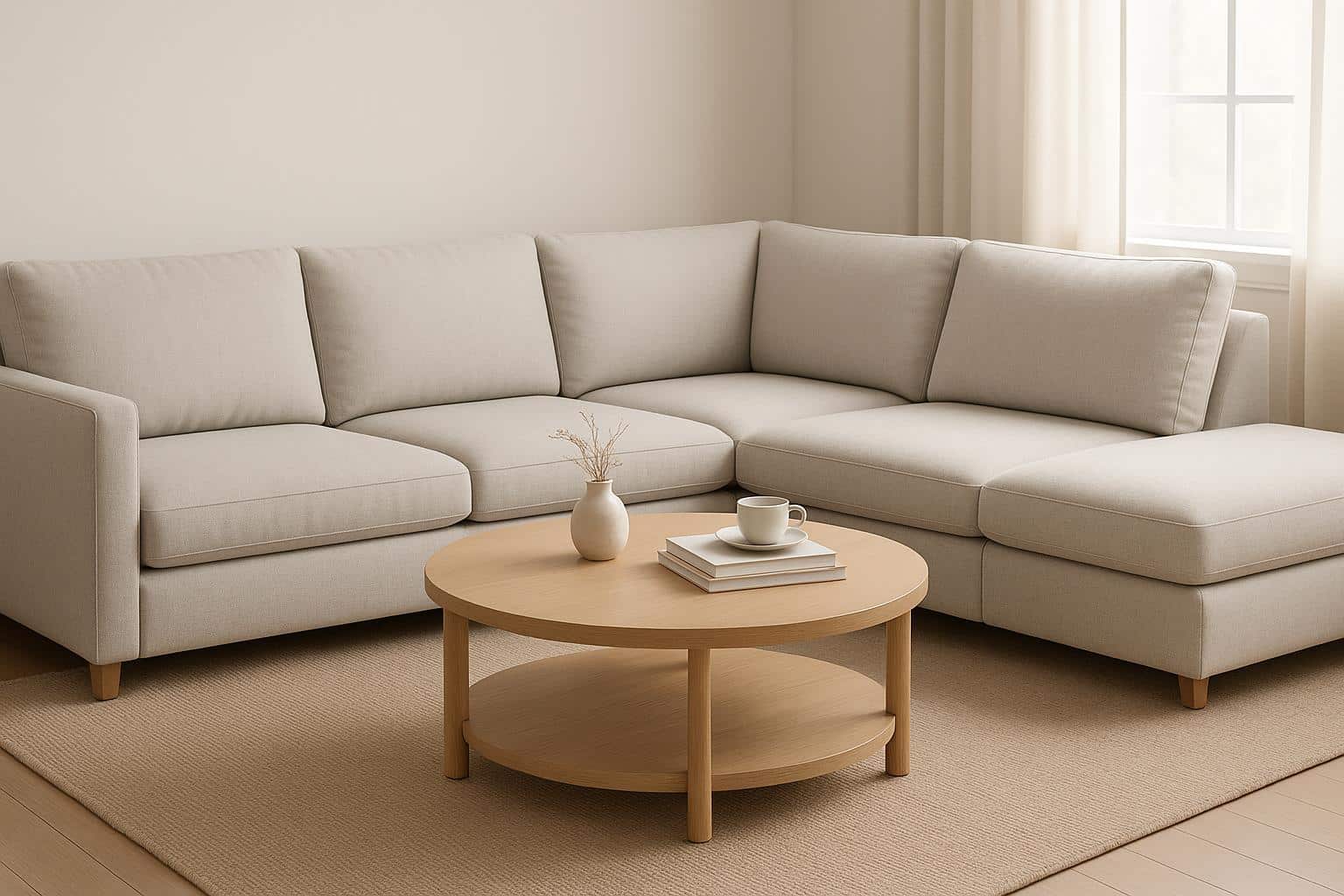
Choosing the right coffee table for a sectional sofa is one of the most important decisions in living room design. A sectional already makes a strong visual and functional statement, and the coffee table must work in harmony with its scale, shape, and purpose. When the size is right, the room feels balanced, comfortable, and practical. When the size is wrong, even the most stylish sofa can feel awkward or inconvenient. This guide explores every factor you need to consider so you can confidently select a coffee table that fits your sectional perfectly and enhances daily living.
Understanding the Role of a Coffee Table in a Sectional Layout
A coffee table is more than a surface for drinks or decor. In a sectional setup, it acts as a central anchor that ties the seating arrangement together. Sectionals are designed to encourage conversation and relaxation, and the coffee table sits at the heart of that interaction. Its size determines how easily people can reach items, move around the room, and maintain visual flow. Before measuring or shopping, it is important to understand how your sectional is used. Some households prioritize entertaining guests, while others focus on lounging, working, or family time. The right size supports these activities without overcrowding the space.
- Understanding the Role of a Coffee Table in a Sectional Layout
- Measuring Your Sectional the Right Way
- Ideal Distance Between the Sectional and the Coffee Table
- Choosing the Right Width and Depth
- Height Matters More Than You Think
- Matching Coffee Table Shape to Sectional Style
- Room Size and Overall Proportion
- Functionality and Daily Use
- Visual Balance and Design Harmony
- Common Mistakes to Avoid
- Shopping Smart for the Perfect Fit
- Final Thoughts on Choosing the Perfect Coffee Table Size
Measuring Your Sectional the Right Way
Accurate measurements are the foundation of choosing the correct coffee table size. Start by measuring the total length of the sectional from one end to the other. If your sectional has a chaise, measure the longest side separately. Next, note the depth of the seating area. These measurements help determine how large the coffee table can be without overwhelming the sofa. A general rule is that the coffee table should be about half to two thirds the length of the longest section of the sofa. This proportion creates balance while keeping the table accessible to everyone seated.
Ideal Distance Between the Sectional and the Coffee Table
Spacing is just as important as size. The distance between the sectional and the coffee table affects comfort and movement. Ideally, there should be enough space to walk comfortably while still allowing easy reach from the sofa. A gap that feels too tight can make the room feel cramped, while too much distance reduces functionality. Aim for a space that allows you to sit back and stretch your legs without bumping into the table. This balance ensures the coffee table feels like a natural extension of the seating rather than an obstacle.
Choosing the Right Width and Depth
The width and depth of a coffee table should correspond to the inner seating area of the sectional. If the table is too narrow, it may feel insignificant and fail to serve its purpose. If it is too wide, it can block movement and dominate the room. For sectionals with deep seating, a slightly deeper coffee table works well, as it fills the space visually and functionally. For more compact sectionals, a slimmer table maintains openness and flow. Always consider how people will move around the table and whether doors, walkways, or other furniture are nearby.
Height Matters More Than You Think
Height plays a critical role in comfort and usability. A coffee table that is too high can feel intrusive, while one that is too low may be impractical. The best height is usually close to the seat height of the sectional cushions. This allows easy access to items without straining or leaning too far forward. Matching the height creates a cohesive look and ensures the table feels like it belongs with the sofa rather than competing with it.
Matching Coffee Table Shape to Sectional Style
The shape of the coffee table influences how it fits within the sectional layout. Rectangular tables are popular for larger sectionals because they mirror the long lines of the sofa. Square tables work well in symmetrical layouts where seating wraps around evenly. Round or oval tables are excellent for softening the look of a large sectional and improving traffic flow, especially in smaller rooms. When selecting size, consider how the shape affects reach and movement. Curved edges can make a larger table feel less bulky, while straight edges provide more surface area.
Room Size and Overall Proportion
Your living room size should guide your final decision. Even if a coffee table fits the sectional perfectly, it must also suit the room as a whole. In spacious rooms, a larger coffee table helps anchor the seating area and prevents the sectional from looking lost. In smaller rooms, a more compact table keeps the space open and breathable. Always view the sectional and coffee table as part of a complete layout that includes rugs, side tables, and walkways.
Functionality and Daily Use
Think about how the coffee table will be used every day. If you often entertain, a larger surface area may be necessary for drinks and snacks. If the room doubles as a family space, consider whether the size allows children to move safely. Storage needs can also influence size. Tables with shelves or drawers may require a bit more space but can reduce clutter elsewhere. When browsing modern coffee tables for sale, consider how each size option supports your lifestyle rather than focusing on appearance alone.
Visual Balance and Design Harmony
A well sized coffee table enhances the overall aesthetic of the room. It should complement the sectional without competing for attention. Consider the visual weight of both pieces. A bulky sectional pairs well with a substantial table, while a sleek sectional benefits from a lighter, more refined design. Materials also affect perceived size. Glass or open frame tables can appear less imposing even when they are larger, while solid wood tables may feel heavier. Choosing the right size helps maintain harmony and elegance.
Common Mistakes to Avoid
One common mistake is choosing a coffee table that is too small because it feels safer. While this may leave more floor space, it often results in a layout that feels incomplete. Another mistake is prioritizing style over size. Even the most beautiful table can become frustrating if it is hard to reach or navigate around. Avoid guessing measurements and always account for real life use. Taking time to plan prevents costly mistakes and ensures long term satisfaction.
Shopping Smart for the Perfect Fit
When shopping, bring your measurements and visualize the table in your space. Many people find it helpful to mark the proposed size on the floor using paper or tape. This gives a clear sense of scale and spacing. While exploring modern coffee tables for sale, compare dimensions carefully and imagine how the table will function in daily life. This practical approach helps you move beyond trends and choose a piece that truly fits your sectional.
Final Thoughts on Choosing the Perfect Coffee Table Size
Selecting the perfect coffee table size for your sectional is a thoughtful process that balances measurement, proportion, comfort, and style. By considering length, width, height, spacing, and room size, you can create a living room that feels inviting and functional. The right coffee table enhances conversation, supports daily activities, and completes the look of your sectional beautifully. When you are ready to invest in a piece that combines quality, style, and the right dimensions, consider buying coffee tables from Furniture in Fashion to find options that suit both your sectional and your lifestyle.