


A paid media audit should do more than identify expensive keywords. In B2B marketing, the important question is whether the entire path, from search or social impression to qualified opportunity and revenue, produces trustworthy evidence. A campaign can look efficient at the top while leaking value in the landing page, CRM handoff or sales follow-up.
The most useful audit follows one prospect through five layers: demand, message, experience, measurement and commercial outcome.
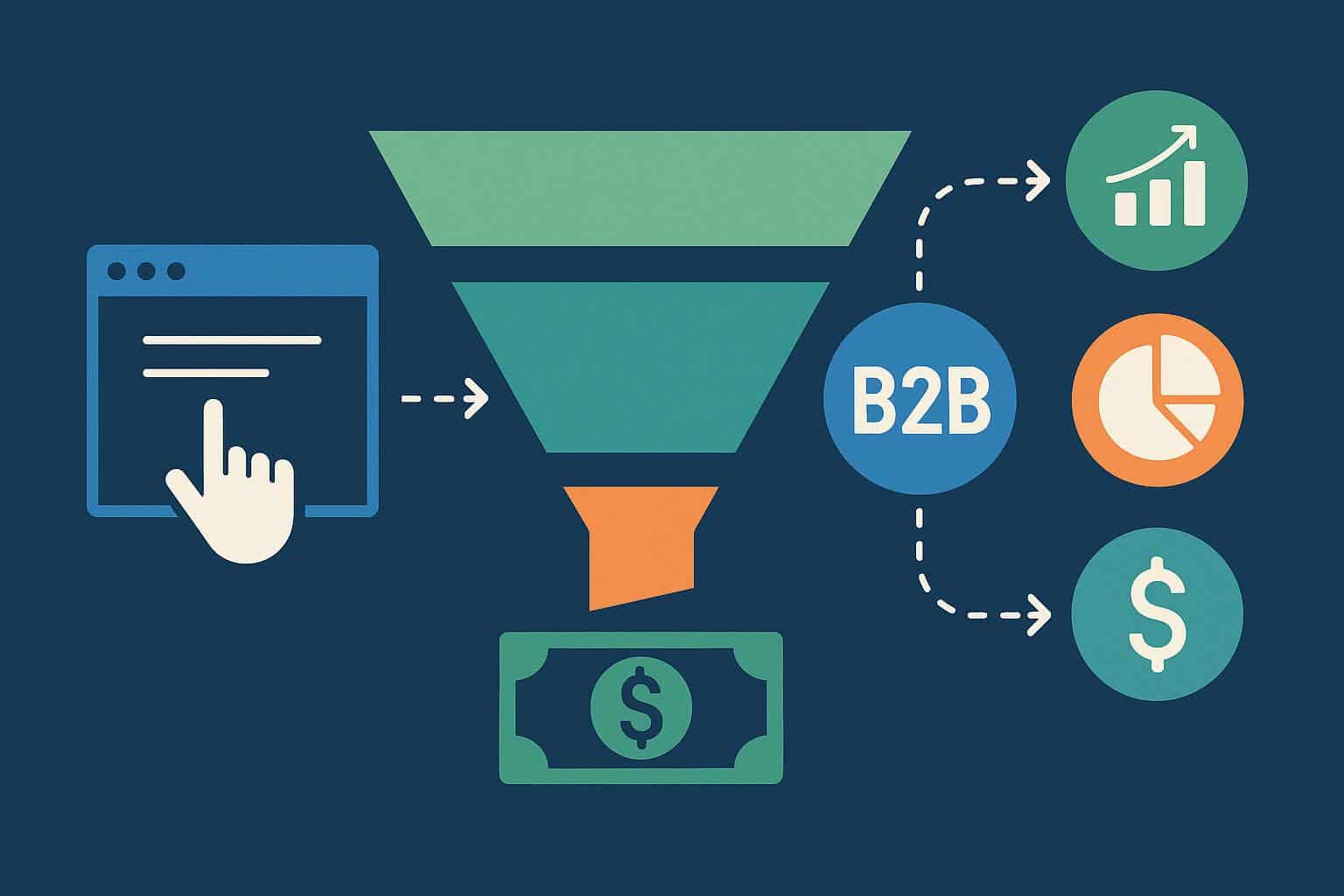
In brief: The goal is not more platform activity. It is a clearer connection between audience intent, customer experience, trustworthy measurement and commercial value.
- Export search terms and audience placements.
- Trace several leads from click ID to CRM outcome.
- Test every landing page on mobile and slow connections.
Audit demand quality
Review actual search terms, placements and audience expansion. Group traffic by intent instead of evaluating every line independently. High volume from research-oriented terms may be useful for education, but it should not be judged or funded like direct evaluation demand.
Test message continuity
The advert and destination should make the same promise. If the ad speaks to enterprise security leaders and the page opens with generic productivity language, the visitor must do interpretive work. Message continuity improves both conversion and the quality of the enquiry.
For a complementary perspective, multi-touch attribution becoming a business requirement shows how practitioners translate the same principle into campaign operations.
Inspect the conversion experience
A conversion rate optimisation agency can investigate the post-click funnel through analytics, user research, copy analysis and controlled testing. Its role is to increase meaningful actions without sacrificing qualification, then carry the learning into future pages, offers and campaigns.
| Layer | Evidence | Audit question |
| Demand | Queries and audiences | Are we attracting the right intent? |
| Message | Ads and landing pages | Does the promise continue? |
| Experience | Speed, forms and proof | Can buyers act with confidence? |
| Measurement | IDs, CRM stages, attribution | Can outcomes be trusted? |
| Revenue | Pipeline, wins and lag | Does spend create commercial value? |
Reconcile platform and CRM data
Platforms and CRMs count differently. Reconcile identifiers, time zones, attribution windows, duplicate records and offline events. A practical discussion of
Evaluate revenue, lag and incrementality
Finally, examine qualified pipeline, win rate, deal value and time to close by cohort. Compare marginal performance as spend changed. Where possible, use geographic, audience or time-based holdouts to distinguish incremental demand from conversions that would have occurred anyway.multi-touch attribution becoming a business requirement adds useful context for teams building a stronger measurement and decision process.
Turn findings into decisions
Prioritise findings by commercial impact, confidence and effort. Assign an owner and review date to every action. An audit becomes valuable when it changes a decision—not when it produces a longer slide deck.
Convert audit findings into a CRO roadmap
A funnel audit should rank leaks by potential value, evidence strength and implementation effort. Broken tracking comes before bid optimisation. A severe mobile form problem comes before a new creative library. Each recommended test needs a hypothesis, target audience, primary outcome and quality guardrail, such as qualified-lead rate or revenue per visitor.
Conversion rate optimisation is the disciplined process behind this roadmap. It combines behavioural data, customer research, copy, design and controlled experimentation to increase the proportion of suitable visitors who complete a meaningful action. It should not maximise form submissions at the expense of lead quality, nor assume every observed difference was caused by the latest page edit.
What to ask a conversion optimisation agency
Ask how the team chooses research methods, calculates test duration and handles low-traffic pages. It should connect experiments with CRM outcomes, preserve a record of losing tests and distinguish statistical movement from commercial relevance. A strong agency will sometimes recommend fixing the offer, audience or measurement instead of testing the page, because the visible symptom may originate elsewhere in the funnel.
Example: a form that converts less but sells more
A B2B company removes several form fields and celebrates a 30% lift in submissions. Sales later reports a flood of students and micro-businesses outside the target market. The correct CRO response is not to restore friction blindly. It is to test clearer qualification in the page copy, ask one high-value routing question and compare sales acceptance by variation. The winning version may produce fewer total forms but more qualified opportunities and greater revenue per visitor. That is why funnel audits must follow outcomes beyond the thank-you page.
Questions for the next review
- Fix broken measurement before changing bids.
- Prioritise high-impact leaks with strong evidence.
- Document a hypothesis and success threshold for each test.
The practical standard is simple: every metric should help someone make a better decision. When the evidence cannot change an action, simplify the report, improve the signal or ask a more useful question.