


Modern performance cars are increasingly defined by software as much as mechanical engineering.
While engines still rely on familiar components such as pistons, turbochargers and fuel systems, much of the way they behave is now controlled electronically.
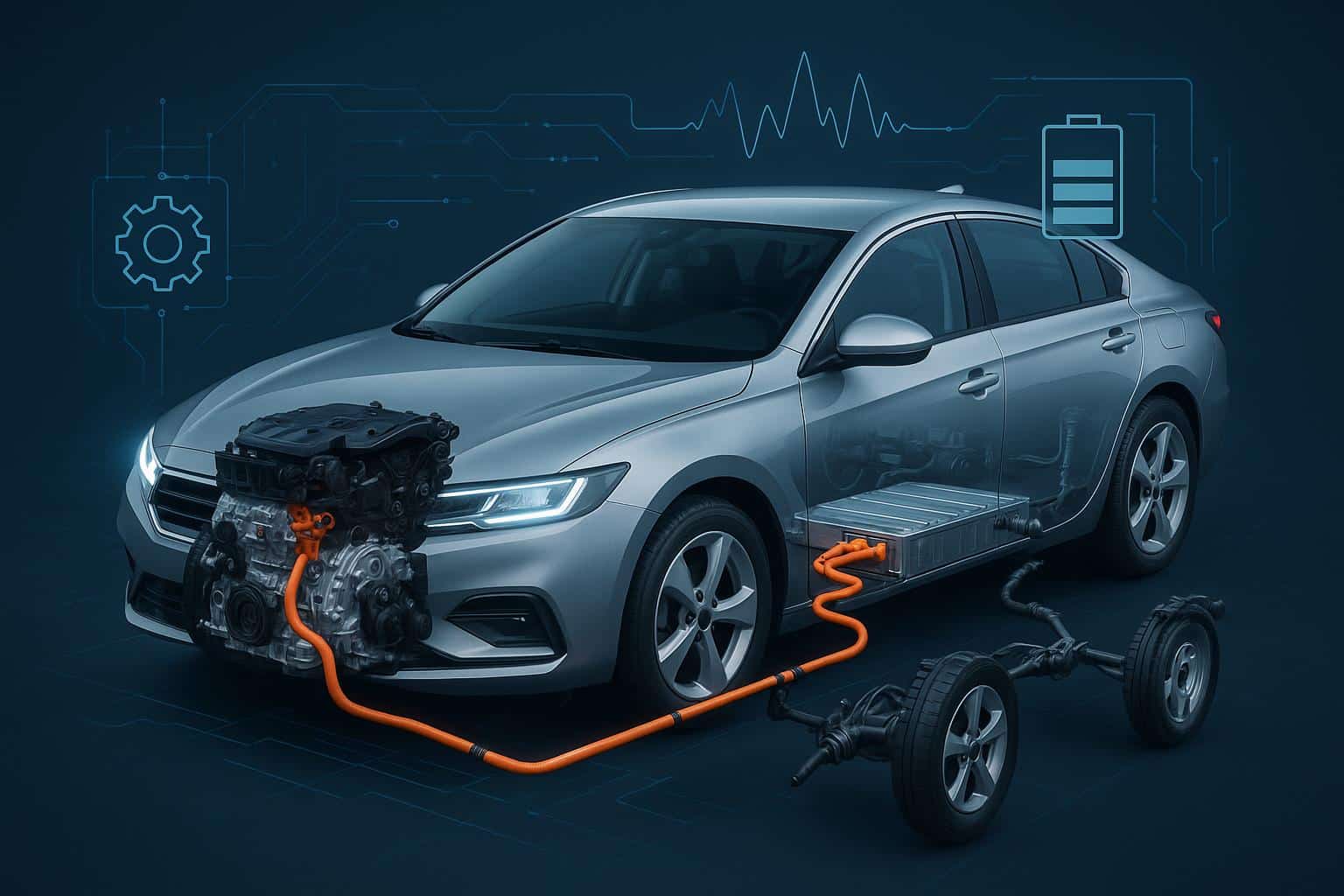
At the centre of this is the Engine Control Unit, or ECU.
From Mechanical Control to Digital Management
Older engines relied much more heavily on mechanical systems to control fuel delivery, ignition and throttle response.
Modern engines are different.
The ECU constantly monitors information from sensors around the vehicle and uses this data to control areas such as:
- fuel delivery
- ignition timing
- turbo boost
- throttle response
- torque output
This allows manufacturers to balance performance, fuel economy, emissions, reliability and drivability.
Why Manufacturers Don’t Always Use the Full Potential
A vehicle manufacturer has to produce cars that can operate across different countries, climates, fuel qualities and driving conditions.
As a result, engine software is usually calibrated around a broad range of requirements rather than maximum performance alone.
That creates scope for specialist tuning.
ECU remapping involves adjusting selected areas of the vehicle’s software calibration to change how the engine produces power and torque.
On suitable turbocharged engines, this can result in stronger acceleration, improved throttle response and a different overall driving experience.
Modern Tuning Is About More Than Horsepower
Increasing the biggest horsepower number isn’t necessarily the sign of a good calibration.
The way power is delivered matters too.
A strong tune should consider factors such as:
- usable torque
- smooth power delivery
- engine temperature
- fuel quality
- gearbox limitations
- overall drivability
This is one reason professional testing remains important.
Why Dyno Testing Still Matters
Even though tuning has become increasingly software-based, the physical performance of the vehicle still needs to be understood.
A rolling road or dynamometer allows specialists to measure how the vehicle produces power and torque under controlled conditions.
It can help tuners assess the vehicle before and after calibration rather than relying purely on theoretical figures.
Modern performance tuning may begin on a laptop, but the engine still has to perform in the real world.
As vehicles become more software-driven, understanding the relationship between digital calibration and mechanical performance is likely to become an increasingly important part of automotive tuning.