


A paramedic response unit arrives at a call and the crew needs an airway kit, cardiac monitor and trauma bag. Each item may be onboard, but if supplies are spread across unfamiliar compartments, gathering them becomes another task before the crew begins assessing the patient.
Good paramedic response unit storage starts with a simple question: what must the crew collect first? Organizing equipment around real response tasks, rather than filling every available space, can make retrieval more predictable without compromising safety.
- Prioritize Equipment Based on Response Urgency
- Prepare Grab-and-Go Kits for Different Emergencies
- Make Essential Equipment Accessible From the Vehicle
- Separate First-Response Supplies From Backup Stock
- Standardize Locations Across the Fleet
- Balance Quick Retrieval With Secure Transport
- Check Readiness Before Each Shift
Prioritize Equipment Based on Response Urgency
Not every item needs the same level of access. Start by reviewing service protocols and the equipment crews commonly carry to different calls. Identify essential items that should be available immediately on arrival, then decide which supplies can remain in secondary locations.
For example, an airway bag, cardiac monitor and primary trauma kit may need clear, designated retrieval positions. Replacement dressings, spare consumables and less frequently used accessories can be stored separately, provided they remain accessible when required.
Ask working paramedics to identify equipment they regularly search for or move out of the way. Their feedback can reveal problems that a compartment drawing alone might miss.
Prepare Grab-and-Go Kits for Different Emergencies
- Airway and respiratory kit: Keep approved airway supplies and associated accessories together, with contents arranged for easy identification.
- Trauma kit: Group dressings, bandages and other designated supplies in a bag crews can remove without shifting unrelated equipment.
- Cardiac response equipment: Assign a consistent location for the monitor or defibrillator, along with its necessary leads and accessories.
These examples are not universal packing lists. Equipment selections should follow the service’s scope of practice, protocols and inventory standards. Label each kit clearly and make sure staff know its contents and designated location.
Make Essential Equipment Accessible From the Vehicle
Consider the physical steps involved in retrieving a kit. Does the crew approach the rear hatch or a side door? Does someone have to reach over another bag, lift a heavy case from shoulder height or pull several drawers open?
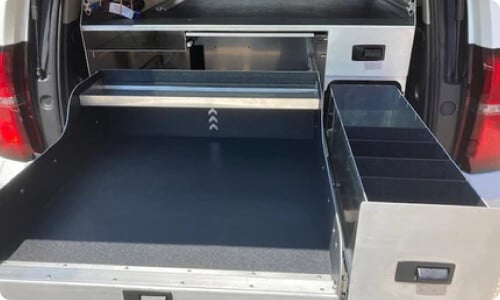
Place frequently collected equipment where staff can remove it with a clear path and appropriate lifting technique. Rear cargo drawers may suit larger bags; side storage can provide another access point where the vehicle design allows. Equipment-specific holders help give compatible items a predictable position.
A Canadian ambulance simulation study involving 48 EMS teams identified difficulties accessing equipment and supplies during simulated patient care. The findings reinforce why storage layouts should be tested against the tasks crews perform, not just available compartment space.
When assessing paramedic response unit storage, compare drawer layouts, restraint options and installation requirements with the actual equipment carried. A convenient position on paper may prove awkward when a vehicle is parked close to a wall or another ambulance. Test retrieval from realistic parking positions before finalizing the arrangement.
Separate First-Response Supplies From Backup Stock
A drawer containing both active equipment and bulk replacements is harder to navigate. Put ready-to-use response kits in assigned locations, while separating reserve items such as replacement dressings, spare batteries and additional consumables.
This distinction also makes restocking clearer. After a call, staff can replenish a kit from reserve stock instead of rearranging every compartment. Use labels that clearly identify contents and avoid storing similar-looking supplies together without clear separation. The aim is to keep the next required item visible and easy to identify.
Standardize Locations Across the Fleet
Crews may move between vehicles during shift changes, maintenance or reassignment. If each response unit has a completely different layout, familiar equipment can become difficult to find.
Develop a common placement plan for vehicles with comparable configurations. Keep critical kits in consistent zones, use recognizable labels and provide a simple equipment-location guide for new team members. Where vehicle dimensions differ, document the exceptions rather than forcing equipment into unsuitable spaces.
Ask paramedics to practise locating essential items in any unfamiliar unit before it enters service.
Balance Quick Retrieval With Secure Transport
Easy access does not mean leaving equipment unsecured. Sudden braking or turning can cause loose items to move, potentially damaging equipment or creating hazards. Appropriate latches, brackets and restraints should keep items in place while the vehicle is moving.
Storage choices must also respect equipment manufacturer instructions, applicable provincial requirements and service procedures. Check that mounting locations and restraint systems suit the equipment, rather than choosing positions based on convenience alone.
Controlled medications also need storage and access procedures consistent with local requirements. Crews should verify that securing an item does not make it unnecessarily difficult for authorized staff to retrieve.
Check Readiness Before Each Shift
An organized compartment cannot help if the expected kit is missing or incomplete. Use pre-shift checks to confirm equipment locations, battery readiness, supply quantities and relevant expiry dates. Inspect latches and restraints and report faults promptly.
After calls, return items to their assigned places and replenish used supplies. Periodic retrieval exercises can expose awkward access points or confusing labels before they become routine frustrations.
Making Critical Equipment Easier to Access
Effective paramedic response unit storage connects equipment placement to the way crews work. Prioritized kits, clear access routes, consistent locations and dependable checks help reduce unnecessary searching.
Before changing a vehicle layout, observe actual retrieval tasks and involve the staff who perform them. A well-organized response unit should make the right equipment easier to find, carry and secure on every shift, even when several staff share vehicles.