


At the beginning of the 2000s, life moved at a gentler pace. Answers did not hurry us. If you wanted to know something, you went looking for it. You sat down at a computer that stayed in one room, opened a browser, and waited while pages loaded slowly. Email was checked once a day, sometimes less. Missing an update never felt like falling behind.
Many people still remember how evenings felt quieter. News arrived at a set hour. Messages waited until morning. If something took time, it simply meant it was taking time. There was no sense that the world expected a response right away. Not knowing felt neutral, even comfortable. Silence left space to think, to rest, to move on with the day.
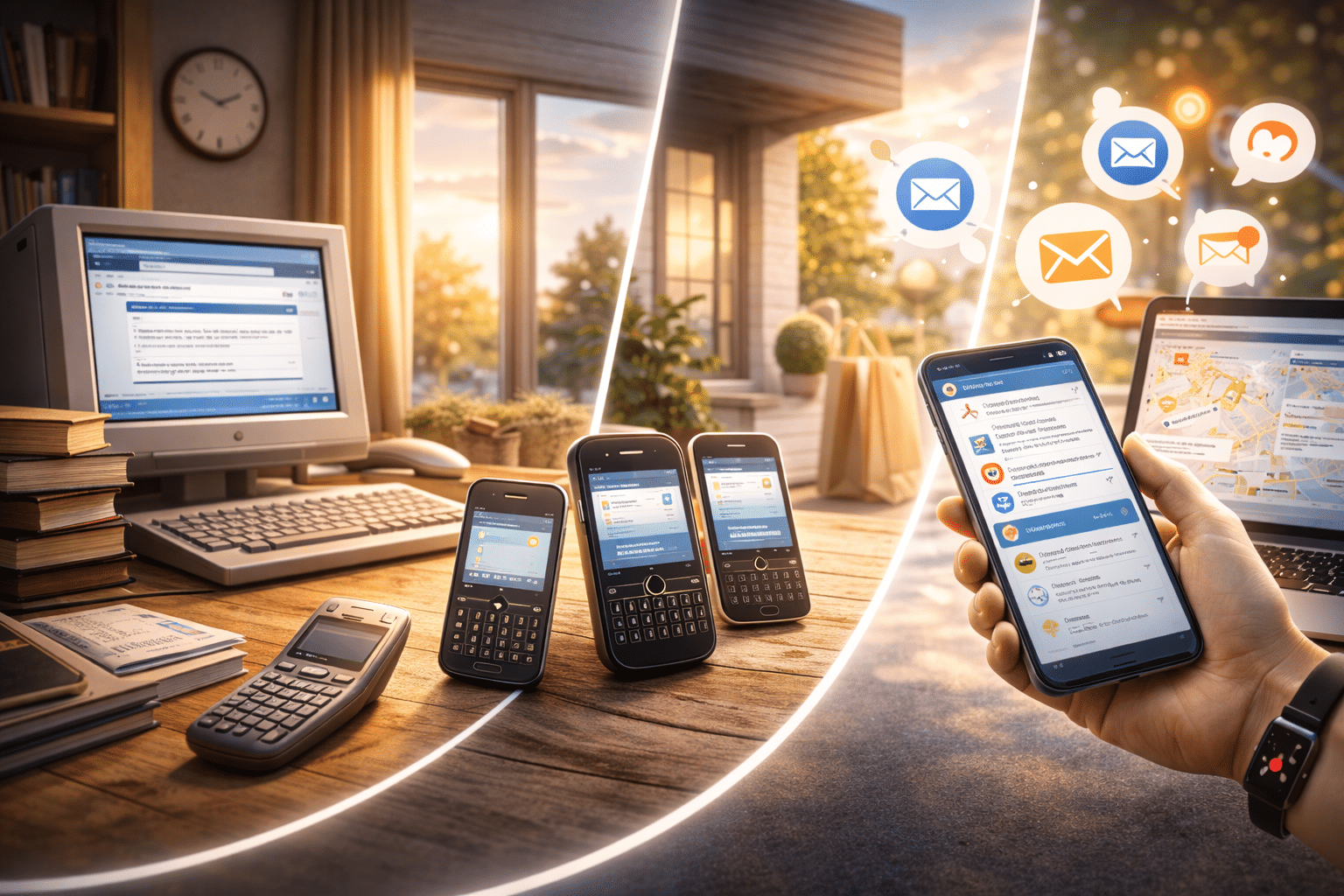
When Answers Became Portable
As the decade moved forward, small changes began to appear. Phones started doing more than ringing. Screens showed headlines, weather forecasts, short messages. Early smartphones felt exciting, not because they were fast, but because they were new companions outside the home.
Somewhere along the way, checking something while standing in line or sitting on a bus became normal. Still, nothing demanded attention. You could glance at a screen, then slip the phone back into a pocket and forget about it for hours. Devices like early iPhones, BlackBerry phones used for work email, and simple mobile browsers offered convenience without pressure.
Life did not revolve around screens yet. They walked alongside daily routines, quietly, without pulling focus away from conversations or moments.
When Screens Started Speaking First
Over time, the tone changed. Phones began lighting up on their own. Small signals appeared: a vibration, a banner, a badge. Messages showed when they were seen. Feeds refreshed endlessly. Answers arrived before questions were fully formed.
Everyday services followed the same path. Bank apps began confirming every transaction. Maps no longer showed static routes but living traffic. Ordering something online no longer ended with a single confirmation email. The journey itself unfolded step by step. Watching a parcel move across borders and checkpoints, being able to track international package progress, became just one example of how everyday processes started explaining themselves as they happened.
At some point, silence stopped feeling ordinary. When nothing appeared on the screen, it felt noticeable. The habit of checking had quietly formed, not out of necessity, but out of expectation.
When Small Updates Shaped How Days Felt
There came a moment when those small signals began carrying more weight. Especially during uncertain times, they offered reassurance. A message arriving on time. A balance updating as expected. A delivery moving one step closer. These details did more than inform; they calmed.
Screens became steady companions. Laptops stayed open longer. Phones rested closer to hand. Even a short update could influence mood, not because it contained something important, but because it confirmed that things were still moving forward. Knowing that something was happening, somewhere, felt grounding.
During that period, it became clear how much daily life had grown around these quiet confirmations. They filled gaps left by broken routines and unanswered questions. Waiting no longer happened in silence. It happened alongside constant small signs of progress.
When the Noise Became Too Loud
As life slowly found its balance again, the glow of constant updates began to feel tiring. Buzzes interrupted conversations. Notifications stacked up faster than they could be cleared. Smartwatches vibrated for steps, reminders, and messages that often did not matter.
Many people quietly began turning things off. Group chats were muted. Alerts were limited to what truly mattered. The habit shifted from checking everything to trusting certain systems to work without supervision. A service did not need to speak constantly to be reliable. Calm became a signal of confidence.
Waiting regained some of its old shape. Not every pause needed explanation. Not every moment needed confirmation.
When Answers Learned to Stay in the Background
Today, screens are still everywhere, but the relationship with them feels more selective. People expect clarity, but they appreciate restraint. The most valued tools are those that offer reassurance without demanding attention, that provide updates when needed and stay quiet when not.
Looking back across more than two decades, the change feels gradual rather than dramatic. Answers moved from places we visited, to pockets we carried, to companions that followed us everywhere. Now, they are learning to fade into the background again, supporting life instead of interrupting it.
There is something comforting in remembering how slow things once felt, but there is also comfort in knowing how much has improved. The balance today lies somewhere in between. Not in silence, and not in constant noise, but in systems that know when to speak and when to let life unfold on its own.