


A jackknife truck crash can result from multiple mistakes. Fault is determined by identifying what caused the trailer to swing out of line and whether that happened because of driver error, poor truck maintenance, improperly loaded cargo, unsafe road conditions, or failures by the trucking company. Investigators piece together the evidence to determine who, if anyone, acted negligently.
Commercial truck crashes can be far more complex than ordinary car accidents because multiple parties may share responsibility. Understanding how jackknife accidents are investigated can help explain why these cases often require detailed evidence rather than assumptions.
What Is a Jackknife Truck Crash?
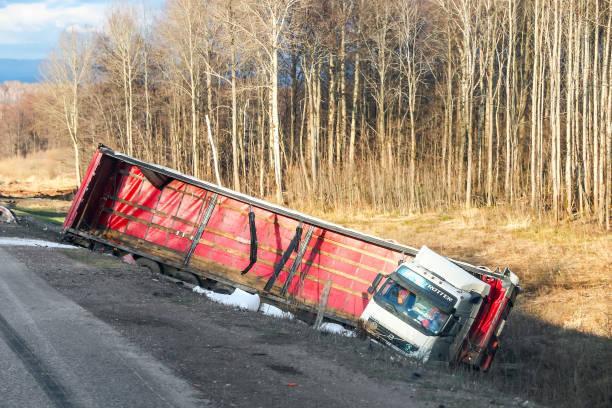
A jackknife accident occurs when a truck’s trailer swings outward, forming an angle with the cab that resembles a folding pocketknife. This typically happens when the truck loses traction or the driver brakes suddenly, causing the trailer to skid.
Once the trailer swings sideways, it can:
- Block multiple traffic lanes
- Strike nearby vehicles
- Trigger chain-reaction collisions
- Cause serious injuries and extensive property damage
Because a jackknife crash can develop and escalate within seconds, determining fault depends heavily on the evidence collected afterward. Investigators examine everything that happened before the collision, including the truck’s speed and braking, maintenance records, and cargo inspections. That complete picture helps determine who should be held legally responsible.
Driver Error Is Often the Starting Point
Investigators usually begin by examining the truck driver’s actions before the crash.
Common examples include:
- Driving too fast for road conditions
- Sudden or excessive braking
- Following other vehicles too closely
- Distracted or fatigued driving
- Failing to react appropriately to traffic or weather
If the driver failed to operate the truck safely, that negligence may become a major factor in determining liability.
The Trucking Company May Also Share Responsibility
The driver is not always the only party at fault. A trucking company can also be held responsible if its own actions contributed to the crash.
Examples include:
- Poor hiring or inadequate driver training
- Unrealistic delivery schedules
- Failure to enforce rest requirements
- Ignoring maintenance problems
- Allowing unsafe vehicles to remain in service
When company decisions create unsafe driving conditions, liability may extend beyond the individual driver.
Maintenance Problems Can Contribute
Mechanical failures sometimes play a significant role in jackknife crashes.
Common issues include:
- Brake failures
- Worn tires
- Defective vehicle components
- Poor repair work
Federal regulation 49 C.F.R. § 396.3 requires motor carriers to systematically inspect, repair, and maintain their commercial vehicles. When maintenance failures contribute to a crash, investigators may examine whether the carrier complied with these safety requirements.
Cargo Loading and Road Conditions Matter
Improperly secured or unevenly loaded cargo can shift during transit, making the trailer unstable. Likewise, wet roads, ice, strong winds, or unexpected roadway hazards can increase the risk of a jackknife.
Even under difficult conditions, investigators still ask whether the driver responded reasonably and whether the crash could have been prevented with proper precautions.
What Kind of Evidence Determines Fault?
Jackknife investigations rely on objective evidence rather than assumptions. Common sources include:
- Black-box or event data recorder information
- Driver logs
- Maintenance and inspection records
- Cargo loading documents
- Witness statements
- Crash reconstruction reports
Commercial drivers are also expected to comply with traffic laws under 49 C.F.R. § 392.2, making driver conduct an important part of any liability investigation.
Final Takeaways
- Jackknife crashes often result from several contributing factors.
- Driver behavior is usually examined first.
- Trucking companies may also share legal responsibility.
- Poor maintenance and mechanical failures can contribute.
- Cargo loading and road conditions influence fault.
- Strong evidence is essential to establish liability.
- Every case depends on identifying what caused the trailer to lose control.