


There is no single “2026 facelift.”
The term still covers several operations, each built around the same basic problem: facial tissue has moved, stretched or lost support, and the skin now reflects those changes.
That is different from saying the skin itself caused them.
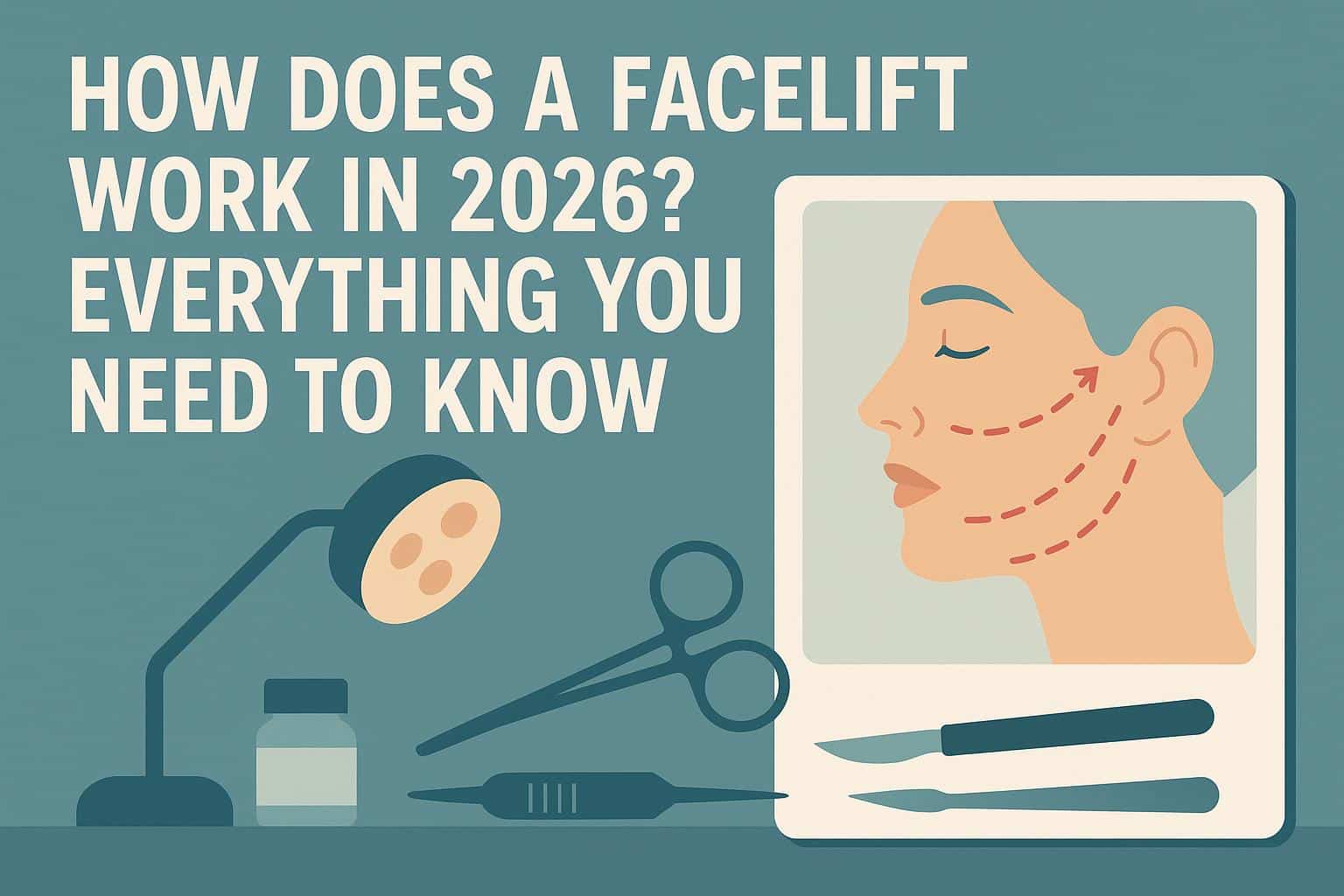
A facelift works mainly by repositioning tissue beneath the skin, then removing only the skin that no longer fits comfortably over the new contour. The goal is not to pull the face tight. It is to restore support through the cheeks, jawline and neck without erasing the features that make the face recognizable.
The Face Ages Below the Surface
Jowls do not appear because one patch of skin suddenly becomes loose. Several changes are usually happening at once.
Facial fat can shrink in some areas and settle lower in others. Ligaments that once held the cheeks firmly begin to provide less support. The jawline softens. Tissue gathers beside the mouth, and the angle between the chin and neck becomes harder to see.
Skin changes too, of course. It becomes thinner and less elastic. Still, asking the skin to carry the entire correction would be like tightening a loose cover without fixing what shifted underneath it.
That is why facelift surgery is better suited to sagging than to surface damage.
It may improve jowls, deeper folds, loose neck skin and loss of jawline definition. It does far less for brown spots, rough texture or fine lines caused by sun exposure. Heavy eyelids and forehead changes also fall outside the usual treatment area unless separate procedures are added.
The difference matters because “looking older” is not one diagnosis. A person bothered by pigmentation needs a different discussion from someone whose lower face has become noticeably heavier.
The Lift Happens Before the Skin Is Trimmed
Most facelift incisions begin near the temple or hairline, follow the natural curves around the ear and continue behind it. The length depends on the work required. A limited jawline correction does not necessarily need the same access as a facelift that includes substantial neck treatment.
Once the incisions are made, the surgeon carefully separates the skin from the tissue below it. That deeper layer is where much of the operation takes place.
It may be lifted, folded, tightened or released from attachments that prevent it from moving. Fat may be preserved, repositioned or removed where appropriate. Only after those decisions have been carried out is the skin placed back over the face.
Excess skin can then be removed without stretching the remainder as tightly as possible.
This approach does not eliminate tension. Surgery always creates some. It changes where the support comes from. The deeper tissue holds the correction, while the skin acts as a covering rather than a suspension system.
Technique Names Tell Only Part of the Story
SMAS and deep plane are the two labels people are most likely to encounter while researching facelifts.
The SMAS, short for superficial musculoaponeurotic system, is a supportive layer beneath the skin. A surgeon may tighten, fold or reposition it during a SMAS facelift.
Deep-plane surgery goes beneath portions of that layer and releases selected retaining ligaments. This allows areas of the cheek and lower face to move together.
The distinction is real, but online comparisons often make it sound cleaner than it is.
Surgeons can use different incision patterns, lifting directions and methods of securing tissue while describing their work with the same general term. A technique name does not reveal how aggressively the face will be lifted, how the neck will be handled or whether the plan suits the patient’s anatomy.
“Mini facelift” is even less specific. It usually means less extensive surgery, shorter incisions or a smaller treatment area. That may be enough for early jowling. It is unlikely to produce the same change when loose tissue extends well into the neck.
Newer does not automatically mean better. Deeper does not automatically mean more natural. The relevant question is whether the chosen method reaches the tissue responsible for the visible change.
The Neck Can Change the Entire Plan
People often separate the face and neck when describing what bothers them. Surgeons cannot always treat them as separate areas.
Loose tissue along the jaw may continue under the chin. Fat may contribute to fullness, but muscle and skin can be involved as well. The platysma, a broad muscle that runs through the neck, may separate or form visible bands.
A small incision under the chin can provide access to that area. Depending on the anatomy, the surgeon may remove or reposition fat, adjust the muscle or combine neck work with the facial lift.
This can make the operation more extensive than the patient first expected.
It also explains why comparing facelift prices or recovery times without knowing whether the neck is included can be misleading. Two procedures called “facelifts” may involve very different amounts of work.
The Consultation Sets the Real Boundaries
Facelift planning begins with the face, not a preferred procedure name.
The surgeon examines the cheeks, jawline, neck, hairline, skin quality and any previous scars. Photographs help, but so does seeing how the tissue moves when the patient speaks or turns their head.
Health history can narrow the options. Smoking affects blood flow and healing. High blood pressure can increase concern about bleeding. Medications and supplements may alter clotting. Previous facial surgery may have changed the tissue planes beneath the skin.
Goals also need to be translated into something practical.
“I want to look younger” is too broad to guide an operation. “I want less heaviness beside my mouth, but I do not want my cheeks lifted too high” is far more useful.
Someone searching for the best facelift surgeon should pay attention to relevant training, experience with facial surgery, operating-facility standards, follow-up care and the plan for handling complications. Before-and-after photographs matter, but they do not answer those questions on their own.
Recovery Does Not End When the Bruising Fades
Two weeks is often quoted as facelift recovery time. It is better understood as a rough social timeline.
During the first several days, swelling, bruising, tightness and numbness are common. The ears may feel strange. One side can swell more than the other. A treated neck may feel firm when looking down or turning the head.
Some patients wear a dressing, and some have temporary drains. Activity is restricted, the head is usually kept elevated, and incision care follows the surgeon’s specific instructions.
Many people return to work or ordinary social situations after two or three weeks. The face is still healing at that point.
Residual swelling can remain. Firm areas soften gradually. Sensation may take months to normalize, and scars continue to change long after they are easy to conceal.
A wedding or major event requires more margin than a return to office work. Recovery is not an appointment the body always keeps on schedule.
Surgery Changes the Starting Point, Not the Clock
Facelift risks include bleeding, infection, fluid collection, poor healing, visible scars, altered sensation, hair loss near an incision, facial weakness and complications related to anesthesia. Some resolve without further surgery. Others do not.
Results also change.
The operation cannot stop the skin, fat, muscle and bone from continuing to age. Genetics, sun exposure, smoking, health and weight fluctuation all shape what happens over the following years.
A facelift does not suddenly wear off. The face continues ageing from the position created during surgery.
That is the useful way to understand the procedure in 2026. It is not a permanent pause and not a skin-tightening shortcut. It is an attempt to restore support where the face has lost it, using a plan that should be specific to the person rather than the latest surgical label.