


Police dogs play a crucial role in modern law enforcement across Australia, supporting officers in tasks that require exceptional senses, agility, and discipline. From tracking missing persons to detecting narcotics or apprehending offenders, these highly skilled animals are the result of intensive, methodical training programs.
But what exactly goes into preparing a police dog for duty? Below, we break down the essential training processes, best practices, and must-know skills that shape these remarkable K9 partners.
Choosing the Right Dog for the Job
A police dog training begins long before formal instruction. Selecting the right dog is a critical first step. Breeds commonly chosen include German Shepherds, Belgian Malinois, and Labradors, as they typically display the key characteristics needed for frontline work: intelligence, confidence, strong drive, and resilience.
Pups are assessed from a young age for sociability, nerve strength, and curiosity. The goal is to ensure they have the right temperament to handle high-pressure situations without becoming stressed or distracted.
Foundational Obedience Training
Just like any working dog, police dogs begin with the basics. Foundational obedience is essential for developing control, communication, and trust between the dog and its handler. Early training focuses on:
- Sit, stay, down, and heel
- Recall commands
- Leash discipline
- Responding calmly to unfamiliar environments
Handlers use reward-based training, typically involving toys or food treats. Positive reinforcement strengthens the bond between dog and handler, making the dog more eager to work and learn.
Specialised Skills: What Police Dogs Must Learn
Once a dog shows strong obedience and confidence, they move on to specialised training tailored to their future role. Some of the most common specialisations include:
Scent Detection
A police dog’s nose is its greatest asset. Detection dogs learn to identify specific scents—such as narcotics, explosives, firearms, currency, or accelerants used in arson. Training involves:
- Scent association
- Searching vehicles, buildings, luggage, and open areas
- Passive or active alert responses
Australian police agencies prioritise consistency and accuracy, ensuring dogs can work reliably in busy airports, festivals, and crime scenes.
Tracking and Trailing
Tracking dogs follow fresh human scent across various terrains. They must remain focused despite distractions such as animals, traffic, or rough weather. Skills include:
- Identifying scent from clothing or belongings
- Following ground disturbance or air scent
- Persisting over long distances
This training is vital for finding missing persons or suspects who have fled from a scene.
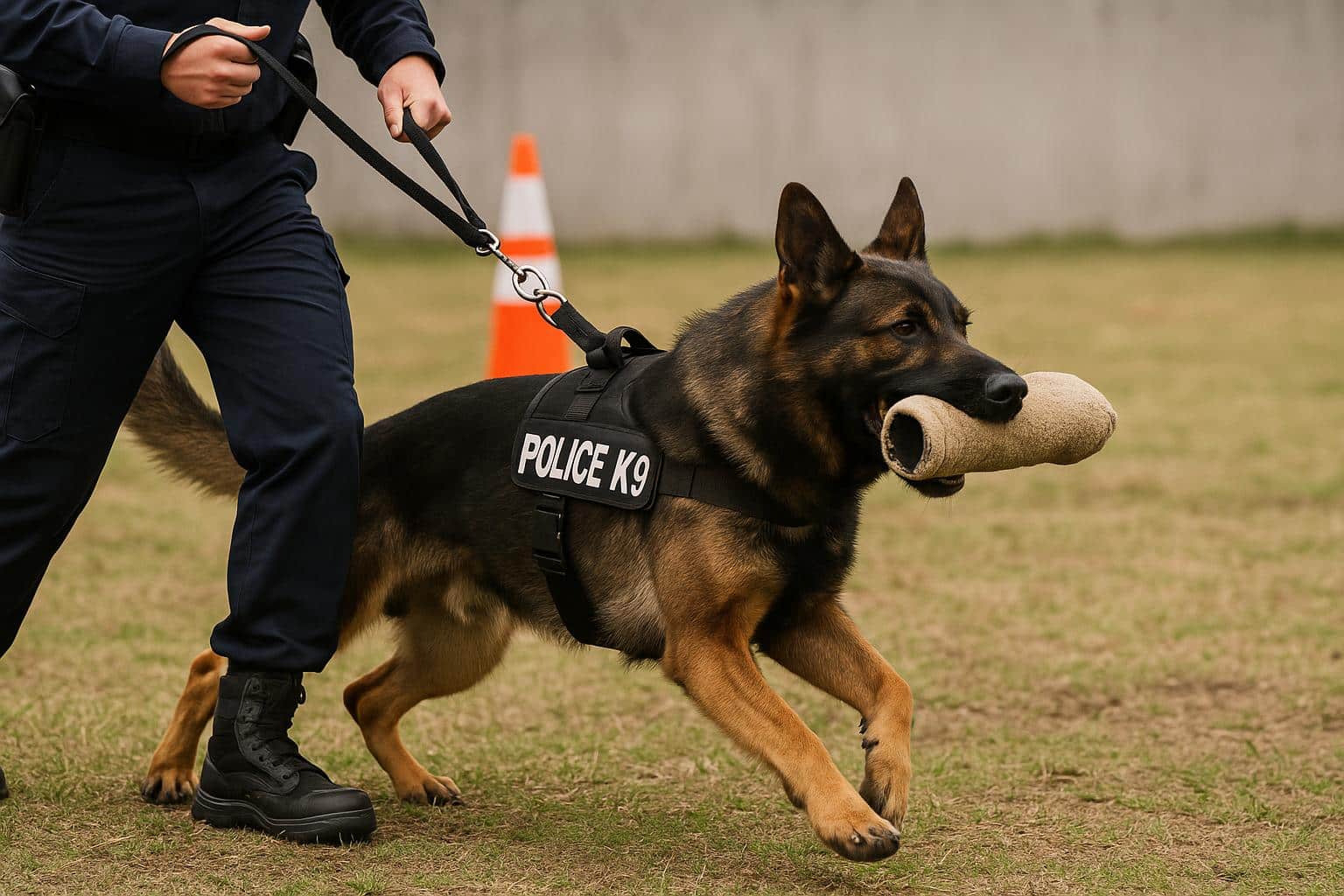
Protection and Apprehension
General-purpose police dogs often assist in high-risk situations. They are trained to:
- Chase and safely apprehend offenders
- Guard a scene or protect an officer
- Respond to verbal commands instantly
Importantly, protection training is highly controlled. Dogs learn to restrain rather than harm, releasing immediately when commanded.
Socialisation and Real-World Exposure
A crucial part of police dog training involves exposing the dog to real-life environments. They must learn to stay calm around crowds, sirens, vehicles, and unpredictable situations. Socialisation includes:
- Visiting public spaces
- Exposure to loud noises
- Working around other animals
- Training in both daylight and nighttime conditions
Well-socialised dogs are more adaptable and less likely to become overwhelmed during operations.
Handler Training: The Human Component
Police dog handlers undergo extensive training too. They must:
- Understand canine behaviour
- Maintain the dog’s fitness and wellbeing
- Apply consistent commands and reinforcement
- Conduct ongoing training sessions
The relationship between a handler and their dog is central to success. Many teams work together for years, building trust and communication that enhances operational effectiveness.
Ongoing Training and Assessment
Police dog training doesn’t stop once they are deployed. Regular assessments ensure skills remain sharp. Dogs participate in refresher drills, mock scenarios, and certification tests. This continuous development keeps both dog and handler at peak performance.
Final Thoughts
Training a police dog is a complex, highly specialised process grounded in patience, consistency, and mutual trust. From foundational obedience to advanced scent detection or protection work, each skill plays a vital role in creating a reliable, confident K9 officer. These remarkable dogs not only support law-enforcement operations but also help keep Australian communities safer every day.