


When planning a granny flat, block orientation is one of the most influential factors in creating a comfortable and efficient home. The way your site receives sunlight affects temperature control, privacy, window placement and the overall experience of the space.
By designing a floor plan that responds directly to your block’s orientation, you’ll achieve a granny flat that feels naturally brighter, more comfortable and more economical to run.
Below is a breakdown of how each orientation impacts design — and how to take advantage of it.
- Why Block Orientation Matters
- North-Facing Block: The Most Ideal Layout
- East-Facing Block: Light-Filled Mornings
- West-Facing Block: Reducing Afternoon Heat
- South-Facing Block: Even, Gentle Light
- Consider the Orientation of the Main Home
- Outdoor Living and Orientation
- Bringing It All Together: Designing With Orientation in Mind
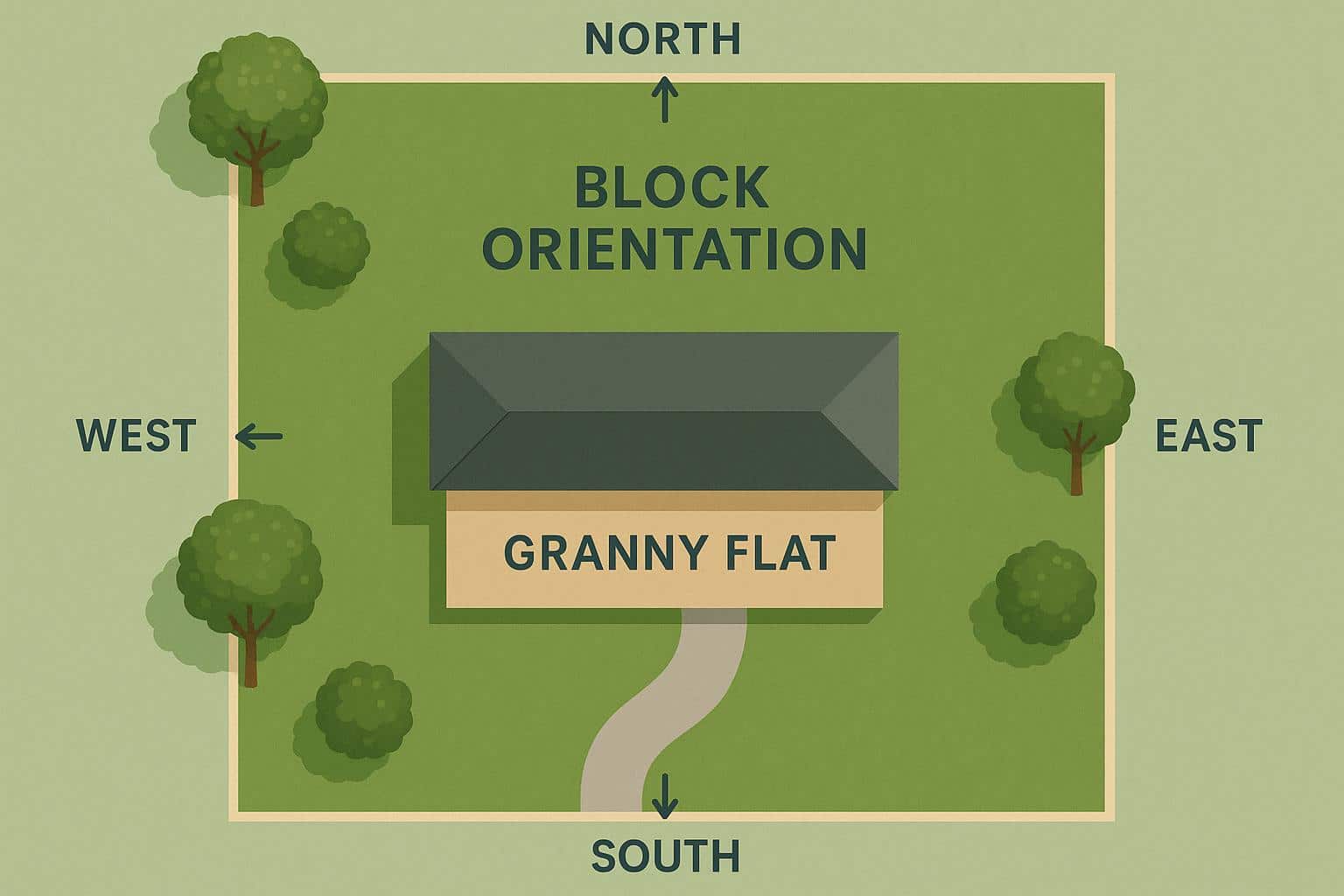
Why Block Orientation Matters
The direction your block faces influences:
- levels of natural sunlight
- year-round temperature comfort
- heating and cooling efficiency
- privacy between the granny flat and the main home
- the ideal positioning of windows, doors and outdoor areas
Understanding how the sun moves across your property is the foundation of a well-designed granny flat.
North-Facing Block: The Most Ideal Layout
North-facing sites are considered the best orientation in Australia due to their consistent daylight and warmth.
How to Optimise Your Floor Plan
- place living and dining spaces on the northern side
- include large windows or sliding doors for passive solar gain
- use shading or eaves to block summer heat while allowing winter sun
- position bedrooms to the east or south for softer light
A north-oriented layout creates a comfortable environment year-round with minimal energy use.
East-Facing Block: Light-Filled Mornings
East-facing blocks enjoy bright morning light and cool afternoons — ideal for people who prefer early sunlight.
Best Layout Strategies
- position bedrooms on the eastern side to capture morning sun
- locate living spaces to the north or east where possible
- minimise west-facing windows to reduce afternoon warmth
- add landscaping or screens to buffer western heat
This orientation supports a fresh, cool feel later in the day.
West-Facing Block: Reducing Afternoon Heat
West-facing blocks receive intense afternoon sun, so careful planning is essential to maintain comfort.
How to Design for Thermal Control
- limit west-facing windows in key living areas and bedrooms
- place laundries, bathrooms or storage zones on the western side
- position living areas to the north or east
- use external shading, trees or screens to block heat
Small design adjustments can make a significant difference in energy efficiency.
South-Facing Block: Even, Gentle Light
South-facing blocks provide consistent but cooler light, which requires thoughtful design to avoid dark or chilly interiors.
Floor Plan Tips
- orient primary living areas to the north where possible
- use skylights or highlight windows to brighten internal spaces
- create outdoor living to the north or east
- allocate southern walls for utility spaces like bathrooms or laundries
This approach helps maintain a calm, balanced atmosphere throughout the home.
Consider the Orientation of the Main Home
A granny flat positioned beside or behind the main dwelling must also account for:
- privacy between households
- noise separation
- driveway or path access
- overshadowing from the main house
What to Prioritise
- avoid placing the granny flat where it will sit in shade all day
- locate outdoor living areas where they won’t face directly into the main house
- design entries to ensure independent access
These considerations help the granny flat function as its own private, self-contained home.
Outdoor Living and Orientation
A well-positioned outdoor area enhances comfort and usability.
- North-facing: ideal for year-round terraces or decks
- East-facing: perfect for morning seating areas
- West-facing: best for secondary outdoor spaces unless well shaded
- South-facing: suitable for utility zones or cooler garden spaces
Outdoor placement should support both privacy and seasonal comfort.
Bringing It All Together: Designing With Orientation in Mind
The best granny flat floor plans take orientation into account by incorporating:
- natural light in key living zones
- strategic shading to prevent overheating
- passive design principles for year-round comfort
- window and door placement that protects privacy
- outdoor living that aligns with climate and lifestyle
When you design your granny flat with orientation as a guiding factor, you create a space that feels bright, efficient and incredibly comfortable — without adding to the construction cost.