


Introduction: Digital Advertising Enters a High-Frequency Era
Digital advertising is no longer about producing a single “hero creative” and pushing it across channels.
Today’s brands operate in an environment defined by short attention spans, fragmented platforms, and continuous optimization.
Campaigns are expected to launch faster, adapt in real time, and speak to multiple audiences simultaneously. A single product release may require dozens—sometimes hundreds—of creative variations across Meta, TikTok, YouTube, and emerging channels.
- Introduction: Digital Advertising Enters a High-Frequency Era
- Why Traditional Advertising Workflows Struggle to Scale
- AI as a Structural Upgrade, Not a Creative Shortcut
- From Manual Creation to Continuous Ad Production
- Visual AI and the New Creative Flexibility
- What This Means for Creative Teams and Agencies
- A New Baseline for Advertising Competitiveness
- Conclusion: Advertising in the Age of Intelligent Execution
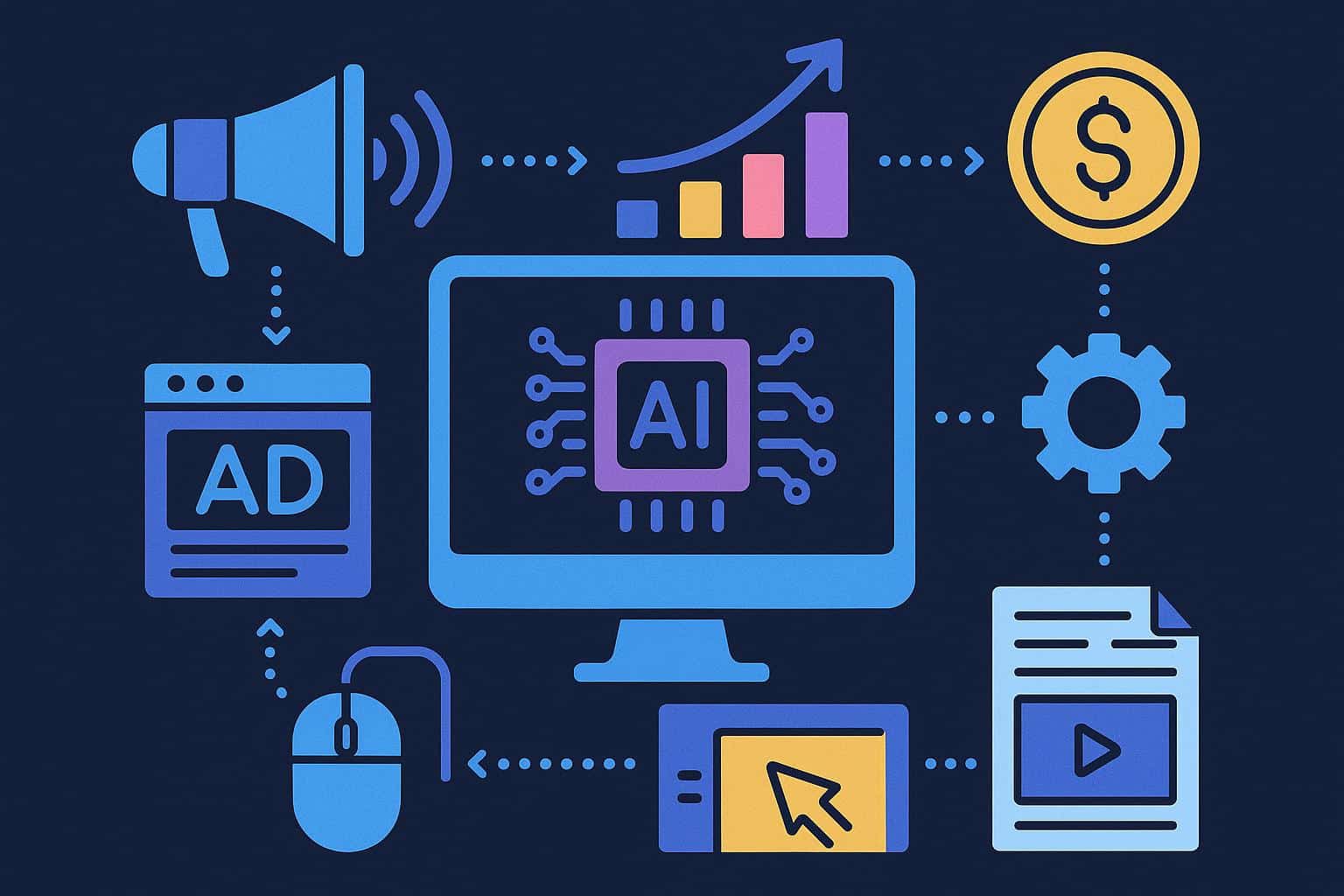
To meet the demand for high-frequency, multi-platform advertising, brands increasingly rely on AI-powered ecosystems. Tools like AI Ad Maker structure and accelerate ad creation, enabling teams to generate dozens of variations efficiently. Meanwhile, visual technologies such as free unlimited video face swap allow brands to experiment with personalization and localization early in the creative process.
For teams looking to further streamline video ad production, platforms like AI UGC Video Ads Generator extend these capabilities by converting user-generated content into optimized ad variations, creating more authentic and scalable campaigns without additional production overhead.
Together, these AI-driven solutions empower marketing teams to shift from project-based execution to continuous, systemized ad production, allowing for rapid iteration, testing, and audience adaptation.
Why Traditional Advertising Workflows Struggle to Scale
For decades, advertising followed a predictable linear process: planning, creative development, production, approval, and distribution. While effective in a slower media landscape, this model is under strain.
Common structural limitations include:
- Production lag: Coordinating designers, editors, and copywriters often takes weeks, delaying time-to-market.
- High marginal cost: Each new variation—format change, localization, creative test—adds incremental cost.
- Limited experimentation: Budget and time constraints reduce the number of creatives teams can realistically test.
- Fragmented execution: Creative, media, and performance teams often operate in silos, slowing feedback loops.
As a result, many campaigns are optimized after launch rather than during creation, missing opportunities to align creative output with real performance data.
AI as a Structural Upgrade, Not a Creative Shortcut
One common misconception is that AI exists to “replace creativity.” In practice, its real value lies elsewhere.
AI restructures how advertising work is organized.
Instead of treating each creative asset as a one-off deliverable, AI enables modular production—where visuals, formats, and messages can be recombined, adapted, and iterated continuously.
This shift delivers three core advantages:
- Speed – Reducing production cycles from weeks to days or hours
- Scale – Making high-volume creative testing operationally feasible
- Consistency – Maintaining brand coherence across dozens of variations
In this model, creativity becomes more strategic, not less: teams spend less time executing repetitive tasks and more time shaping ideas, narratives, and positioning.
From Manual Creation to Continuous Ad Production
Modern advertising success increasingly depends on iteration. Platforms reward freshness, relevance, and responsiveness—yet traditional workflows were never designed for continuous output.
AI-powered ad systems change this equation by enabling:
- Rapid generation of multiple creative versions
- Automatic adaptation to platform-specific formats and constraints
- Faster feedback loops between performance data and creative decisions
This approach aligns ad production with how media buying actually works today: always-on, test-driven, and data-informed.
Rather than launching a single “perfect” ad, brands can now launch a creative system that evolves alongside performance signals.
Visual AI and the New Creative Flexibility
Beyond efficiency, AI is expanding what is creatively possible.
Visual experimentation—once limited by budget, studio access, or editing capacity—is becoming far more accessible. Techniques such as face swapping, expression variation, and rapid visual re-rendering allow teams to test different identities, narratives, and emotional cues without additional shoots or post-production complexity.
This matters because modern audiences respond strongly to relevance. Localized visuals, culturally adapted storytelling, and personalized creative elements consistently outperform generic assets—yet were historically expensive to produce.
With AI-assisted visual tools, experimentation becomes low-risk and fast, encouraging brands to test ideas that would previously be filtered out by cost or time constraints.
What This Means for Creative Teams and Agencies
As AI takes over execution-heavy processes, the role of creative professionals evolves rather than diminishes.
Human expertise remains critical in areas AI cannot replicate:
- Brand strategy and long-term positioning
- Cultural context and emotional nuance
- Ethical judgment and creative originality
AI handles scale and speed; humans handle meaning and intent.
For agencies and in-house teams alike, this shift creates an opportunity to move up the value chain—away from manual production and toward strategic creative leadership.
A New Baseline for Advertising Competitiveness
The most significant implication of AI-driven workflows is not novelty—it is normalization.
What was once considered “advanced” is quickly becoming standard. Brands that cannot produce, test, and iterate creatives at speed risk falling behind competitors who can.
AI-powered advertising systems are no longer a future trend; they are rapidly becoming the baseline for efficient, responsive marketing operations.
Conclusion: Advertising in the Age of Intelligent Execution
The advertising industry is entering a phase defined by intelligent execution—where speed, scale, and creativity coexist rather than compete.
By rethinking how ads are created and optimized, AI allows brands to escape traditional bottlenecks and focus on what truly drives impact: insight, storytelling, and relevance.
In a market where attention is scarce and change is constant, the ability to adapt quickly is no longer a competitive advantage—it is a prerequisite.