


A road construction project can disrupt traffic long before the first excavator arrives. Closing a lane, restricting an intersection, or redirecting pedestrians affects how people travel through the surrounding area. Without careful planning, even a relatively small construction project can create congestion, confusing routes, and unnecessary safety risks.
Traffic management plans help contractors and road authorities prepare for these disruptions. They show how vehicles, pedestrians, cyclists, and construction crews will move around a work area while activities are underway.
- What Is Traffic Plan Drafting?
- How Accurate Traffic Plans Improve Road Safety
- Providing Clear Advance Warnings
- Separating Workers From Moving Traffic
- Maintaining Safe Pedestrian and Cyclist Access
- The Role of Traffic Planning in Reducing Congestion
- Key Factors That Influence Traffic Plan Accuracy
- Why Traffic Plans Must Adapt as Construction Progresses
- Final Thoughts
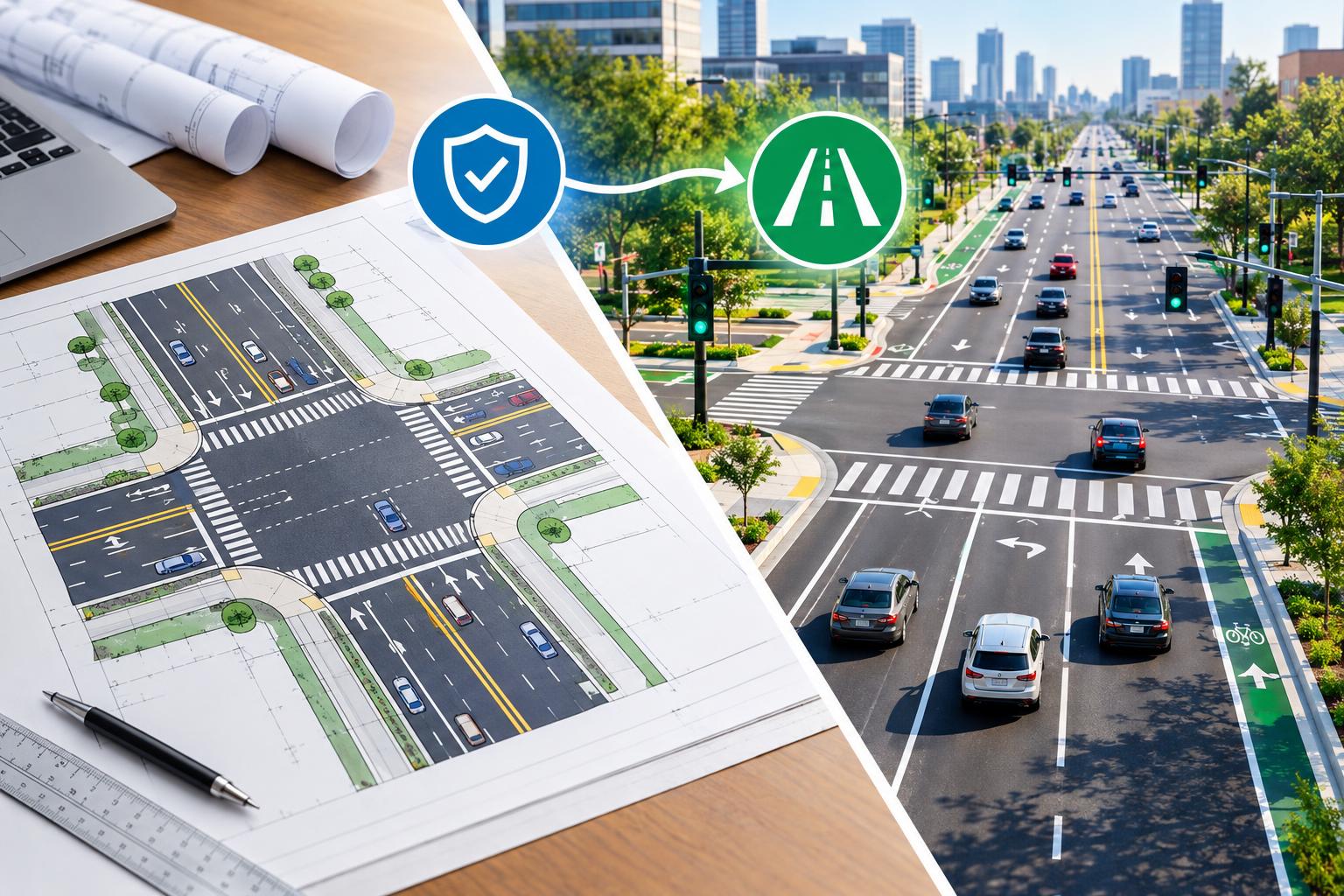
The accuracy of these plans matters. A drawing that overlooks an intersection, misjudges available road space, or places warning signs incorrectly can create difficulties when crews begin implementing it.
Effective planning brings together site measurements, traffic conditions, safety requirements, and practical construction needs before work starts.
What Is Traffic Plan Drafting?
Traffic Plan Drafting involves preparing detailed drawings that show how traffic will be controlled around construction, maintenance, or other temporary roadway activities.
These plans identify work areas, temporary lane arrangements, warning signs, barriers, pedestrian routes, and other traffic control measures.
For example, if a contractor needs to close one lane during utility repairs, the traffic management drawing may show where drivers receive advance warnings, how they approach the closure, and how vehicles return to their normal travel path.
The plan also needs to account for the space required by construction workers, vehicles, and equipment.
Accurate drawings give project teams a common reference when arranging equipment, coordinating construction activities, and reviewing proposed traffic control measures.
How Accurate Traffic Plans Improve Road Safety
Construction zones introduce unfamiliar conditions for motorists. Drivers may encounter narrowed lanes, temporary diversions, slower traffic, or equipment entering the roadway.
A well-prepared traffic plan helps identify these changes before they become hazards.
Providing Clear Advance Warnings
Drivers need sufficient warning when approaching temporary traffic restrictions.
Traffic plans identify suitable locations for construction signs, lane closure warnings, and other traffic control devices based on the applicable standards and road conditions.
Advance warnings give motorists time to recognize changes and adjust their driving behaviour.
Without adequate warning, drivers may brake suddenly, change lanes unexpectedly, or approach the work area at an unsuitable speed.
Separating Workers From Moving Traffic
One of the main concerns during roadwork is the proximity of construction workers to passing vehicles.
Traffic plans help establish boundaries between active work areas and public traffic.
Depending on the project, these arrangements may include channelizing devices, temporary barriers, restricted access points, and designated equipment movement areas.
The required level of separation depends on factors such as traffic speed, roadway configuration, and the activities being performed.
Maintaining Safe Pedestrian and Cyclist Access
Construction planning must also consider people who are not travelling in vehicles.
A sidewalk closure may force pedestrians toward the roadway, while a temporary lane arrangement can affect cyclists using an existing bike lane.
Accurate plans identify how these movements will be managed, including alternative routes and appropriate crossing arrangements.
Where pedestrian detours are required, accessibility and continuity are important considerations.
The Role of Traffic Planning in Reducing Congestion
Road construction often reduces the available space for vehicles. A two-lane road may temporarily operate with one lane, or turning restrictions may require motorists to follow alternative routes.
Although construction-related delays cannot always be avoided, thoughtful planning can help manage their effects.
Managing Lane Closures and Merging Traffic
Lane closures can produce significant congestion when vehicles have insufficient space or notice to merge.
Traffic management plans establish where lane transitions begin and how motorists should move through the affected section.
The arrangement must consider road speed, traffic volume, available space, and nearby intersections.
On busy corridors, poorly positioned lane closures can cause queues to extend into surrounding intersections, affecting traffic beyond the immediate construction area.
Planning Detours and Alternative Routes
When road closures require detours, planners must consider whether alternative roads can accommodate redirected traffic.
A route suitable for passenger vehicles may not suit large commercial trucks. Similarly, directing additional traffic through a residential street could create new access and safety concerns.
Traffic plans should account for turning movements, vehicle restrictions, intersection capacity, and local access requirements.
Clear directional signage is essential so drivers can follow the intended route without unnecessary confusion.
Key Factors That Influence Traffic Plan Accuracy
Preparing a reliable traffic management drawing requires accurate information about the site and its surroundings.
Several factors deserve particular attention.
Roadway dimensions: Lane widths, shoulders, medians, and available roadside space influence where temporary traffic control devices can be placed.
Traffic conditions: Vehicle volumes, turning movements, peak travel periods, and the presence of commercial vehicles can affect temporary traffic arrangements.
Nearby intersections: Lane closures and detours may influence traffic signals, turning lanes, and vehicle queues.
Construction activities: Equipment movement, material deliveries, excavation areas, and project phases determine how much space workers require.
Local regulations: Provincial traffic control standards, municipal requirements, and road authority approvals can influence the final design.
These considerations need to work together. A drawing may appear technically complete while overlooking a practical issue that becomes obvious during installation.
Why Traffic Plans Must Adapt as Construction Progresses
Construction conditions rarely remain unchanged throughout a project.
An initial excavation may require a lane closure, while subsequent paving work could affect a different section of the road. Equipment access points and pedestrian routes may also change.
Traffic management plans should account for these phases rather than assuming one arrangement will remain suitable throughout the work.
When unexpected conditions arise, such as an additional excavation or a change in construction sequencing, the traffic control arrangement may require review.
Revisions should be coordinated with the appropriate project personnel and road authority where required.
Keeping drawings current helps prevent situations where traffic control devices no longer match the conditions motorists encounter.
Final Thoughts
Accurate traffic management planning contributes to safer roadwork by identifying hazards, organizing temporary traffic movements, and establishing clear arrangements before construction begins.
It also helps contractors anticipate congestion, maintain access, and coordinate changes throughout the project.
The most effective traffic plans are based on reliable site information, applicable standards, and a realistic understanding of how construction activities will affect road users.
When these details are addressed early and reviewed as work progresses, construction teams are better prepared to manage traffic safely while keeping surrounding roads functioning as effectively as possible.