


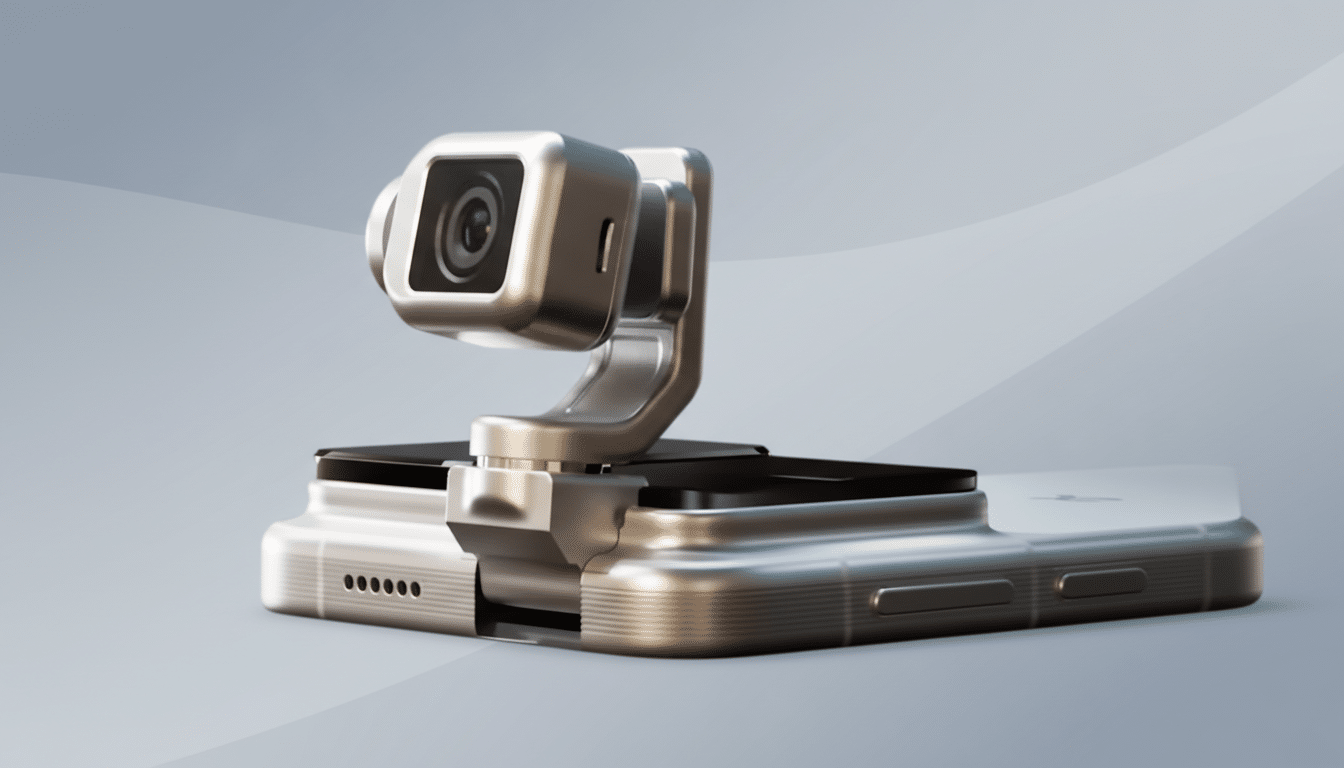
Honor is previewing a “Robot phone” with a movable camera module that doesn’t just pan and tilt for video—it can nod, shake its “head,” and even dance to a beat. Teased ahead of the industry’s annual gathering in Barcelona, the device is pitched as a mobile assistant with personality and is slated to arrive in the second half of the year.
A moving camera with personality and expressive motion
At the core is a compact robotic arm that animates the main camera. Honor says users can interact via text or voice, with the module offering expressive cues like nods and shakes while it listens, thinks, or answers. In a demo, the assistant weighed in on outfit ideas, signaling yes or no with subtle motions, before bouncing along to music when prompted.
- A moving camera with personality and expressive motion
- Gimbal hardware and cinematic tricks for creators and pros
- Smarter video calls with real panning, tilting, and tracking
- Inside the mechanism driving Honor’s four-degree-of-freedom gimbal
- Why this moving-camera approach could matter for phones
- Ecosystem and launch plans alongside Honor’s new devices
- What to watch next as Honor prepares release details
Gimbal hardware and cinematic tricks for creators and pros
The phone’s primary shooter is a 200-megapixel sensor mounted on a three-axis gimbal that the company says delivers smoother capture than typical lens-shift or electronic stabilization. A Super Steady mode targets action footage, while a Spinshot function can rotate the camera by 90 or 180 degrees for whip pans, orbit shots, and creative transitions straight from the native app.
For creators, a mechanical gimbal changes what’s possible handheld. Walk-and-talk vlogs, low-angle slides, or parallax moves usually require a separate rig; here, the phone can physically reframe without cropping away resolution. That can reduce rolling shutter artifacts and preserve detail compared with purely software-based stabilization.
Smarter video calls with real panning, tilting, and tracking
The robotic camera also doubles as an on-device cameraman for calls, using AI tracking to follow faces and bodies. Think of Apple’s Center Stage—but with real panning and tilting rather than digital reframing. That could keep a presenter centered at a whiteboard or track a child who won’t sit still, minimizing the “zoomed-in” look common to software-only solutions. Similar ideas have shown up in smart displays and conference cams from major brands, but not packaged into a mainstream phone.
Inside the mechanism driving Honor’s four-degree-of-freedom gimbal
Honor says it developed a custom micro motor to drive the module and borrowed manufacturing know-how from its foldable hinges to fit what it describes as a four-degree-of-freedom gimbal into a standard handset footprint. The robotic arm reportedly uses the same material as the Magic V6 hinge, rated at 2,800 MPa tensile strength—figures associated with ultra-high-strength steels intended to resist deformation.
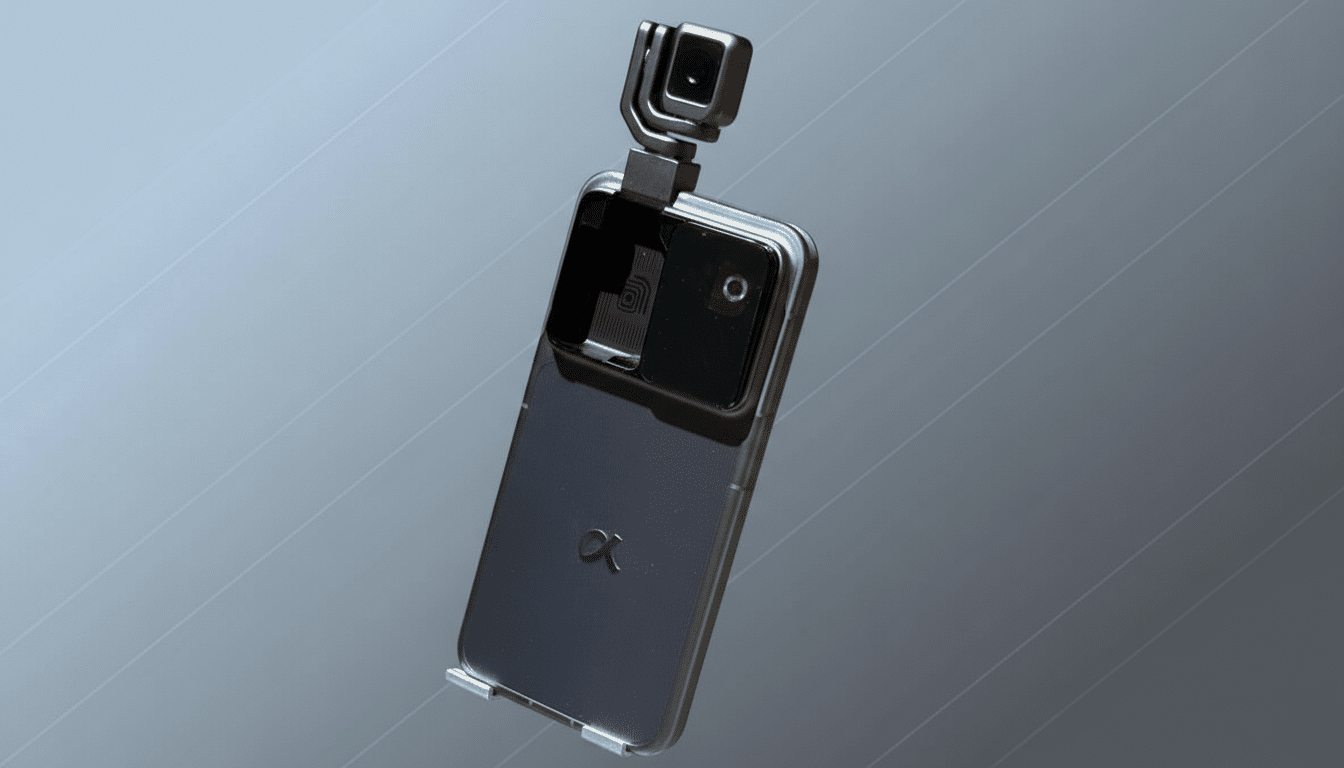
Moving parts bring practical questions. Buyers will look for drop resilience, dust and water ingress protection, and long-term wear guarantees. Power and heat are also in play; motors and continuous tracking can draw current and warm up the chassis. Honor has not yet detailed duty cycles, thermal limits, or the cost and ease of servicing the module if it’s damaged.
Why this moving-camera approach could matter for phones
Smartphone imaging has plateaued around larger sensors, pixel binning, and computational magic. Hardware motion is a bolder swing. Vivo popularized miniature gimbal assemblies in its X series, while earlier pop-up cameras briefly solved notch fatigue before fading over reliability and ingress concerns. Honor’s bet is that motion—if made robust—unlocks clear value for creators and power users.
The market signal is there. Cisco’s Visual Networking Index has long estimated that video accounts for roughly 80% of consumer internet traffic, and short-form platforms set a high bar for stabilization and tracking. Independent tests such as those by DXOMARK routinely reward steady footage and subject lock, so a phone that physically moves its optics could test well and, more importantly, simplify everyday shooting.
Ecosystem and launch plans alongside Honor’s new devices
Honor says the Robot phone will debut in the second half of the year. Alongside the tease, the company introduced the Magic V6 foldable with a 6,600 mAh battery, plus a new MagicPad tablet and MagicBook 14 laptop. Foldables remain one of the few growing segments in an otherwise flat handset market, with firms like Counterpoint Research noting recent double-digit shipment gains—a backdrop that explains Honor’s appetite for hardware experimentation.
What to watch next as Honor prepares release details
Pricing, battery life impact, and developer access will determine whether this is a headline feature or a new category. Will third-party apps get APIs to choreograph the gimbal for creative moves? Can users fine-tune or mute the assistant’s gestures for work calls? And what safeguards exist to prevent accidental movement near faces or in pockets? If Honor delivers reliability and smart software, the Robot phone could push rivals to revisit moving optics—and bring a dash of robotics to daily mobile computing.