


Hinge is updating its enforcement playbook to take a less sweeping approach, moving away from one-strike account bans toward more measured penalties that target the particular content at issue. Rather than booting someone because of a single policy violation, the app will now add a flag to the offending text or image, explain why it’s taking issue with it, and temporarily hide the profile from the Discover feed for as many as three days (or until you’ve fixed things up). Repeat or extreme violations can still result in a ban, but the norm is now correction, not banishment.
Why Hinge Has Altered Its Content Enforcement Policies
Dating apps have faced increasing scrutiny over their lack of meaningful moderation, with users reporting everything from surprise profile bannings to little insight into why they were banned in the first place. Trust and safety teams have for years urged clearer notices and remedies. The Santa Clara Principles on transparency and accountability, which are endorsed by many digital rights organizations, call for in-depth explanations when content is taken down. Concurrently, regulatory pressures — from the EU’s Digital Services Act to the UK’s Online Safety Act — are pushing platforms to be more transparent about decisions and proportional in their responses.
- Why Hinge Has Altered Its Content Enforcement Policies
- How the New Flagging System Works Across Hinge Profiles
- What Gets You Banned Under Hinge’s Updated Enforcement
- Wider Dating Industry Context And Competitor Moves
- Safety, Trust And Measurable Impact For Hinge Users
- What You Should Do Now To Keep Your Hinge Profile Safe
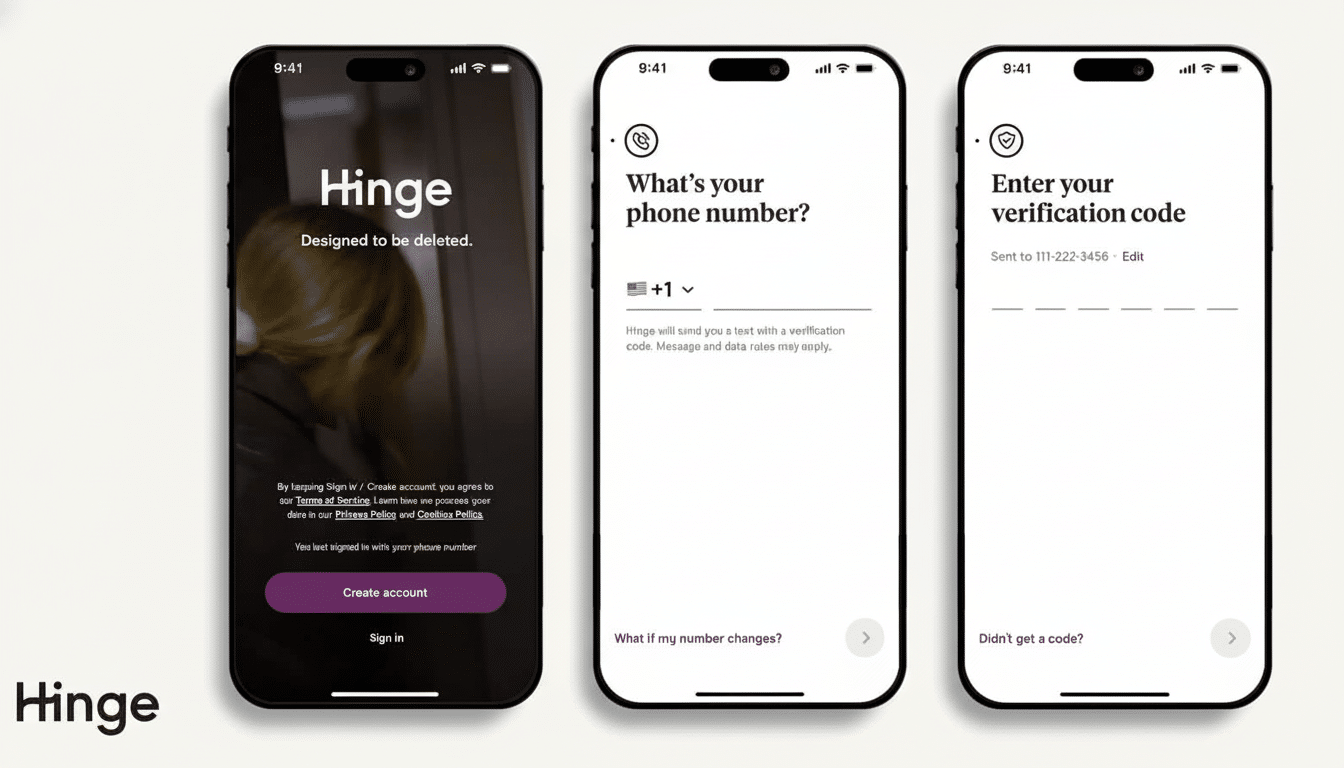
Hinge’s change reflects the fact that not every mistake deserves a life sentence. It is an effort to separate good-faith users who make fixable mistakes from the bad actors that engage in harassment, fraud, or other harmful behaviors. Clear guidance, coupled with graduated enforcement, can lead to better compliance without dulling the tools of safety. The Trust & Safety Professional Association has observed that clear guidelines and light-touch enforcement generally result in better adherence while also preserving safety features.
How the New Flagging System Works Across Hinge Profiles
When a profile item violates the rules, Hinge will take down or blur that piece of content and send both email and push notifications about it, as well as surface an in-app prompt explaining what went wrong and how to fix it. During that window, the profile remains live but is invisible to Discover so users don’t get penalized in perpetuity for tweaking. After the issue is fixed, you can see everything again.
Hinge’s community guidelines, meanwhile, prohibit the usual things that dating apps do: explicit or sexually suggestive images, harassment and hate speech, misrepresentation, attempts to use the app for phishing scams, and so on. By identifying the specific violation — maybe it’s a photo that crosses from nudity into pornography or a prompt with banned contact info — enforcement is less of an all-or-nothing approach and instead becomes a guided edit, not a straight lockout.
What Gets You Banned Under Hinge’s Updated Enforcement
Graduated responses don’t require mercy when serious harm has been done. Users who accumulate multiple violations or commit serious violations can still be banned from their accounts, Hinge says. Among those are things like threats, hate speech, organized harassment, or fraud; the third-time poster of a revenge porn image is out of luck. The model, in other words, separates the fixable from the intolerable — and escalates accordingly.
This balance is key. Too-harsh bans can penalize honest mistakes and generate distrust, while weak enforcement risks misuse. A targeted system minimizes false positives and creates a margin of allowance, without allowing bad actors to stay.
Wider Dating Industry Context And Competitor Moves
Hinge’s parent company, Match Group, has invested in safety and security throughout its entire portfolio, and competitors are on similar trajectories. A number of dating apps in India like TrulyMadly and Bumble have revised their practices recently, with TrulyMadly adopting account verification and spam control while Bumble was one of the few to automatically block obscene messages. But the objective is the same: Reduce bad behavior without creating collateral damage for legitimate users.
The stakes are real. The Federal Trade Commission says romance scams caused more than $1 billion in losses last year, with social and dating apps providing “a hunting ground” but also an efficient way to test victims before landing on bigger prey. That chilling atmosphere forces platforms to stand guard — but when vigilance lacks precision, they risk alienating users and subverting the reporting process. By delivering concrete notices and a road to redemption, Hinge is betting that it can not only keep users safer but also better informed along the way.
Safety, Trust And Measurable Impact For Hinge Users
Trust and safety practitioners frequently find that detailed notices increase the rates of remedial action — when people know exactly what to change, they change it. More targeted enforcement can also cut down on support tickets and appeals — a headache for platforms when one wrong ban can lead to days of back-and-forth. If Hinge’s approach cuts down false positives and speeds resolutions, it might be able to boost both its safety metrics and user retention.
What You Should Do Now To Keep Your Hinge Profile Safe
Users should do a quick audit of the profiles they see, too:
- Scrutinize photos for anything that might be borderline under these apps’ standards.
- Refuse to share contact information on the site.
- Steer clear of any conversation trigger that seems even remotely harassing or discriminatory-sounding.
- When you receive a flag, fix that item fast — getting back into Discover as soon as possible helps restore visibility in the feed.
- Continue reporting suspicious actions — successful moderation involves both automation and community vigilance.
That alone won’t make all moderation controversies disappear, but it changes the way enforcement is framed: around clarity and proportionality. In a category where safety and fairness are both nonnegotiable, that’s a significant step forward — and one that others will probably watch closely.