


Electric truck maker Harbinger has acquired Phantom AI, a Mountain View–based developer of advanced driver-assistance software, in a move aimed at tightening vertical integration and opening a new licensing business alongside its medium-duty EV platform. Terms were not disclosed, and Phantom AI’s roughly 30 employees, including its leadership team, will remain in place.
Why Phantom AI Matters for Harbinger’s Medium‑Duty EVs
Harbinger has focused on Class 4–6 electric chassis for last-mile delivery, vocational fleets, and urban logistics—segments where safety tech often lags passenger cars. Many medium-duty trucks still ship without features such as lane keeping or automatic emergency braking, despite operating amid pedestrians, cyclists, and frequent stop‑and‑go traffic. That gap is precisely where Phantom AI’s camera- and radar-based stack fits.
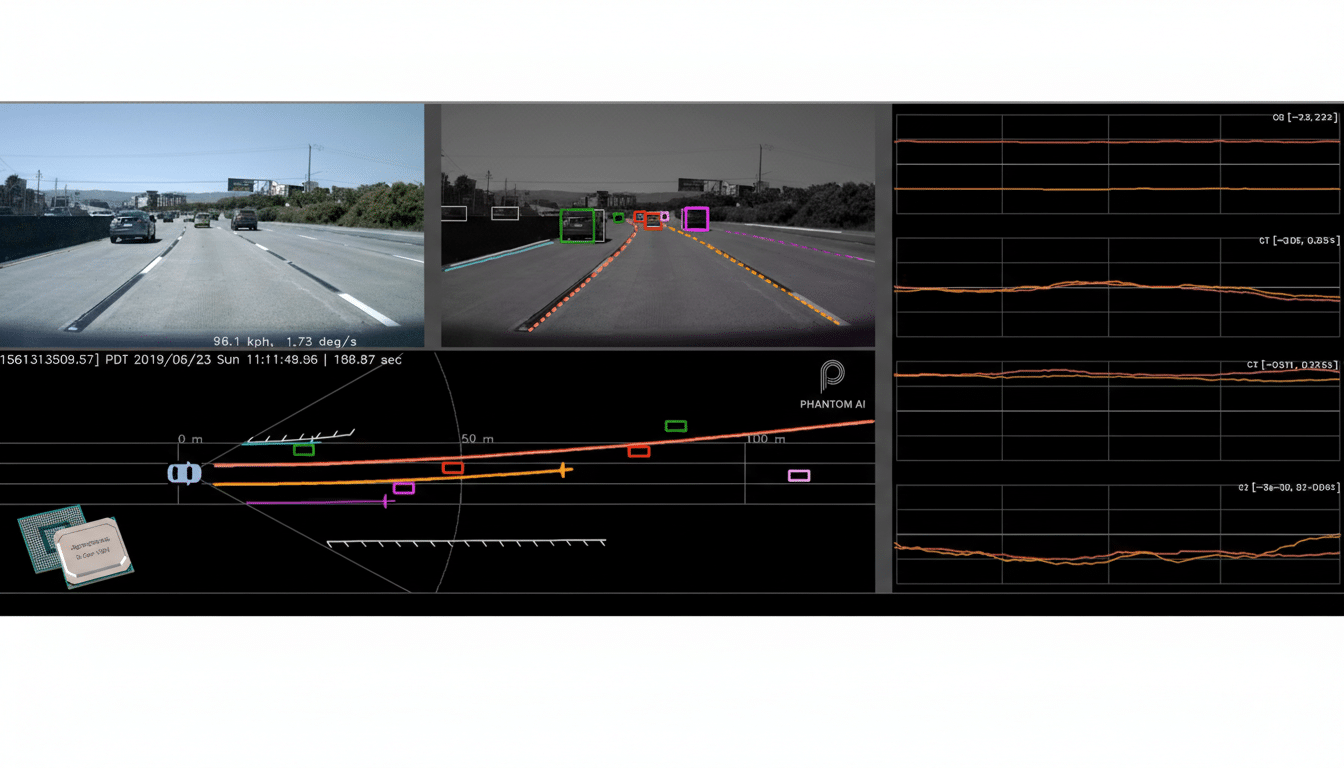
Independent research has consistently tied these systems to real-world crash reduction. The Insurance Institute for Highway Safety, for example, has reported that vehicles equipped with front automatic emergency braking cut rear‑end crashes by around 50% and reduce injuries even further. Bringing those capabilities to delivery routes and depot yards could be a meaningful lever on total cost of ownership—fewer collisions, lower downtime, and better insurance outcomes—on top of the operational savings Harbinger already touts with electrification.
Harbinger had already been using Phantom AI’s software on its platform; owning the stack should accelerate performance tuning for commercial duty cycles: extended idling with frequent starts, tight turning in yards and alleys, and payload‑dependent braking dynamics. Expect tighter sensor fusion calibrations for tall frontal profiles, low‑speed pedestrian and cyclist detection around loading zones, and feature sets prioritized for fleet managers—think safety telemetry and over‑the‑air configuration rather than consumer infotainment.
Licensing Path Through ZF Group Targets Passenger Cars
In a notable twist for a truck startup, Harbinger has already lined up a downstream path for Phantom AI’s tech: ZF Group, one of the world’s largest automotive suppliers, will license the software for passenger-car programs. ZF brings scale, established OEM relationships, and a broad sensor and compute portfolio, positioning the combined offering as a modular ADAS package that automakers can integrate within existing electrical architectures.
For Harbinger, the ZF agreement is more than a validation—it’s a second business line. Automotive software margins tend to be structurally higher than hardware, and analysts at firms like McKinsey have projected that ADAS and automated-driving software could represent tens of billions in annual revenue industrywide by the end of the decade. If licensing ramps as planned, the deal diversifies Harbinger’s revenue beyond chassis sales, smoothing the hardware cyclicality that has challenged many commercial EV entrants.
Safety As A Competitive Edge In Medium-Duty
Commercial buyers increasingly weigh safety technology as a line‑item ROI calculation. Forward-collision mitigation, lane keeping, blind‑spot detection, and 360‑degree surround view translate directly into avoided claims and fewer out‑of‑service events. Fleets also face growing pressure from major insurers and corporate safety policies to standardize on higher-spec vehicles. By embedding Phantom AI’s stack, Harbinger can package these features as standard—or fleet‑configurable—across municipal, parcel, beverage, and shuttle applications.
Regulatory momentum adds tailwind. U.S. safety regulators have advanced proposals to make automatic emergency braking standard across vehicle classes, while the European Union’s General Safety Regulation is already phasing in requirements for features like AEB and lane keeping in new models. Even where mandates are not yet in force for medium‑duty trucks, procurement teams increasingly align to those benchmarks, especially for urban operations.
A Broader Vertical Strategy Takes Shape at Harbinger
The acquisition caps a broader strategy to monetize Harbinger’s core technologies beyond truck sales. Recently, the company began offering its battery systems for energy storage and auxiliary power, with Airstream named as an early customer. Combining a batteries‑as‑a‑product line with software licensing creates a three‑legged model—chassis, energy systems, and ADAS—that spreads risk and taps multiple profit pools within transportation and adjacent markets.
Operationally, the arrangement preserves Phantom AI’s Silicon Valley footprint while plugging its roadmap into Harbinger’s vehicle programs. That structure mirrors playbooks used by larger automakers when absorbing software specialists: keep the talent concentrated, maintain release cadence, and align feature priorities with vehicle integration milestones.
What to Watch Next as Harbinger Integrates Phantom AI
Key markers to track include validation of Phantom AI features on Harbinger pre‑production builds, early fleet feedback on crash reductions and driver satisfaction, and evidence of over‑the‑air update velocity. On the licensing front, watch for ZF program announcements that bring Phantom AI software into volume passenger models, as well as signals that insurers are recognizing ADAS‑equipped medium‑duty EVs with favorable rates.
If Harbinger can translate integrated safety into measurable savings for fleet operators—while turning ZF‑enabled licensing into a recurring revenue stream—the acquisition could become a template for how commercial EV startups scale beyond the chassis and win on software as much as hardware.