


A hardware hacker has shoved the “Will it run Doom?” meme into uncharted territory, pressing a bubble-gum vaporizer to screen gameplay from the 1993 classic. The catch: it’s not running natively. Instead, it mirrors a PC feed at a surprisingly usable clip, transforming the pocket-sized nicotine device into the world’s smallest external monitor.
How a $30 Vape Became a Little-Publicized Health Crisis
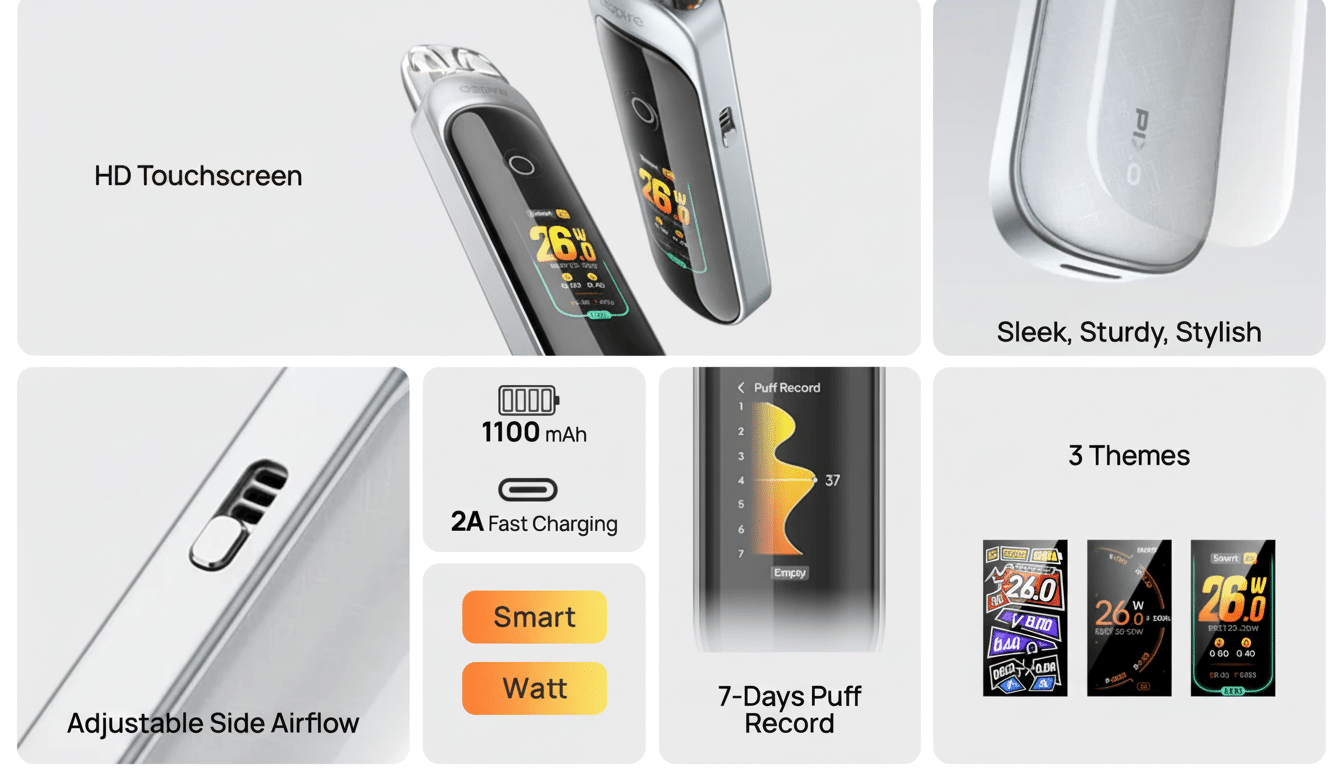
Security researcher and hardware hacker Aaron Christophel disabled the Aspire Pixo Kit, a roughly $30 e-cigarette known for its 1.5-inch color touchscreen. By flashing custom firmware onto the device and tethering over USB, he was able to get a basic screen-share mode working that sends frames from a PC over to the vape’s display. In the demos, Doom was rendering at roughly 6 frames per second — slow, but fair enough to illustrate his point and make people take notice.
- How a $30 Vape Became a Little-Publicized Health Crisis
- A closer technical look at the Aspire Pixo Kit hardware
- Why Native Doom on This Vape Isn’t Possible Yet
- Doom’s Everywhere Story Has Another Chapter to Go
- What This Hack Could Mean for Hobbyists and Tinkerers
- The Bottom Line on Doom Mirroring to a $30 Vape

The firmware tweak isn’t just letting you display Doom. Open the display path, and it can also double as a second ultra-small display for anything on your connected computer: system stats, a video clip, or even just lines of text rolling up a terminal. It’s a clever reuse of a consumer device with more UI power than it requires for its day job.
A closer technical look at the Aspire Pixo Kit hardware
What makes the Pixo unique is it’s not just a battery with some coils. Powering the color touchscreen and user interface is a 32-bit Arm-based microcontroller from the PY32F403 family. That’s an unusual capability in a cheap vape, and it’s exactly what Christophel exploits: the chip has the ability to accept and push pixel data fast enough to mirror a low-resolution video stream.
Most importantly, you can replace the display firmware—if you know where to find that and how to talk to the controller. Christophel’s project has the device recognized over USB and delivering a series of frames, which are then rendered by the vape on its mini screen. Input is still on the PC side; the vape screen is display-only in this mod.
Why Native Doom on This Vape Isn’t Possible Yet
“Running Doom” usually implies that there is a full port running on a device’s CPU and RAM. That’s not feasible here—for now. Christophel points out the vape includes some 64KB of RAM. The initial DOS version of Doom was aimed at a system with about 4 MB RAM and a 386 CPU, while players expecting embedded ports do just fine with the megabytes of RAM… and storage… and optimization that come with them today.
In short, the vape’s chip has graphics capabilities, it can “draw” pixels—but to port over the classic game, it would need a data structure for each of those 32×48 sprites referenced above (a big set of columns—followed by a number that sorts), an audio mixer handling three or more channels, and some rendering mechanism without killing CPU or video performance. Here, screen mirroring is clever elbow grease: offload the heavy lifting to his PC and use the vape as a ditzy monitor. Christophel has dropped hints that he might try a native build on alternate hardware further down the track.
Doom’s Everywhere Story Has Another Chapter to Go
From smart fridges to e-readers — and, yes, even that “pregnancy test” gag — Doom’s portability has essentially become a decades-long challenge for hackers. Some of this is cultural — id Software’s decision to release the Doom source code contributed to a lively porting scene that treats new hardware as puzzles, not obstacles. It’s also technical: the game engine is slim and predictable, well-understood and an excellent forecast for embedded experiments.
Christophel’s vape project is special in the sense that it retrofits a mass-market, non-computing device to serve as a tiny reborn monitor.
Forget about how well you can play Doom and start wondering how much potential is lurking in all manner of common hardware — from microcontrollers with an RGB LED to a color touch panel — that we never even suspected could become hosts for this demon killer once the fire hose of open source software snuffed out custom firmware.
What This Hack Could Mean for Hobbyists and Tinkerers
For the easily addled, diagnosing the latest techno-moral panic is not a simple matter. It’s that a budget device with a modern UI stack also can be used as a micro display for PC projects. Think real-time CPU temps, sensor readouts, or notification badges — and you don’t need to buy a dedicated external screen.
There are clear caveats. People flashing unofficial firmware are also rolling the dice that they won’t brick their device, void their warranty, or, in a worst-case scenario, create potential safety hazards around lithium-ion cells. But anyone tempted to try and replicate the feat should take all due caution and proper tooling. Security researchers and right-to-repair activists have argued for years that unlocking firmware — even when done for playful stunts like this one — provides useful insight into the potential and limitations of consumer hardware.
The Bottom Line on Doom Mirroring to a $30 Vape
It’s not native, it’s not quick, and it’s not sensible — but that doesn’t matter. Much like a beloved bunch of hardware hacks, this project takes what you learn about the device and puts it into something delightfully unexpected: converting a $30 vape into a 1.5-inch Doom display.