


Google is extending its multimodal Gemini assistant to the largest screen in the house. With Gemini for Google TV and Android TV OS, the company is aiming at more conversational interactions around what’s playing on a living-room display than have been possible before, from casual voice commands to help viewers find something to watch or catch up on an episode of something they follow, as well as asking open-ended questions without having to reach for their smartphone.
Google claims the rollout will cover hundreds of millions of devices, available on over 300 million active Google TV and Android TV OS installs already in the market. It’s an effort to fuse generative AI into everyday viewing, in the space where decision fatigue is found amid modern streaming.
- What Gemini on TV really alters for viewers
- Assistant remains; Gemini provides deeper context
- First partners and supported models rollout
- Why have AI on the biggest screen at home
- How it stacks up against rival TV platforms
- Privacy, control and family use on Google TV
- What’s next for developers and streamers on TV
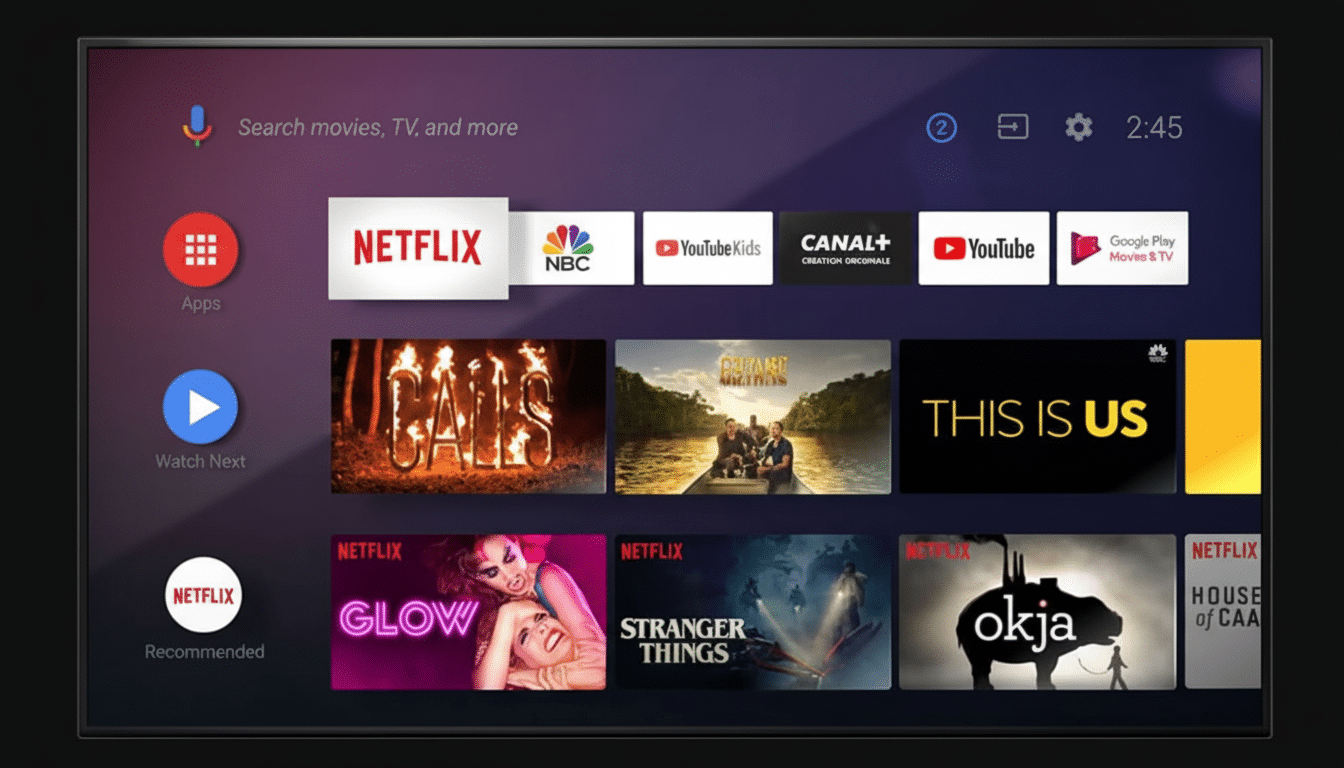
What Gemini on TV really alters for viewers
While traditional voice assistants are great at responding to specific commands, Gemini can handle sloppy, conversational prompts. For instance: “Find a comedy we’ll both like — one of us is really into dry humor, the other adores heists,” or “What did I miss in season two of my show before I watch the finale?” It can also be useful if you don’t remember the title — “the space thriller with the twist ending” — or translate review sentiment to see whether something is worth giving your whole night for.
Since Gemini is a general AI, it is not restricted to TV-related questions. Families can watch content in the background or browse while they plan a science fair project, road trip, or get step-by-step instructions for projects around the house.
Assistant remains; Gemini provides deeper context
Most crucially, Google is not ripping out the comfortable. Google Assistant capabilities you’re already using — “open Netflix,” “turn off the lights” or “pause,” for example — are still around. Gemini adds an additional layer on top for those more open-ended and discovery-laden tasks that push the back-and-forth communication that typically lands people in their phones.
Operationally, that means you still tap out commands and they fire fast, but if you need nuance, Gemini is there: multi-criteria searches, context-aware catch-up looking for entertainment and general knowledge, or exploratory searches blending the two.
First partners and supported models rollout
The first rollout will begin on TCL’s QM9K series with a phased expansion to follow. Google’s listed more supported hardware, such as the Google TV Streamer, Walmart’s onn. 4K Pro, Hisense U7, U8 and UX models, and TCL QM7K, QM8K and X11K lines. However, like anything new in the platform age, features will mature over time as Google fine-tunes across device tiers.
And this isn’t just one OEM or geography. By embedding Gemini within Google TV and Android TV OS, the company is positioning AI as an operating system-level foundation that walks alongside it — not a niche add-on designed for one or two high-end models.
Why have AI on the biggest screen at home
The timing is strategic. Streaming in the U.S. has eclipsed traditional linear TV viewing, according to Nielsen’s The Gauge, but discovery is still unbearably elusive. Industry surveys such as TiVo’s Video Trends reports consistently find viewers spend roughly 10 minutes choosing what to watch, and fragmentation across apps has only made the problem worse.
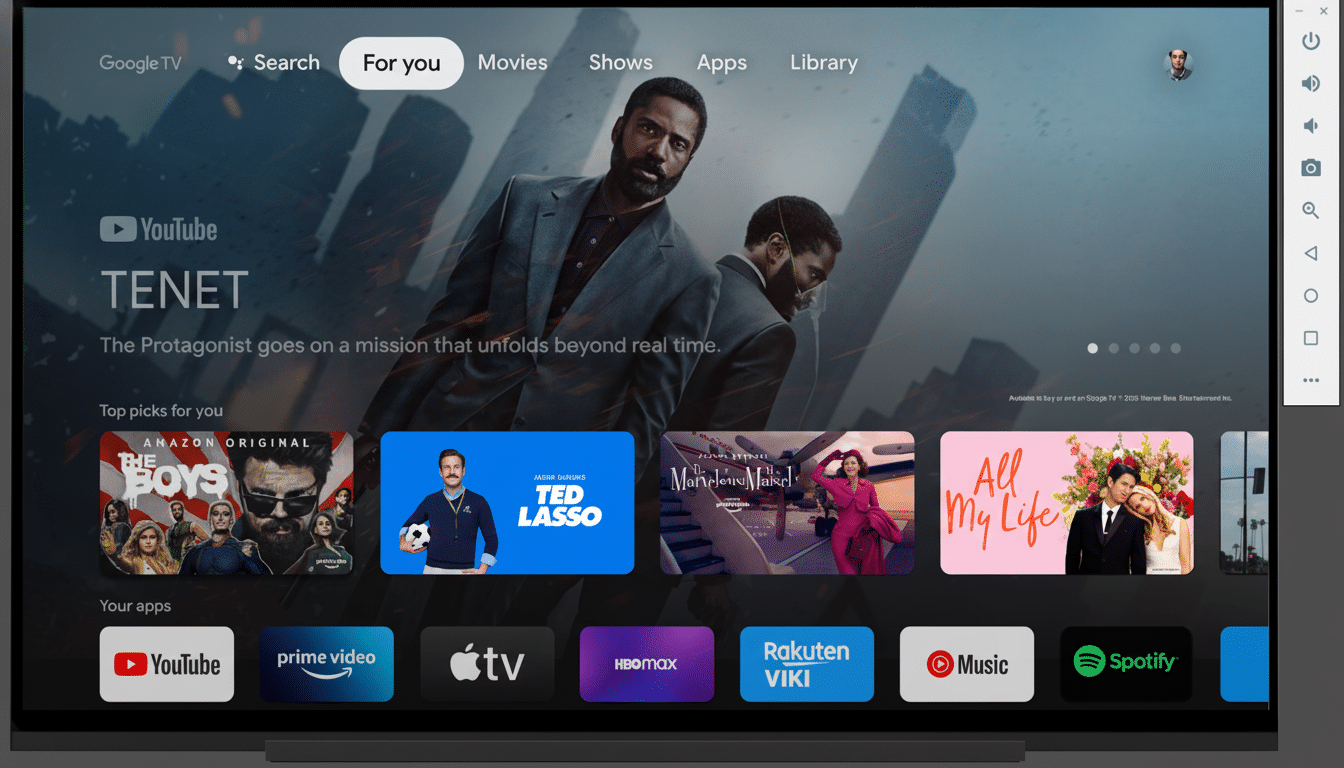
Gemini says it will shrink that decision loop. If the assistant can make sense of preferences across profiles, know when we’re in a mood, and surface cross-app options with context — trailers, critic consensus and “if you liked x, watch y because …” logic — it can shave minutes off every session and take users to better-fit choices.
For Google, the living room is as much about retention as acquisition. The more indispensable universal search and voice get, the more viewers will stay on the platform’s home screen versus elsewhere, which benefits content partners in curation and Google with additional engagement signals.
How it stacks up against rival TV platforms
Amazon promoted conversational search on Fire TV with Alexa, and Apple’s tvOS has come to depend on Siri for quick lookups. Here, the difference is Gemini has generative breadth, and Google has a vast knowledge graph. If it can braid plot summaries, cast background, local availability and individual taste into one flow, then Google TV has a defensible lead in intent understanding.
The competitive question is whether third-party apps adopt richer metadata hooks. And platforms that surface richer descriptors — tone, pacing, themes — effectively give AI more to chew over, increasing the accuracy of recommendations and voice results.
Privacy, control and family use on Google TV
Google is also doubling down on existing privacy controls first introduced with Google TV, such as account-level settings, microphone toggles at the remote control level, and kid-friendly profiles supported by parental features like Family Link. Like any other Gemini experience, long freeform questions and generative reasoning are typically handled in the cloud, while basic device commands stay light.
For households, that mix matters. A parent might request age-appropriate nature documentaries, or co-create a homework outline on the TV and then pass it off to a phone or tablet once they’ve finished working through it together. The assistant becomes a multiperson resource, rather than a single-user device slipping into and out of pockets.
What’s next for developers and streamers on TV
Google will no doubt proliferate Gemini’s hooks throughout universal search, watchlists, and contextual carousels. If the assistant can serve up episode recaps on command, understands natural-language intents such as “cozy, low-stakes shows after 10 p.m.,” and deep-links immediately into the correct app and profile — or, if there’s no account yet, just drop off a share-to-install referral code so it receives attribution for conversions that come later — conversion rates should lift. Ampere Analysis has observed better “discovery” pipelines and found that pipeline improvements correlate with greater session starts and lower churn — exactly the metrics streamers are worrying about.
The living room has always been a realm for reducing friction. If Gemini can make TV less like a grid of tiles and more like the Web, then Google may have found the clearest path for winning the remote control: meeting people where they already look for answers — on the biggest screen in the house.