


Google’s long-teased plan to let Android Auto run video apps while a car is parked appears to be moving forward, with a new beta hint suggesting the feature is getting closer to launch. It follows the company’s announcement at I/O 2025 that in-vehicle video playback would be added in a controlled, safety-first way.
New Android Auto beta flag hints at parked video playback
A fresh build of Android Auto, version 16.3.160744 in the beta channel, includes a telltale configuration flag labeled “CradleFeature__allow_video_apps.” While the toggle isn’t yet enabling video in the current beta, its presence signals active plumbing behind the scenes to support approved video experiences on the car display when the vehicle is stationary.
- New Android Auto beta flag hints at parked video playback
- Why parked video during charging stops matters for drivers
- Safety and policy constraints remain central for rollout
- How Google could roll out parked video apps in stages
- New clues point to a broader Android Auto UI refresh
- What to watch next as Android Auto video nears launch
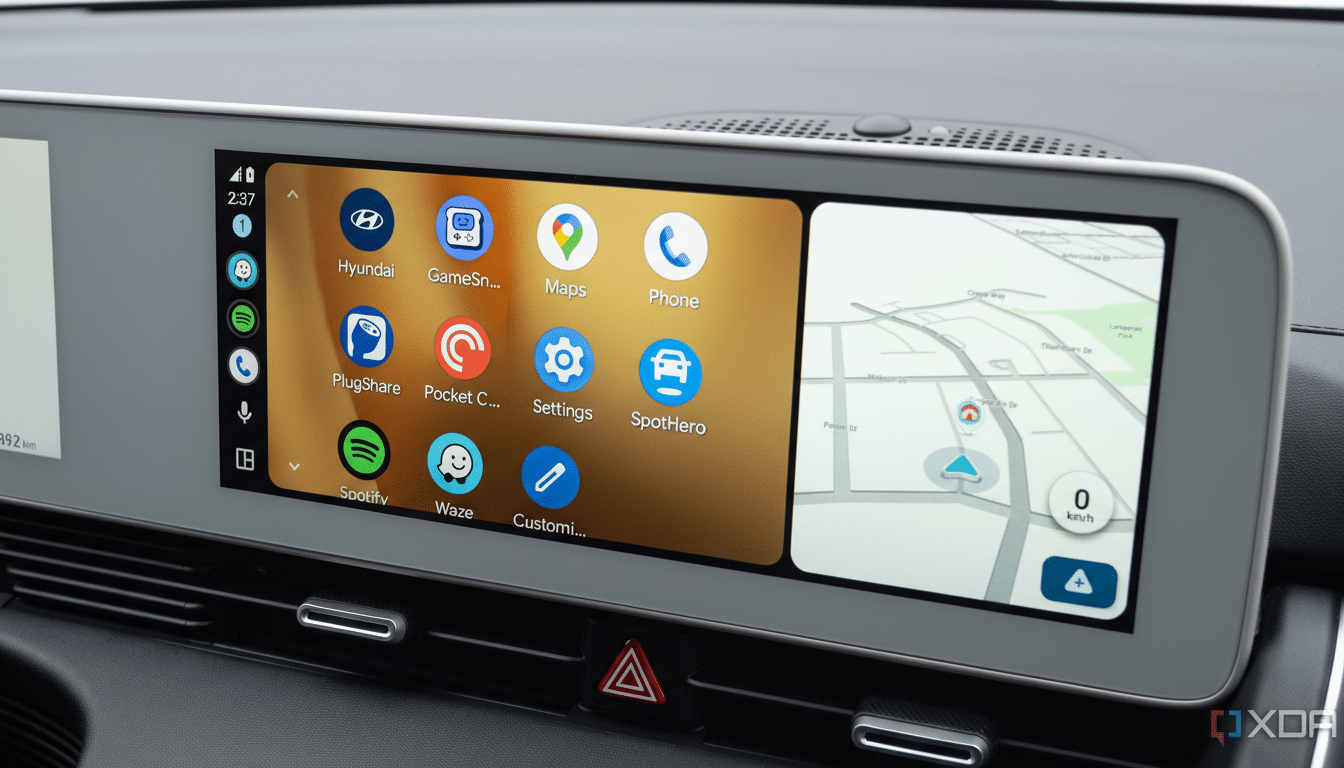
APK teardowns and hands-on testing show no end-user functionality yet, which is typical for features that require multiple layers of readiness: the host app, projection protocol, app category whitelisting, and parked-state verification all have to align. In practical terms, Google appears to be wiring up the hooks that will permit compatible streaming or playback apps to surface in Android Auto only under the right conditions.
Why parked video during charging stops matters for drivers
Parked video fills a real downtime gap, especially for electric vehicle owners. DC fast-charging sessions commonly run 20–40 minutes depending on charger speed and state of charge, according to industry briefings from charging networks and automaker guidance. Giving drivers a sanctioned way to watch during those windows turns the center display into a legitimate entertainment screen rather than a static map.
The feature also aligns Android Auto with what’s already possible on Android Automotive OS with Google built-in, where cars from brands like Volvo, Polestar, and Renault support parked video through apps such as YouTube and Prime Video. It helps Google present a more consistent in-car media story across both embedded systems and phone-projected experiences.
Safety and policy constraints remain central for rollout
Expect strict safety gates. Google has consistently tied any visual-heavy in-car features to the vehicle’s gear and parking status, and that will almost certainly continue here. Parked-only playback dovetails with the US National Highway Traffic Safety Administration’s distraction guidelines and similar international rules that prohibit driver-viewable video while moving.
Technically, this likely means Android Auto will verify a stationary state via signals from the vehicle and lock playback the moment motion is detected. Some automakers already enforce similar guardrails for built-in video apps, and Google’s projection layer can piggyback on that logic to ensure uniform behavior regardless of brand.
How Google could roll out parked video apps in stages
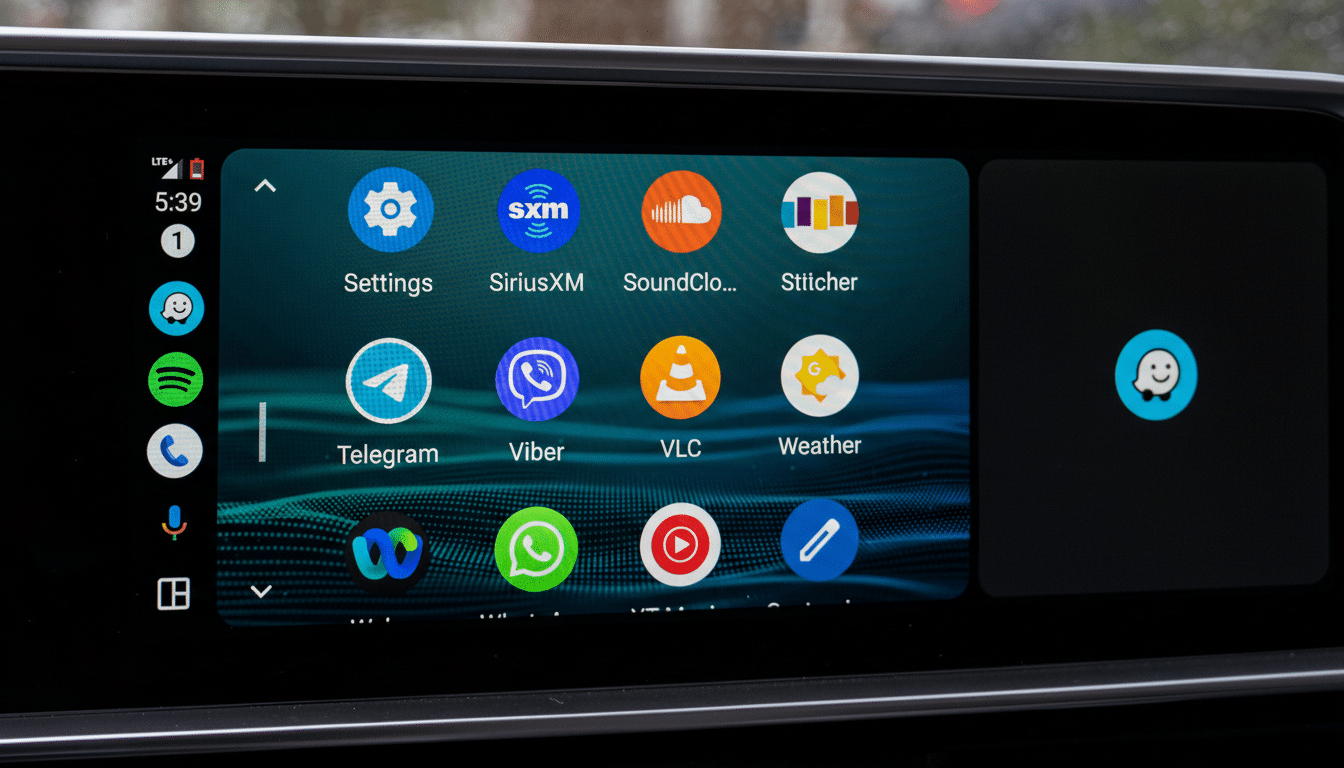
Google is poised to use its Car App Library to define a new, curated category for video in Android Auto, mirroring the approach used for navigation, media, and messaging. Early availability will likely be limited to a short list of partners with content optimized for touch-first, glanceable UI and quick-resume behavior—think short clips and streaming apps with robust pause and resume support.
There’s precedent for cautious, stepwise launches. When Google brought conferencing apps like Zoom and Webex to Android Auto, it initially offered audio-only participation and parked-only experiences before expanding functionality. A similar phased pathway for video apps would help Google validate safety, bandwidth, and UX considerations across a wide range of head units and cables or wireless connections.
New clues point to a broader Android Auto UI refresh
The same beta wave also references Android 16-style network icons in Android Auto and the ability to choose a driving avatar directly from the car interface. While smaller in scope, both point to continued polish and personalization on the dashboard, building on recent redesigns that emphasized split-screen layouts and contextual suggestions.
What to watch next as Android Auto video nears launch
Keep an eye on subsequent Android Auto 16.x betas for traces of UI surfaces that expose a video shelf or category, and for early partner listings in release notes. Because parked video crosses content licensing, regional rules, and automaker integrations, a staggered rollout is likely, with availability varying by market and model.
With EVs approaching roughly 8% of US new-vehicle sales based on recent industry tallies, the case for better parked-time entertainment is only getting stronger. The new beta flag doesn’t turn the feature on yet, but it’s a clear sign that Google’s promise of video apps for Android Auto hasn’t slipped off the roadmap—and that the last-mile engineering is underway.