


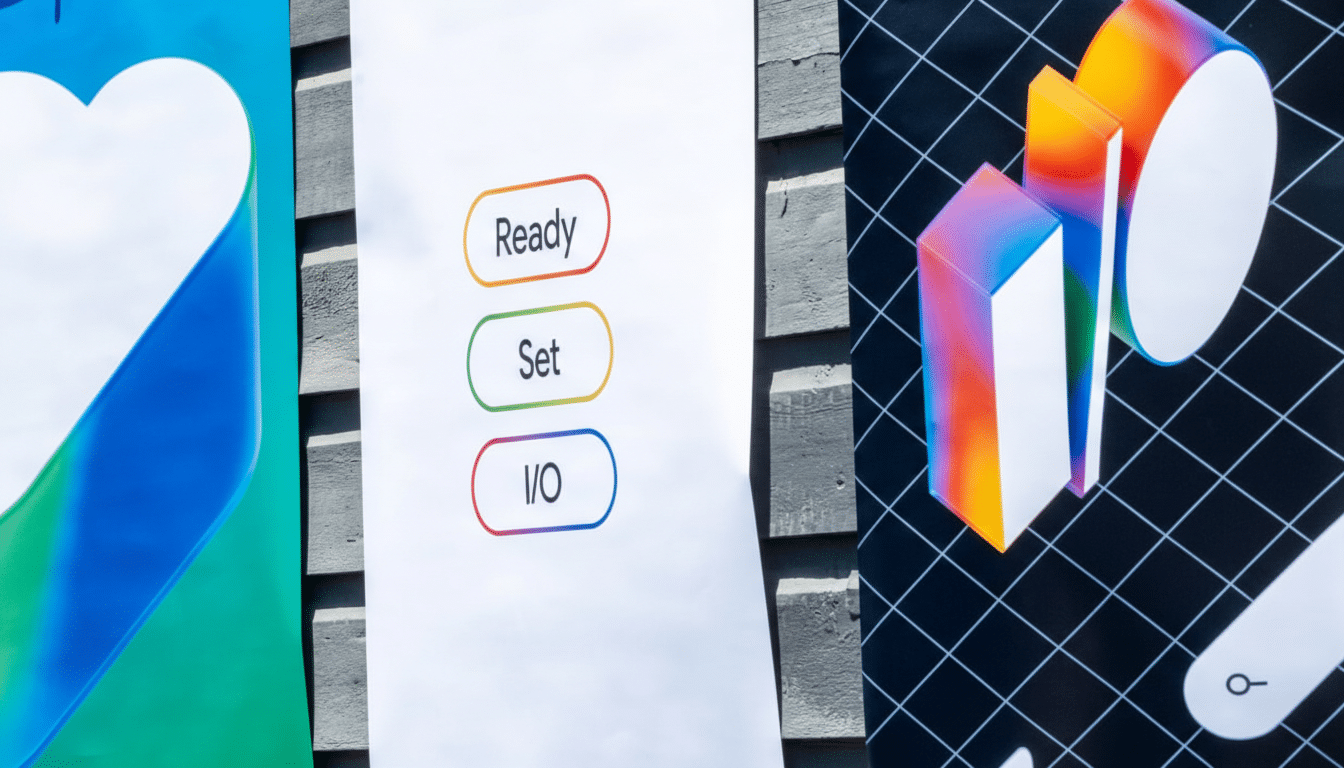
Google has locked in the schedule for its flagship developer showcase, confirming a two-day I/O event at the Shoreline Amphitheatre in Mountain View with a simultaneous global livestream. The company says attendees can expect keynotes, deep-dive technical sessions, and hands-on demos, with an explicit promise of “AI breakthroughs” spanning Gemini, Android, and the broader Google ecosystem.
What Google Confirmed About Its I/O 2026 Plans
The program will blend in-person keynotes at Shoreline with a full digital experience, mirroring the hybrid format that has become standard for I/O. Google is signaling a broad agenda: platform updates for Android and Chrome, advances in developer tools and cloud services, and new capabilities anchored by its Gemini family of models. Expect the usual mix of main-stage reveals followed by breakout sessions, code labs, and product office hours.
While the company isn’t previewing specific launches, it has been clear about priorities: multimodal AI that spans text, images, video, and audio; tighter integrations across Search and Workspace; and on-device intelligence that makes phones and wearables smarter without sacrificing privacy. Historically, I/O also brings fresh SDKs, beta builds, and updates to Google Play policies that matter for app monetization and compliance.
Why It Matters for Developers Building With AI
I/O has increasingly become an annual roadmap for Google’s AI strategy, and developers have been quick to adapt. Tools that compress workflows—from AI-assisted code generation in Android Studio to auto-generated UI assets and test scaffolding—are moving from experiments to everyday staples. That shift tracks with findings from the Stack Overflow Developer Survey and other industry research showing widespread interest in AI copilots and model-powered tooling across the software lifecycle.
Beyond productivity, the platform implications are significant. On-device models promise lower latency and stronger privacy guarantees, which could reshape how apps handle transcription, vision, and personalization. For mobile teams, that means new APIs, memory and performance considerations, and potential UX patterns that assume AI is available even when a device is offline.
What to Watch at I/O 2026 Based on Recent Trends
Android: Google typically uses I/O to spotlight the next Android release. Look for updates to privacy sandboxes, notification policies, background task limits, and generative UI features. Expect continued work on large-screen and foldable optimizations, along with performance and battery improvements to support always-on AI workloads.
Gemini Everywhere: After a year of rapid iteration, watch for more cohesive multimodal experiences that jump between phone, browser, and smart displays. Developers should expect clearer guidance on model selection, context management, and cost controls for inference, especially for apps that blend on-device and cloud execution.
Search and Commerce: With AI-powered experiences expanding inside Search and Shopping, advertisers and retailers will be looking for measurement transparency and brand controls. Google often pairs keynote demos with new policy details and analytics hooks, so keep an eye out for updates that affect attribution and feed quality.
XR and Spatial Computing: Google has hinted at XR frameworks aligned with Android and the web. Even without headline hardware, developer tools for spatial UX, hand tracking, and shared experiences could advance, particularly if they tie into Gemini’s perception capabilities.
Recent History Sets the Tone for This Year’s I/O
Last year’s I/O keynote ran close to two hours and was almost entirely AI-focused. Google detailed upgrades to its Gemini line—highlighting faster, more efficient models suited for both cloud and edge—unveiled new media-generation capabilities with Imagen and Veo, and rolled out AI-enhanced features in Search, Gmail, and Chrome. It also broadened shopping and translation experiences, including a reintroduced telepresence effort under the Google Beam brand.
The through line was unmistakable: AI as a platform layer, not a standalone product. This year’s early messaging suggests more of the same, with a stronger emphasis on developer ergonomics—SDKs, model tooling, safety guardrails, and documentation—so teams can move from prototypes to production with confidence.
The Big Picture for Developers and Everyday Users
Google I/O has evolved from an Android-centric gathering into a showcase for how AI threads through every layer of the company’s products. For developers, it’s the moment to parse which capabilities are mature enough to ship, which are still experimental, and how to budget compute and context windows without compromising UX. For everyone else, it’s a preview of where the search, productivity, and mobile experiences you use daily are headed next.
Google says the keynotes and technical sessions will be available to stream, with highlights published through its developer channels. If the past few years are any guide, the announcements will arrive fast—so plan to triage by platform and API area, and bookmark the talks that map directly to your roadmap.