


Google Play Games on PC has finally left its long-time beta state, making for a full launch of Google’s native option for playing Android games on Windows. (The latter hoping for confidence in performance, compatibility, and developer support.) Such a move provides PC players with a potentially credible official alternative to emulators.
What general availability actually changes
For its existing users, the client feels much the same — but having lost that beta label is important. It signals that with Project Fi, Google is in it for the long haul, and not just trying something out. The service is still available in over 130 countries, with account-based progression syncing with Play Games included.
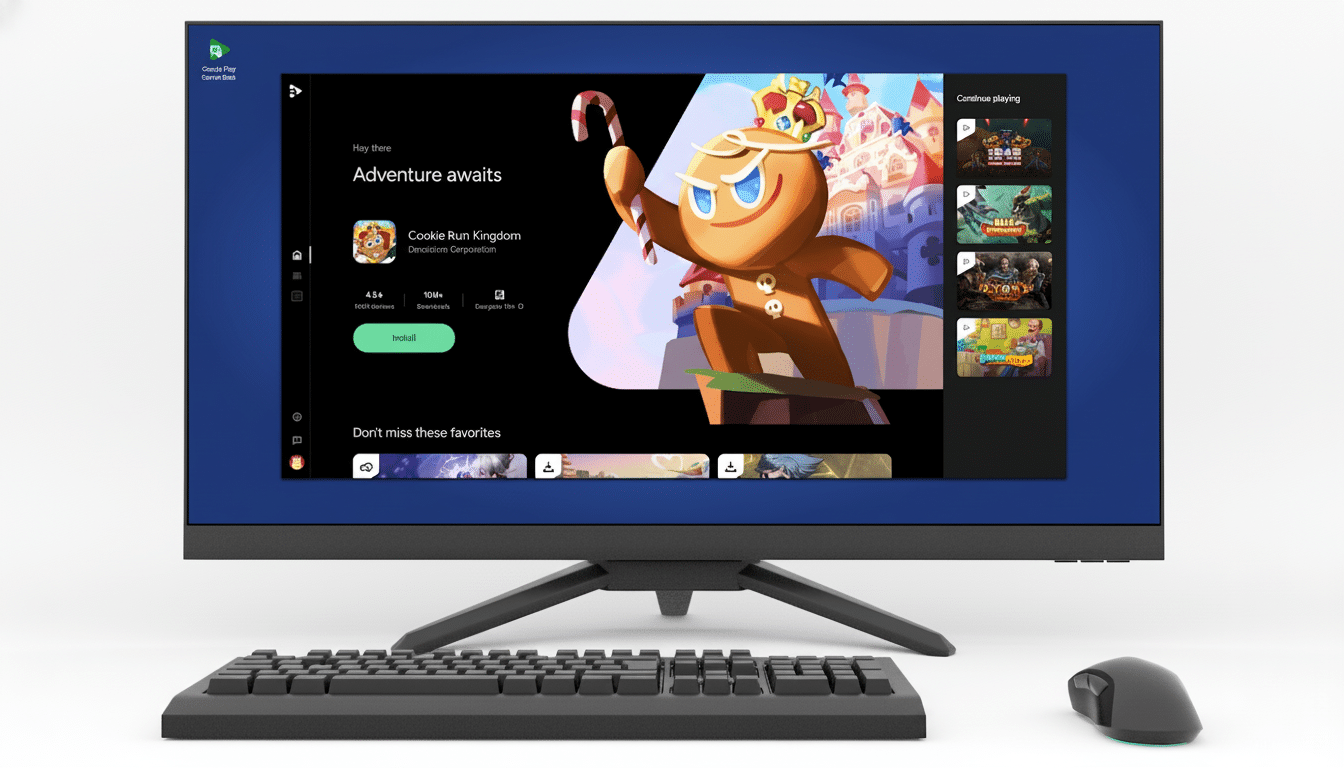
Cross-device continuity remains a tentpole draw: progress, achievements, and settings travel smoothly across Android phones, tablets, Chromebooks, and Windows PCs. Keyboard and mouse input is provided out of the box, while controller support ranges from native to none. Google has also released a more simplified stats and achievements hub, as well as generative AI avatars for player profiles.
A much larger library, optimized for PC gaming
The catalogue now counts well over 200,000 titles. And that scale represents a move from an almost-curated list to a very open one, making it much easier for significantly more games to run on PC with the least work possible on developers’ part. Genres that are most enhanced on a desktop — strategy, MOBAs, shooters, city-builders — receive proper keyboard mappings and get full-screen or windowed support.
Google’s architecture puts the devices behind a container that normalizes profiles, so developers with limited resources do not have to create a separate PC port for this Windows target. That translates into lower engineering lift and marketing leverage for studios — a single codebase across form factors, as well as the opportunity to re-engage users who have lapsed on PC without needing to create a whole new distribution channel.
Why this is significant in the current PC climate
Windows folks have long turned to third-party Android emulators, which can be robust but may also need some fiddling and sometimes don’t play nice with anti-cheat, input latency, or update cadence. When Play Games services, cloud saves, and Play Billing are involved in a product that is using our billing system, we think these types of frictions should go away, and there needs to be an official way for publishers who actually have all the boxes checked, as we do with Google Play PC games.
And the timing is noteworthy, too. As the Windows Subsystem for Android winds down, Google Play Games on PC becomes the most direct way to play Android games natively in Windows. That translates into less of “Will It Work With My Stuff?” for players. For developers, it’s a solid target to build on, backed by Google’s distribution, safety checks, and account infrastructure.

Mobile games make up roughly half of global game revenue, industry analysts at Newzoo have estimated. Bringing those experiences to PC can help boost lifetime value and retention by meeting users where they are, particularly in places where a phone is the main gaming device but PCs act as a second screen for long sessions.
Performance, features, and system requirements
The PC app aims to enable smooth performance on virtually all hardware. Google suggests a modern multi-core processor, 8GB of RAM, plenty of disk space, and virtualization to be supported in the hardware. Supported are integrated graphics on recent processors, and discrete GPUs help maintain a higher and more stable frame rate. An SSD is a strong recommendation for quicker load times and updates.
On the feature side, you can look out for continued work on input customization, resolution scaling, and window management. High-refresh monitors and wide aspect ratios are already widely supported, and Google’s underpinning key mapping layer is becoming increasingly robust to support more elaborate control schemes like those often deployed in shooters and competitive games.
What to watch next for Google Play Games on PC
With the launch, our next milestones become less about core plumbing and more about ecosystem depth:
- Deeper integration with Play Points
- Broader support for controllers
- Faster update pipelines serving top-grossing games
- Better discovery features for desktop behavior
For now, the message is one of commitment: Google is moving beyond test mode and committing to Play Games on PC as a permanent part of its gaming stack. It’s good news for players looking for mobile-first games on a larger screen and studios that want to grow without fragmenting their builds across yet another store.