


Google is revamping how you find apps on the Play Store with a pair of additions: curated Spaces that feature specially themed content, and an AI-guided Search that recognizes everyday phrases. Combined, they hope to cut down on the clutter and ensure that the right apps and media surface sooner throughout a catalog that industry trackers like AppBrain estimate it contains well over three million listings.
What Play Store Spaces are and how they guide discovery
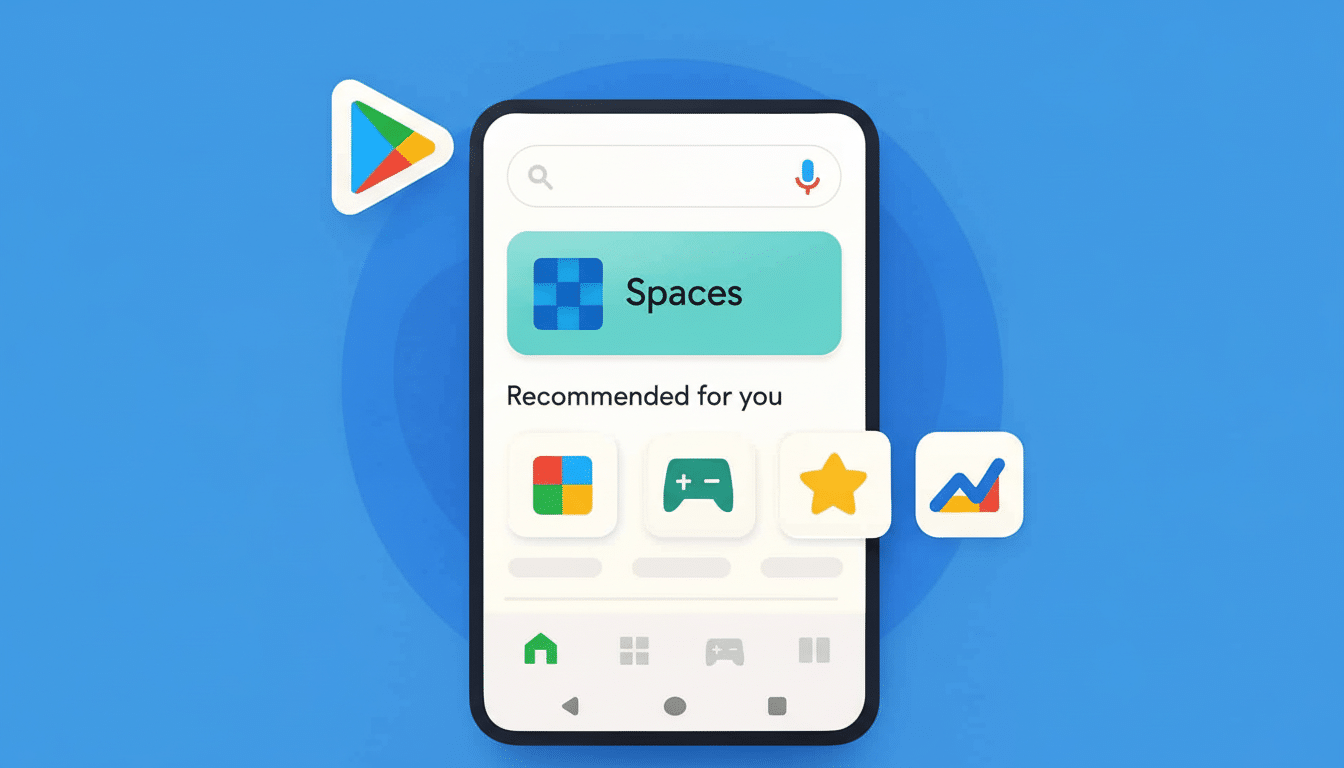
Spaces are editorially curated groupings that live near the top of the Apps tab, alongside sections like For You and Top Charts. Instead of relentless lists, Spaces package apps and content around a single theme — say, travel planning, back-to-school tools, or wellness streaks — to help you dive into a focused set of recommendations without having to think up the perfect search term.
Google has tested Spaces as niche hubs before, with a Cricket Hub in India and a Comics hub in Japan. Now it’s widening the concept. A new entertainment space in Korea showcases movies and short-form dramas, while users in the U.S. can see content trending on Samsung TV Plus right from the Apps tab. Among its early content partners are HBO Max and Peacock, and Google is now helping to extend free webcomic samples to the U.S. and Korea after successfully testing the feature in Japan.
These samples break down friction: instead of installing a streaming app from which you might one day feel like watching something, you can dabble and decide whether it’s worth downloading.
That try-before-you-install flow could move the needle on conversion for media apps and give users a faster shot at something engaging.
Guided Search uses AI to organize Play Store results
Searching the Play Store is fine if you have a specific app name, of course. It’s more difficult when you are investigating categories or goals. Guided Search can plug that gap by interpreting natural-language phrases like “find a home,” “help build habits,” or “deck‑building games.”
Results that are ranked based on this feature will include an “Organized with AI” badge, and they will surface clearer headlines, richer descriptions, and helpful groupings. Underneath, you’ll see the traditional “All results” list. The point is to offer you a well-composed starting place, then let you dive deeper if necessary — valuable for novices and power users alike.
Google says the organization is powered by AI, which fits into its bigger push to use machine learning for ranking and recommendations. Seeing the label is a gesture of transparency, and falling back to normal results prevents discouragement when you are seeking the unfiltered list.
Why this matters for users and developers
Mobile discovery is noisy. Data.ai and Sensor Tower have also long demonstrated that search and on-store browsing are the top channels for installs, but the journey from query to install is often muddled. By collecting Spaces and front-loading richer, AI-curated results, Google is also eliminating steps between claiming intent and taking action, especially in crowded categories like finance, sports, fitness, or casual gaming.
For developers, that means app store optimization is moving from keywords alone to the clarity of your value proposition. If you desperately want to be included in Guided Search result pages, catchy app titles, catchy short descriptions, and clear taxonomy tags are even more of a must. Look for assets such as screenshots and short videos to take on even greater importance in the store — especially if they are included in samples or prominent modules.
Curation has media partners, who get on-page sampling out of the deal — but curation also implies editorial standards. Google Play editorial has traditionally focused on quality experiences, so best-in-class onboarding, design, and update cadence could improve the chances of being featured.
Availability and how to try these Play Store features
Server-side updates are bringing both features to users over time. To access Spaces, go to the Apps tab and you should see new themed rows up top. If you see the “Organized with AI” tag, you’re in the test group — otherwise Guided Search may not be enabled for you. Availability is limited by region and account, as with most Play Store changes.
Some early signs point to more international expansion coming, with entertainment and comics already live in some markets. Whether you’re hunting your next budgeting app or testing out a new series, these updates should make the Play Store feel less like a warehouse where files are stored and more like a well-staffed showroom.