


The Google Nest Learning Thermostat has hit its lowest price ever, which makes it much easier to justify making one of the best smart home upgrades available. The top smart thermostat is currently on sale for around $229.99 at popular vendors, not too far off its usual list price of $279.99. That 18% shave adds up to an instant $50 off before any utility rebates, so the big takeaway here is: This is absolutely the thermostat deal to seize while it’s still around.
Why This Deal on the Nest Thermostat Matters Now
Heating and cooling make up about half of the average U.S. home’s energy consumption, according to the U.S. Department of Energy. Small savings accumulate quickly when energy costs are high. Smart thermostats achieve those benefits by automating setbacks and shaving off waste you might not remember to, or care to, day to day. Add an upfront discount, and the payback time shrinks — what would’ve been a nice-to-have gadget becomes a sensible efficiency upgrade.

How the Nest Learning Thermostat Is Different
The “learning” part is the most important hook. Rather than guilting you into micromanaging a schedule, it learns when the temperature in your home goes up and down during that first week and creates its own Auto-Schedule to match. It uses occupancy sensing and your phone’s location (if you turn it on) to enter energy-sipping modes when no one’s home, then preheats or precools as you head back.
It has features that prompt you to save energy and encourage you to develop your heating schedules, such as the Nest Leaf, which indicates efficient setpoints, and Energy History, which logs when runtime occurred and why. The bright screen is readable from anywhere in the room, and you can control it remotely via the Google Home app to adjust settings even when you’re out of the home. It features Google Assistant, so you can use voice control to streamline your morning and bedtime routines.
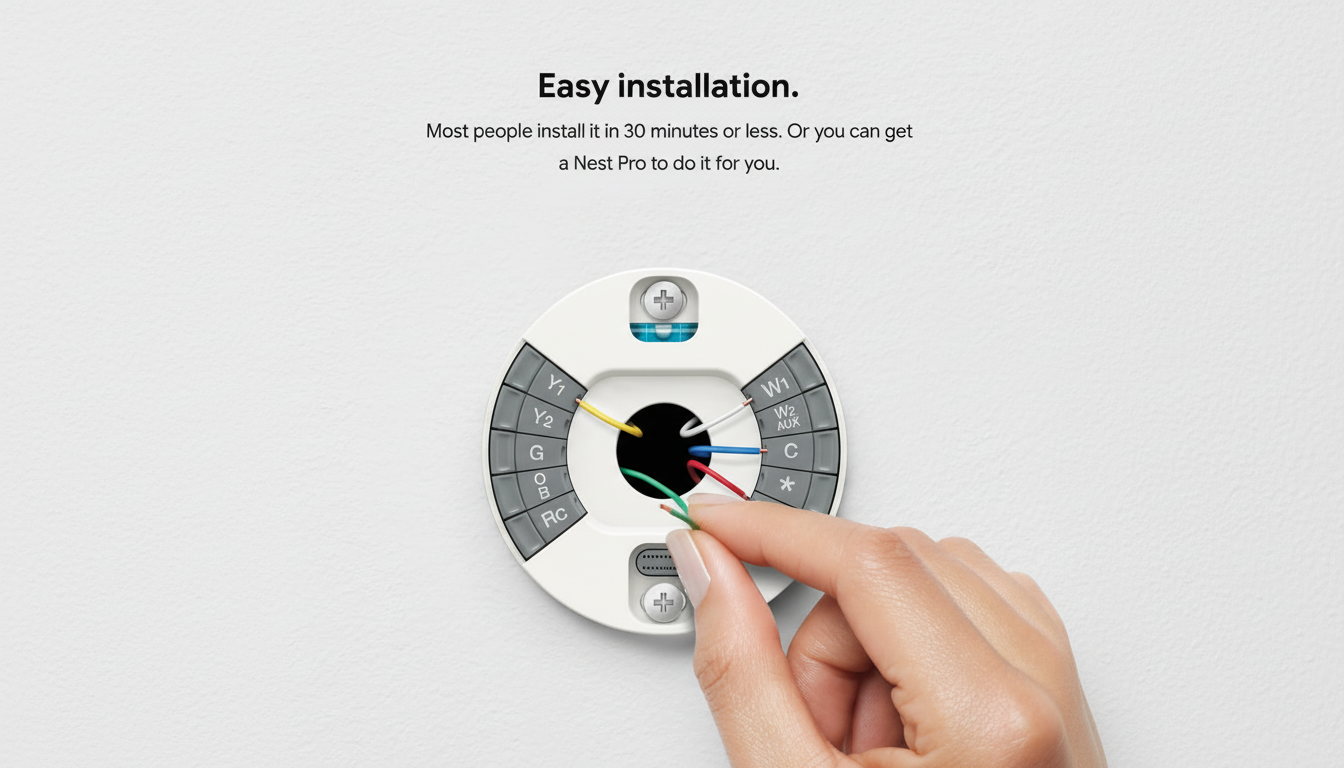
Compatible with most 24V heating and cooling systems, including gas, oil, electric, heat pump, radiant, and hydronic. Many (though not all) installations don’t need a C-wire, though it’s still best for reliability; Nest offers clear wiring guidance, and most DIY installs should take under 30 minutes to wire up for a typical single-stage system.
Real-World Energy Savings and Available Rebates
According to Google’s analysis of customer data, homes see 10–12% heating savings and about 15% cooling with Smart Away, which is in line with the Department of Energy’s recommendations that regular setpoints can shave a little over 10% from annual HVAC costs. Meanwhile, ENERGY STAR has reported around 8% in average savings for certified smart thermostats as well. In dollars and cents, most households are looking at triple-digit savings — with paybacks usually in just one or two seasons, depending largely on whether you buy at a discount.
Don’t overlook incentives. U.S. and Canadian utilities often give $50–$100 back on smart thermostats, which can be stacked with state and federal incentives for an extra-large rebate. Some run demand response programs that pay you to let the grid dial your AC up a couple of degrees when it’s really hot out. Those stack with the current discount, bringing your net cost down below even the sale price.
Installation Tips and What Everyday Use Looks Like
A fast compatibility check with your HVAC wiring means a painless install before you buy. If you have a multi-stage system, or one that has accessories like humidifiers, Nest supports many setups, though older systems such as baseboard systems or high-voltage ones will not be compatible. Renters can even install it — just hold onto the original thermostat to swap out when it’s time to move.
After it is installed, the thermostat requires a week or two to “teach” itself your routine. You can override any schedule, set temperature holds, and select eco setpoints that balance comfort with energy savings. For homes with forced-air heating systems, you can whittle down your energy use room by room: Nest temperature sensors let you prioritize living areas during the day when other sensor-free rooms are unoccupied.
How It Compares With Other Smart Thermostats
When it comes to competitors, Nest’s strong suits are its beautiful look, stripped-back learning automation, and widespread ecosystem support. On the top end, Ecobee’s models are big into room sensors and air quality gauges; the bargain models frequently just leverage basic scheduling without any sort of predictive smarts. If you’re in pursuit of the true set-it-and-forget-it experience with solid energy reporting and straightforward controls, Nest is still the measure to beat — especially at this cost.
Bottom Line: A Strong Smart Thermostat Deal Today
It turns the epitome of a smart home upgrade into a small financial win, discounted 18 percent off its usual price tag. Add $50 to that, factor in possible utility rebates and the kind of HVAC savings most smart thermostats offer, and your ROI is rapid and your home becomes that much more comfortable on autopilot. If you have been looking to upgrade your thermostat, this is the time.