


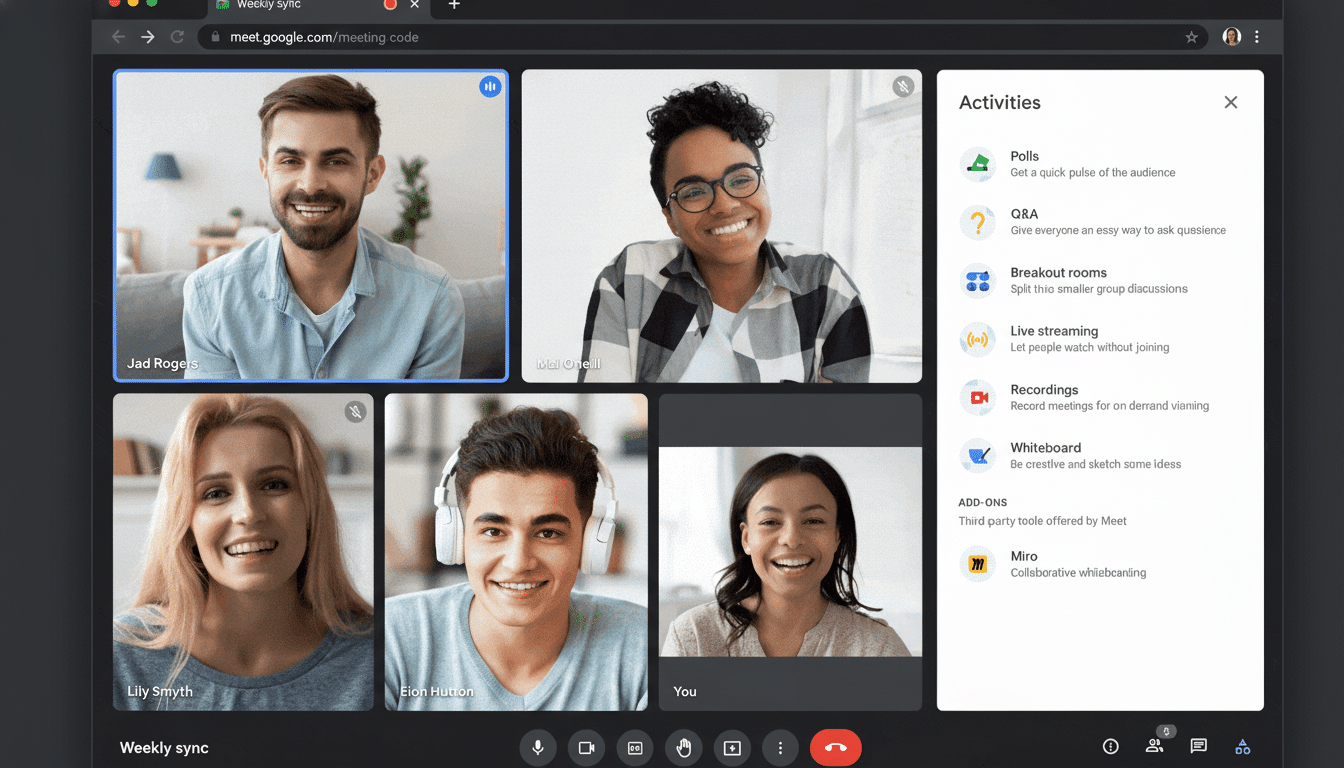
Google Meet, the videoconferencing tool that is part of Google’s G Suite productivity apps for business, suffered a widespread outage that lasted more than two hours and affected many parts of the world, leading some people to rush to find alternatives across businesses, schools and governments. Complaints surged on outage trackers, and Google confirmed the issue on its service status page before the platform steadied.
What Happened and Who Was Affected
Outage reports jumped into the tens of thousands on Downdetector, showing a widespread impact slicing through regions and industries. A recurring pattern: Users were able to hear audio, but encountered black or unresponsive screens, slow interface loads and a “Join Request Failed” error on desktop. I noticed mobile clients were still working, so I figure a client-specific or frontend pathway issue instead of a completely non-functioning back end.
Google’s own service dashboard also indicated a performance degradation for Meet and cited issues with meeting joins and loading.June 7, 2021 That is in line with symptoms usually associated when there is a problem with the front-end deployment or signaling layer – core media services can still work but the session never gets past the initialisation for the UI.
Google’s Diagnosis: Reversing the Change
Google status updates said engineers promptly found the problem with a recent change, reverted it to restore service. This is the norm for most large collaboration products, including Meet—features are rolled out incrementally in phases with automatic rollback mechanisms. If our telemetry is indicating anything unhealthy, such as a sudden rash of failed joins or UI load latencies, the escape hatch is automatic or manual rollback.
The symptoms are suggestive of an issue with client-side initialisation, or the signalling flow that sets up the WebRTC sessions. When token validation, media delivery or configuration flags regress, users can connect to the audio paths; however, their video or participant data cannot be rendered. “Rolling back the bad build or configuration clears the bottleneck in minutes while caches and edge points update.”
Why Even a Short Outage Is Significant
Meet is now mission critical for remote work, live classes, and telehealth. A few minutes of downtime can blow up important client presentations, board meetings and time-sensitive support calls. And while Google Workspace tries to sell you on a 99.9% monthly uptime guarantee for core services, that’s more than a half-hour of downtime every month before giving customers credits for the failure — a level of reliability that, in the age of Zoom calls and Slack messages, is less and less acceptable. Companies today should be demanding more than “three nines” of reliability for their real-time communications, particularly during the busy business day.
The incident also serves as a reminder of the dependence hybrid teams have on one collaboration stack. Even if the outage is quickly contained and repaired, however, the downstream cost — lost productivity, decisions not made, sales calls delayed — is enormous. [Read: The Internet with a Human Face]Other major providers have also experienced similar outages over the years, highlighting that resilience planning should be platform-agnostic.
How IT Teams Can Foster Resilience
Pragmatic contingency planning limits the blast radius of a service hiccup. Admins can standardize emergency options such as dial-in numbers on every meeting invite, can keep secondary providers like Zoom or Microsoft Teams for important sessions, and make “join by phone” a default. Boosting cross-client compatibility — offering desktop, mobile, and browser options — can also be useful if you face a subpar interface.
Monitoring is equally important. Monitor the Google Workspace Status Dashboard, third-party outage aggregators such as Downdetector and enterprise observability tools like ThousandEyes for network-layer anomalies. The clear internal comms templates allows teams to rapidly switch links, post dial in details and reschedule without confusion.
What This Says About the Reliability of the Cloud
Incidents like this are far less about raw infrastructure failure, and more about the complexity of constant rapid deployment. A wrong flag here or a front-end change there, can propagate through global edge networks and impact parts of the user base in the wrong way. Google’s rollback speed is indicative of more mature observability and release gates, but it also serves as a reminder of how slim the balance can be between fast, invisible updates and visible disruption.
For users and IT leaders alike, the lessons are simple: expect the occasional rockiness even from top-notch services, design in redundant paths for must-run meetings, and plan to roll over to someone else’s service when needed. The encouraging news is that if providers can contain and roll-back issues, the recovery is fast — assuming customers can make do in the meantime.
Bottom Line
Google Meet hit a bump in the road that took thousands of video calls down, but emergency work got things rolling again after a rollback. Think of it as a reminder to build in options, have dial-in details well at hand and monitor official status channels lest your meetings rely on a single point of failure.