


Google has introduced Lyria 3, a new AI music generator built into the Gemini app that produces high‑fidelity, 30‑second tracks from simple prompts. The tool is free to use and designed to streamline everything from melody and instrumentation to vocals and lyrics, signaling Google’s most accessible push yet into AI‑assisted music creation.
What Lyria 3 Can Do in Google’s Gemini App
Lyria 3 turns short text, image, audio, or video cues into complete musical ideas, generating arrangements across genres such as lo‑fi, EDM, pop ballads, and cinematic scores. Users can steer style, tempo, mood, and vocal presence directly in the prompt, then iterate to adjust intensity, structure, or instrumentation.
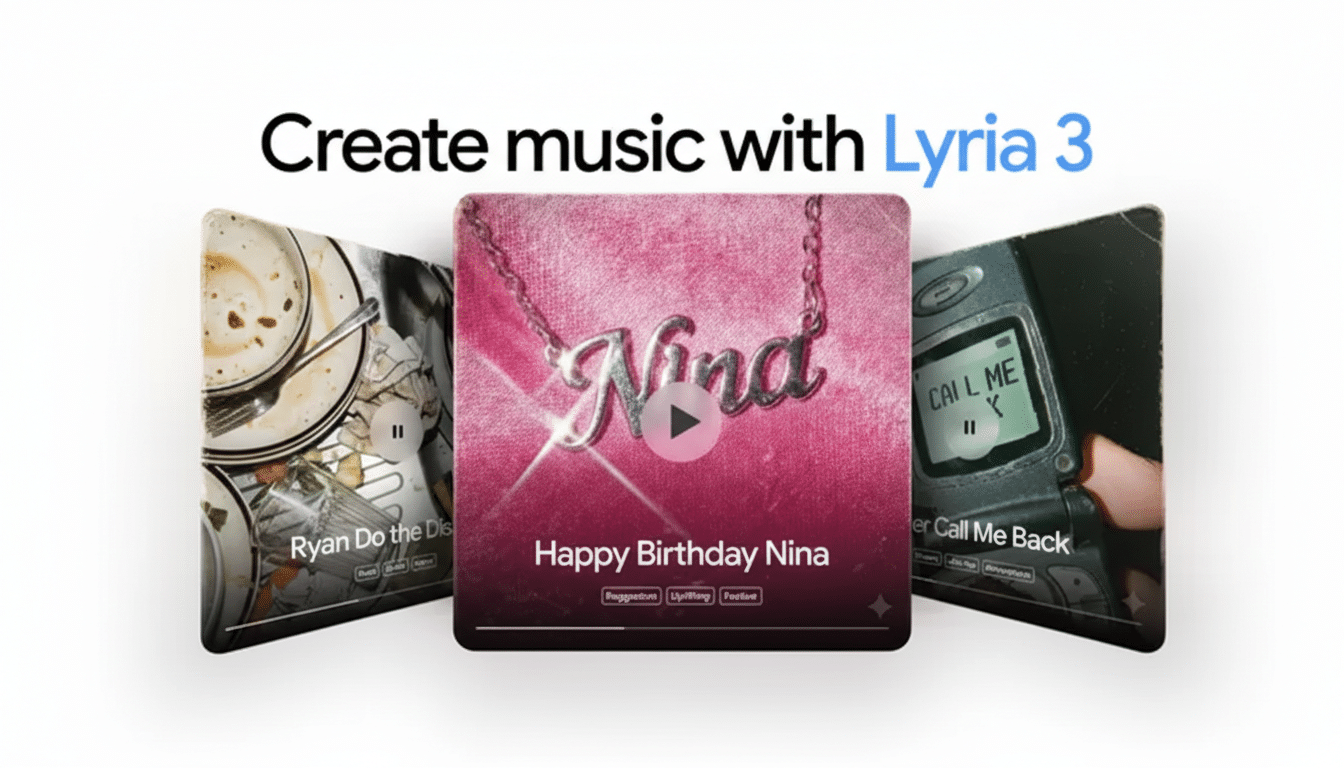
Crucially, the model now writes lyrics on demand, removing a major friction point for quick demo creation. And because the feature sits inside Gemini, users can pair tracks with matching visuals by requesting cover art via Gemini’s image capabilities, packaging a concept, song, and artwork within a single workflow.
The output is capped at 30 seconds per generation, but the quality target is radio‑ready sketching: high‑fidelity stems and vocals suitable for hooks, intros, ad stingers, and social clips. For creators accustomed to stock libraries, that means bespoke audio in seconds rather than digging through catalogs—especially useful for Shorts, Reels, and TikTok‑style edits.
Getting Started and Availability for Lyria 3
Lyria 3 is available in the Gemini desktop app now, with mobile support rolling out next. In the app’s Tools menu, selecting Music opens a guided experience, and Google has published a prompt guide to help users shape genres, vocal timbres, and rhythmic patterns more precisely.
The feature is free for users 18 and older and works in English, German, Spanish, French, Hindi, Japanese, Korean, and Portuguese, with more languages planned. Subscribers to Google’s AI Plus and AI Ultra tiers get higher usage limits, a familiar gating strategy that mirrors how image and code features scale in other AI suites.
Practical example: a social creator can upload a beach clip and ask for “an upbeat indie surf rock riff at 120 BPM with bright guitars and short vocal ad‑libs,” then refine to “add a halftime bridge with vintage drum saturation” and request “nostalgic Polaroid‑style cover art” to publish a consistent package.
Safeguards, Watermarking, and Rights in Gemini
Every track generated in Gemini carries a SynthID watermark, a technology developed by Google DeepMind to embed imperceptible signals that identify AI‑created content. This matters as platforms and labels push for provenance tracking across audio and video pipelines.
Google says Lyria 3 is designed for original expression and is not built to clone living or deceased artists. If a user references a specific artist, Gemini treats it as broad stylistic direction rather than a template for imitation. Google also notes it has filters to compare outputs against existing works and invites rightsholders to report problematic content.
The launch lands amid intensifying legal scrutiny. In 2024, major record labels represented by the Recording Industry Association of America filed lawsuits against AI music startups over alleged unauthorized training on copyrighted recordings, while several AI firms cited fair use in their defenses. Google’s messaging emphasizes being “mindful” of partner agreements and copyright considerations without detailing training datasets—standard positioning among frontier model developers.
Why This Matters For Creators And The Industry
Lyria 3 lowers the barrier to custom soundtracks for marketers, indie filmmakers, game modders, educators, and everyday creators who need fast, rights‑clear alternatives to stock audio. For musicians, it functions as a rapid sketchpad: generate a hook, export references, and replace with human performances later, or draft lyrics to beat writer’s block.
Competition is heating up. Rivals like Suno and Udio popularized text‑to‑song workflows, and Meta has showcased music‑capable research models. Google’s differentiator is distribution: putting a music model directly inside Gemini alongside image, code, and video tools creates an all‑in‑one creative console with identity watermarks baked in.
The broader backdrop is a music market balancing growth and fragmentation. IFPI’s Global Music Report showed recorded music revenues rising in 2023, while catalog glut and AI proliferation are challenging discovery. Watermarked provenance, clear usage limits, and anti‑mimicry guardrails are quickly becoming table stakes for Big Tech entries in generative audio.
Lyria 3’s value proposition is straightforward: high‑quality 30‑second songs, lyrics included, free inside a mainstream AI app. Whether it becomes a staple for creators or a sketchpad for professionals, the move pushes AI‑native music from novelty to everyday utility—while putting Google on the hook to prove its safeguards can scale.