


Google and XReal silently reset smart glasses expectations with hands-on Android XR development kits that feel less like prototypes and more like the groundwork for a real ecosystem. One track has ultralight, wireless waveguide glasses that connect to your phone; and the other jams headset-grade horsepower into a skinny prism design with hand tracking for good measure. Together, they outline a vision of a future where smart glasses aren’t exotic, but everyday accessories.
Android XR Goes From Concept to Real Dev Kit
Android XR was positioned as the solution to fragmented XR software. These dev kits put that forward promise into tangible, if not quite beta-release quality, tools: common UI patterns, input models, services — music, maps, calls, and on-device AI — all “the Android way.” That’s important to app developers who have been forced to fight with one-off SDKs and inconsistent capabilities across devices, and to hardware manufacturers that need a roadmap that reduces risk and speeds time-to-market.
Waveguide Glasses Display Practical Everyday Use
Google’s two wire-free reference designs are powered by a built-in battery and transfer compute to a connected Android phone. They’re virtually the same except for the displays: monocular and binocular. The monocular version is daintily light at 49 grams, to maintain an eyewear look and feel, while the binocular edition can offer up stereoscopic depth for richer UI and 3D content.
The demo suite addressed the type of everyday tasks that have stumped earlier glasses. A floating YouTube Music widget with track info and tap-to-skip controls that crisply hovered on a temple touch strip. One tap and a Google Meet video call will pop into view — with the wearer able to beam what they’re seeing to the web via onboard cameras. Google Maps offered up glanceable turn-by-turn arrows that transmogrified into a minimap when you looked down — precisely the “heads-up HUD” every enthusiast has fantasized for years.
AI is ever-present. Call Gemini with a button or wake word and it serves for basic tasks and object-aware queries. One demonstration had the system recognizing pantry items, differentiating between types of pasta and sweet potatoes — before suggesting a recipe. The magic is in computer vision running inside the Android XR pipeline, not some single app trick.
3D Without the Bulk: Binocular Glasses Add Depth
The binocular glasses unleash stereoscopic effects that render maps and short-form 3D video more lifelike. There are still trade-offs with waveguides — constrained field of view and brightness ceilings — so they’re not designed for watching “The Queen’s Gambit,” say. But being able to deliver content to both eyes has a definite comfort and legibility advantage; even if only peripherally, many users feel that monocular overlays are slightly fatiguing for marathon-length sessions.
XReal Project Aura – The Headset Is in the Glasses
Project Aura from XReal goes a different route. Instead of waveguides, it relies on clear prism optics to offer a far more expansive 70-degree field of view — large enough that it feels like a private theater but still transparent. Decidedly smaller is the pocketable control box that packs a complement of Snapdragon XR2+ Gen 2, which Qualcomm says is the silicon class to be packed in high-end mixed reality headsets, and the thing will run Android XR natively.
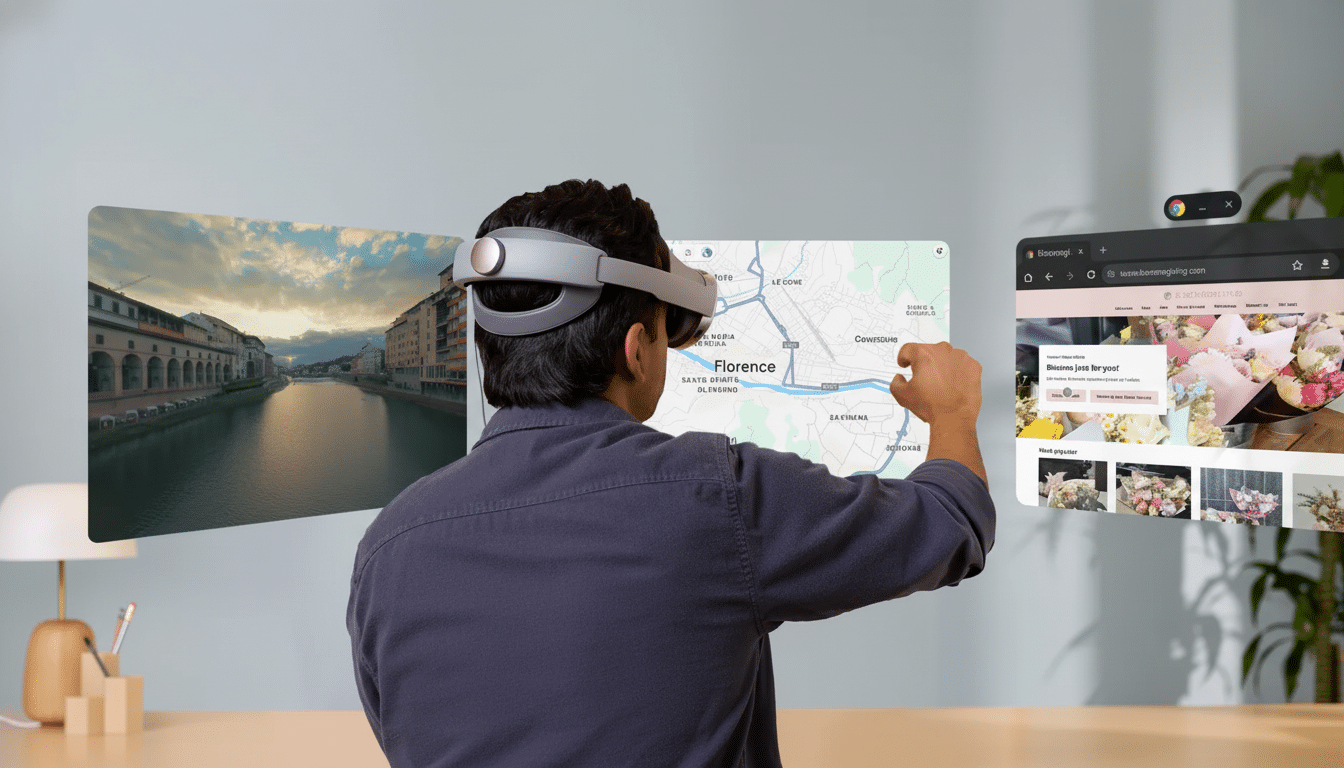
That power means the Aura can do no-controller hand tracking with the industry’s standard point-and-pinch interface. Windows can be opened and resized, or shuffled around in space; web browsing, YouTube, Google Maps, and low-poly 3D games all run at the same time. After all, Aura is quicker and easier to put on than a larger headset, but still has room for peripherals (such as Bluetooth keyboards or gamepads) when you want the workstation setup.
There are honest compromises. Resolution maxes out at 1080p per eye, compared to considerably denser headset panels, and there are fewer cameras in play, so the hand-tracking envelope is smaller. And though they don’t cast a menacing shadow overall, the transparent prism lenses subtly deform whatever you’re seeing in real space, an effect that isn’t really conducive to mobility. Even with that, Aura crosses the bridge between tethered “monitor glasses” and actual spatial computing in a way that hasn’t been available at this size and weight.
How This Compares to Today’s Smart Glasses
Meta’s Ray-Ban version has made everyday-style form factors cool but is still monocular and shackled to Meta’s operating system. Apple’s Vision Pro established the standard for hand-and-eye interaction, but occupies a headset category with vastly different ergonomics. Android XR is an “in-between” situation, resulting in a platform-based approach that balances on the featherlight waveguides to single-pound magicians — and most importantly, brings third-party hardware and software contributions to the same platform.
The value proposition for developers is standardization: a consistent system UI, access to Google services, and an obvious path to support from engines like Unity alongside ARCore features. The payoff for buyers down the line is breadth — multiple iterations of a design that share apps and features, rather than having to start from scratch with each new pair of glasses.
Availability and What to Watch Next for Android XR
Google’s glasses, as well as XReal’s Aura, are development kits. Pricing wasn’t shared, but hardware with XR2+ Gen 2 silicon has an inclination toward premium. Consumer timelines are still unannounced, but the goal is clear: create a shared Android XR base now so off-the-shelf hardware comes out of the box with great apps, solid hand tracking, and AI that knows your space from Day One.
False starts have dictated the smart glasses narrative for years. These kits feel different because they bring the pieces together: ultralight waveguides for glanceable computing, Lume Pad-based hardware for immersive work, and a platform that treats both as first-class citizens. If developers rally around it, Android XR will do more than drive one more gadget. It could set the tone for what smart glasses should be.