


Google announced that it is now enabling its AI Mode in Search to five more languages: Hindi, Indonesian, Japanese, Korean, and Brazilian Portuguese. After months in which it has been testing the experience in English, the company says the multilingual rollout will make it so more users can ask complex questions and receive AI-generated overviews in the language they speak at home.
Five more languages, more accessibility
The expansion, Google Search VP of Product Management Hema Budaraju says, is meant to make AI Mode of Search feel native, not a translation. Hindi, Japanese and Korean join Indonesian and Brazilian Portuguese — producing five languages that include deep cultural nuance and unique writing systems that are too often underserved by state-of-the-art AI features at launch.
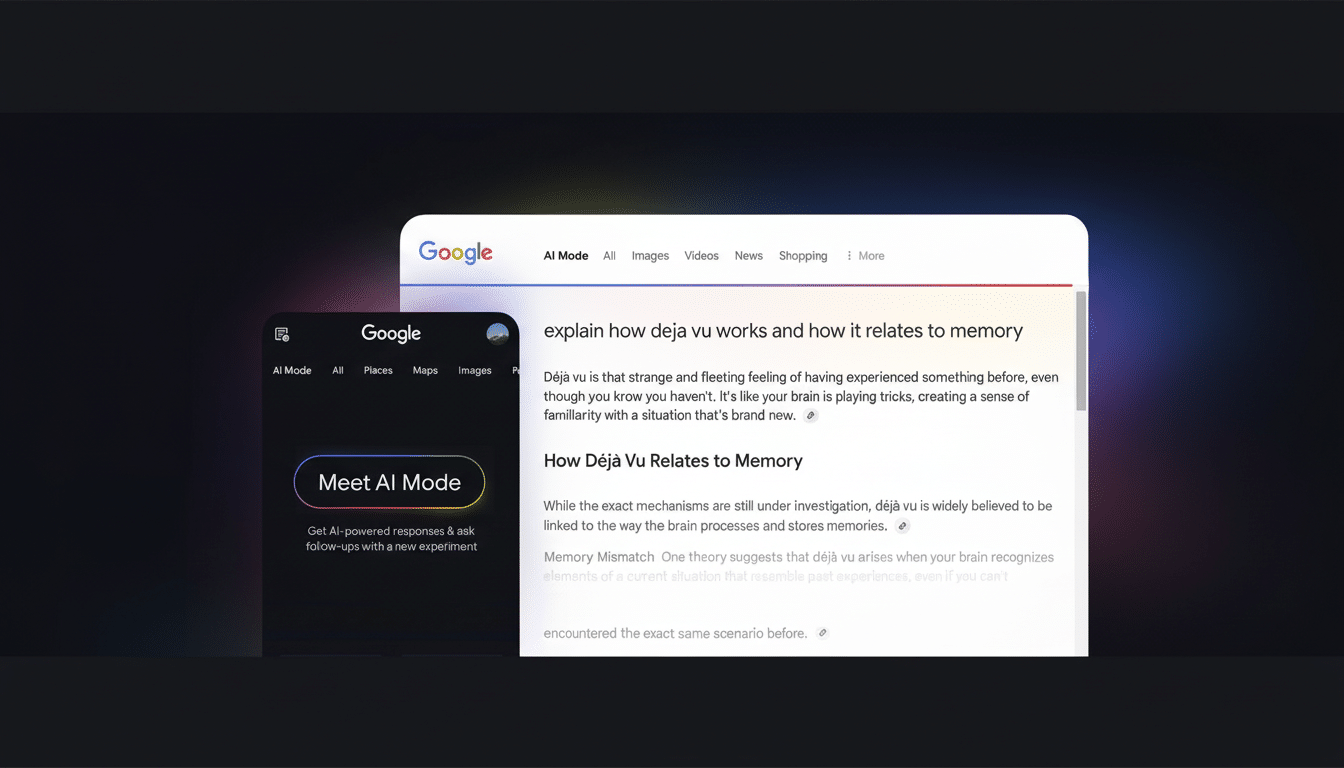
AI Mode appears to coexist with standard results, which are available via a dedicated tab and a button in the search bar. Google has been experimenting with the experience in additional markets and has suggested it could eventually become the default experience for some users; Google DeepMind’s Logan Kilpatrick recently suggested as much.
Why these languages matter
Combined, the five additions cover hundreds of millions of speakers and some of the world’s most active mobile internet populations. According to IAMAI–Kantar, India now has more than 750 million internet users, and the Hindi language continues to dominate both search and social. Japan claims around 125 million native speakers of Japanese; South Korea over 80 million speakers globally of Korean; Indonesian by almost 200 million people as a first or second language; and Brazil’s Portuguese speaking community exceeds 210 million inhabitants.
Support for multiple languages is a competitive requirement as well. While English remains about half of web content, according to estimates from W3Techs, the shares for Japanese and Portuguese have expanded significantly, and user growth is faster where English isn’t the primary language. Extending AI Mode into these markets puts Google in a position to shield share from AI-first search challengers that already localise aggressively.
What AI Mode can do already
These systems are backed by a customized version of Gemini 2.5, Google’s multimodal model, which is able to reason over varying inputs capable of being understood as text and beyond. In practice, it all amounts to a way for a user in Tokyo to request, in Japanese, “late night ramen near me that takes card and has vegetarian sides,” and receive a synopsis of reviews, menus and hours, with links to more reading. It could be a Korean speaker who asks for a step-by-step plan to challenge a parking ticket and proceeds to shape the back and forth with follow-up questions — all in Korean.
Google is also layering in agentic capabilities — early features that act on your behalf. In some instances, AI Mode could assist in finding restaurant reservations, with local service appointments and event ticketing set to be added. Today, that features lags behind only Google’s premium experiments and is only available to U.S.-based Ultra subscribers as the company tests quality and safety controls.
Availability, price, and where it’s available
AI Mode started as a test for Google One AI Premium users before expanding in English to more regions. The new language is in the process of a staged rollout, and Google usually limits access through Search Labs switches and by time zone.
The base experience comes bundled with Search when activated, accessed through the AI Mode tab / prompt button.” Advanced agentic functions are part of a paid tier for the moment; the Ultra plan runs $249.99 a month in the U.S. as Google explores pricier infrastructure and more proactive duties.
What this means for search and publishers
An AI-sourced overview can influence how people click. Publishers and e-commerce sites are concerned that instant answers are also steeping into referral traffic territory, especially on short, answer-driven queries. Google has fired back, arguing that AI Mode and AI Overviews are meant to guide users to trusted sources of information, and are not set up to downplay clicks. Independent analysts observe that the effect is likely different based on the type of query: navigational and purchase-intent searches generally continue to yield visits, whilst some informational queries coalesce into (new) overviews.
For users, the multilingual expansion should mean less ambiguity and more confidence. Asking nuanced, multipart questions, in one’s own language — on topics like visas, health guidance or local services — minimizes translation friction and the chance of misunderstanding. For Google, it’s a stress test of Gemini 2.5’s authoring around scripts, titles and regional idioms, which could be very punishing for context mistakes.
What to watch next
Key signals to watch include how quickly the rollout happens in these languages, if AI Mode becomes the default for more users, and how fast agentic tasks move outside the U.S. If Google can maintain the quality and — if it shows meaningful click-through to trusted sources — the multilingual push might establish AI Mode as a key part of everyday search for hundreds of millions of people.