


Google is winding down Google Assistant on its smart speakers and displays and replacing it with Gemini, a conversational generative AI. The gesture isn’t just a reboot of voice control; it is the reboot: at once an overhaul and re-architecture of how Google’s smart home sees, hears and interprets what’s happening in your world. Meanwhile, Nest cameras receive semantic scene recognition and the Google Home app is rebuilt from the ground up to make automation and monitoring a discussion rather than a chore.
What Gemini Replacing Assistant Actually Swaps
Gemini introduces natural, memory-aware conversation to devices that used to require rigid phraseology. You can string together commands “turn off the lights, start the vacuum and lock up” without odd pauses. It knows about context and exceptions (“turn off all the lights except the living room lamp”), and it knows what room you are in when you talk about “the lights.”
There are 10 different voices to choose from, and the assistant’s responses skew toward reasoning and follow-up. In demos, Gemini navigated everyday frustrations like troubleshooting a finicky dishwasher and responded to preferences in real time. And the new Gemini Live mode leaves the conversation open after a wake phrase so you can interrupt or refine or change the subject — great for storytime with kids, brainstorming playlists without repeating yourself.
Smarter Cameras Through Semantic Scene Understanding
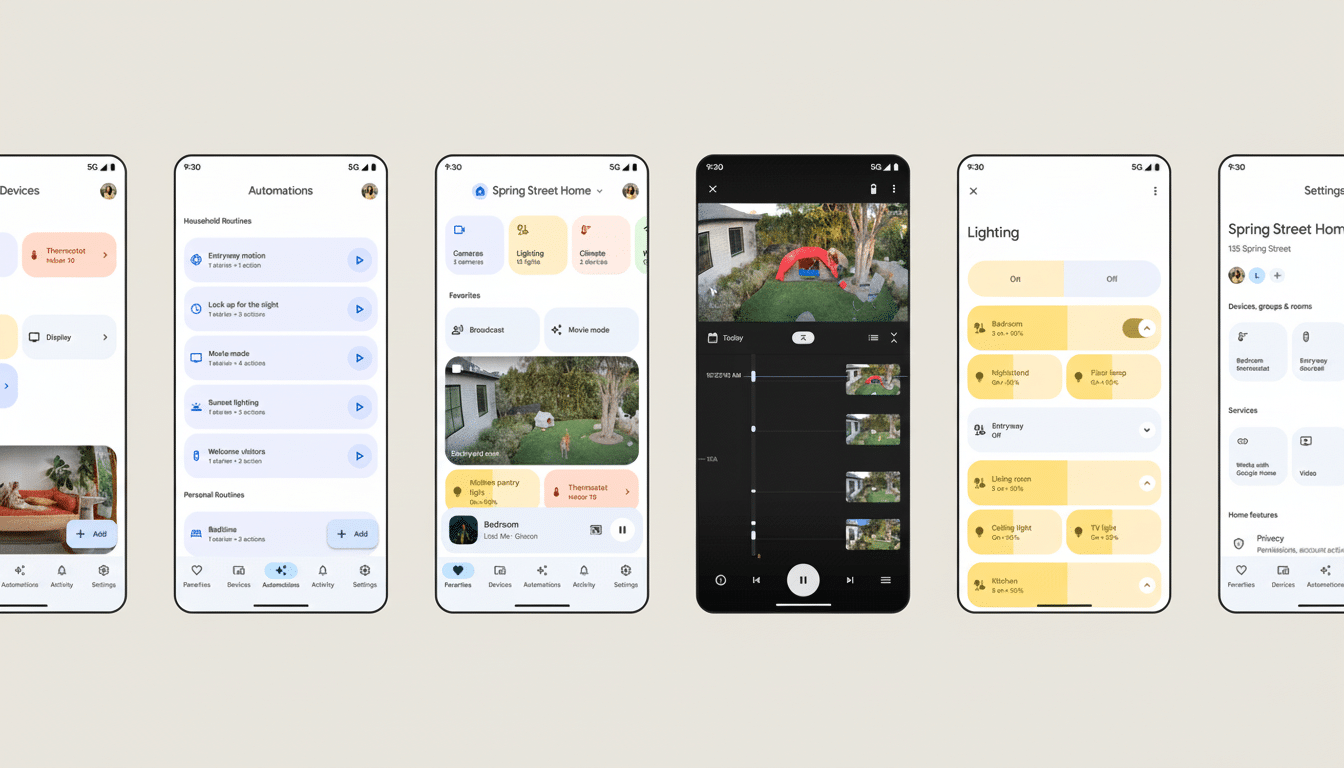
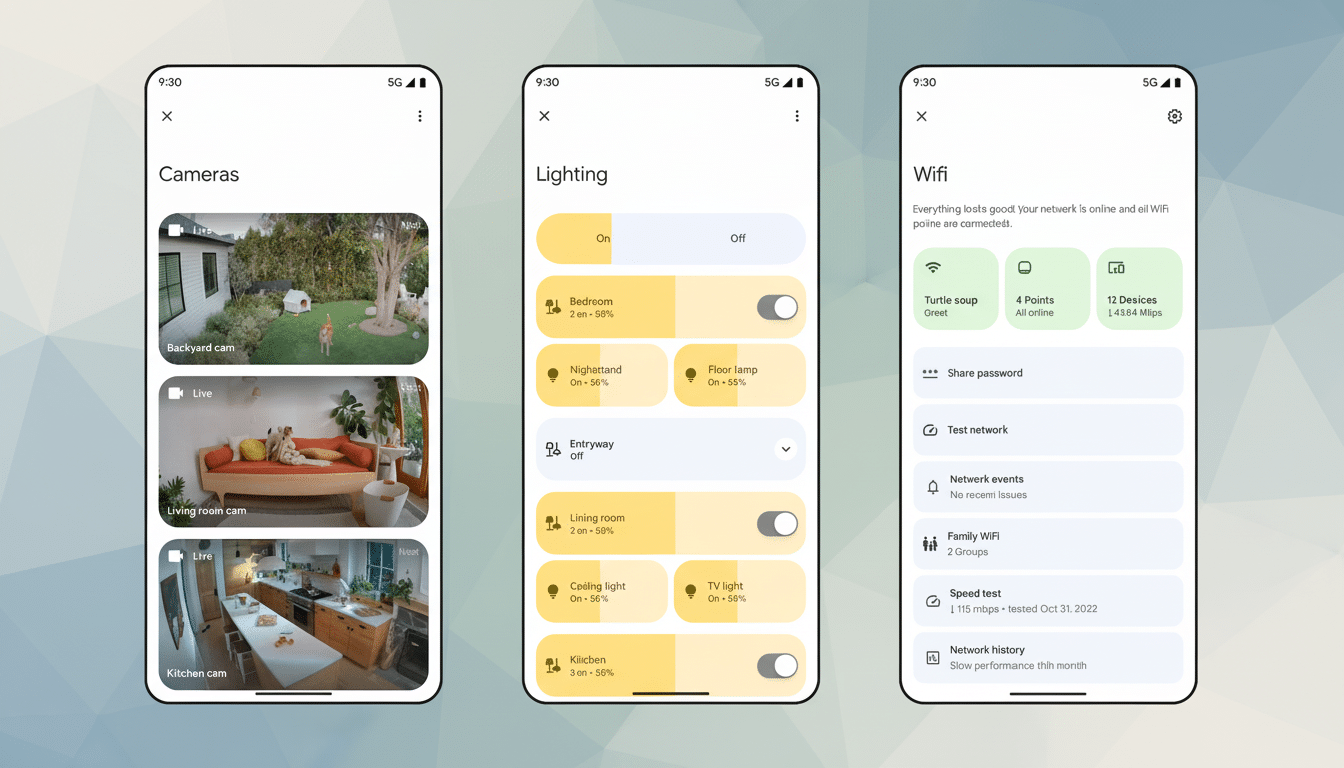
Google’s indoor and outdoor Nest cameras — and video doorbells, going back years — are being updated to add artificial intelligence that understands the contents of a clip, not just what triggered it. Rather than scrubbing timelines, you can look up “the gardener,” inquire “did anything eat the basil?” or come across “when the kids left toys in the driveway.” It comes up with short descriptions, and packages them as customizable Home Brief summaries focusing on people, pets or time windows (say, overnight or a busy morning).
For free users, the rolling history on alerts will be longer (going from three to six hours) and paid tiers unlock the full semantic toolkit. The implication is less notification fatigue and quicker resolution to “what happened” questions, no matter how many cameras you own.
A New App That Acts Like a Smart Home Control Room
The revamped Google Home app is based around three tabs—Home, Activity, and Automations—and a search field at the top that can be triggered using your voice or keyboard. Powered by that same Gemini logic, Ask Home lets you find arcane device controls, construct routines conversationally and even inquire about usage; “how long were the kitchen lights on?” The company’s older Nest gear, which includes early thermostats and doorbells, is finally all together inside the same app to control it.
This matters for households balancing multi-brand gear. According to the Connectivity Standards Alliance, there is “volatile” industry momentum for interoperable ecosystems, with a smarter front-end able to cover over ecosystem seams. The app is designed to make scenes and routines feel more like a chat and less like programming.
Pricing Tiers and What You Get With Each Plan
Basic voice control and Gemini’s smart-home responsiveness will remain free. Gemini Live, the always-on conversational mode, is in a $10-a-month standard tier that also includes 30 days of event video history and intelligent alerts for recognized faces and objects. A $20 tier increases event history to 60 days and adds AI-generated notifications, clip summaries and daily recaps that distill hours of footage into a few lines for you to skim.
Ask Home can create automations through voice, but that feature requires the $10 tier. Consider it as payment for expedited convenience, but not basic control. This reflects a larger trend: advanced AI features are becoming more and more of a subscription line item throughout the smart home. More than half of US internet households now own at least one smart home device, according to research firm Parks Associates, and vendors are banking on software tiers to distinguish the experiences they offer rather than just shipping new hardware.
Backward Compatibility and Rollout Across Devices
Of particular note, Google is forcing Gemini onto older hardware such as the original Google Home speaker from 2016 and the first “Nest Hub” (née Home Hub) smart display from 2018. Video-side upgrades go back to 2015’s indoor Nest Cam and the original, 2018-vintage Nest Video Doorbell. Early access is coming to the Google Home app, and Google is debuting a revamped Google Home speaker (in addition to three new Nest cameras) that can highlight its changes.
Notably, this is an instance of a backward-compatible upgrade, which is uncommon in the field of consumer electronics; typically AI upgrades remain relegated to the latest silicon.
Bringing these advanced features to older hardware could keep them in use longer and out of the trash, but also provide Google with a wider real-world platform on which to train its home AI.
Privacy, Competition and What to Watch Next at Home
AI that can identify faces, objects and behavior raises concerns about privacy controls. Users should check for clear opt-in flows, granular retention settings and simple mechanisms to get rid of events or turn off specific detections. As regulators begin to scrutinize AI transparency, companies which reveal useful controls will distinguish themselves.
Competition is intensifying. Amazon is testing a chattier Alexa, and Apple keeps adding more on-device intelligence to HomeKit. Google’s edge is scale in search and language models; the test is whether that will translate into fewer misfires, faster follow-ups and arbitrary routines that learn without baby-sitting.
Bottom line: The move to replace Assistant with Gemini is a new era where your smart home becomes less about issuing commands and more about achieving an outcome. Should Google bring the reliability to bear, this sounds as though it could be the most significant upgrade we’ve seen to the Google Home ecosystem since launch.