


I swapped Spotify’s auto-generated playlists for an AI layer on top of my Plex library, and the result upended my listening habits. Using an open-source tool called MediaSage with Google’s Gemini to create semantic playlists from my local files, I regained control, transparency, and a sense of discovery that mainstream streaming had dulled. It’s a small shift with big implications for how we find music in an era of algorithm fatigue.
How Gemini Turns Plex Into a Smart, Personal DJ
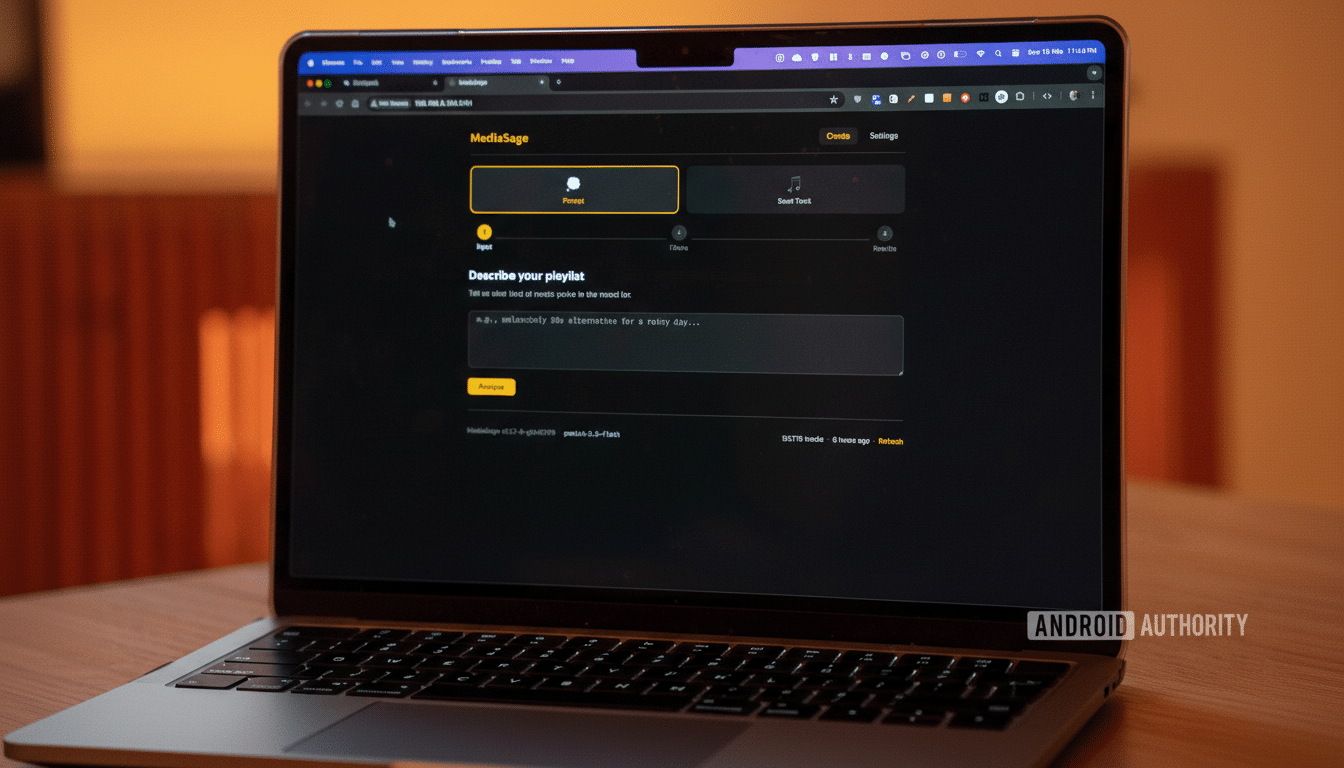
MediaSage bridges static music folders and modern AI. It scans your Plex library, compiles metadata, and asks a large language model—Gemini, OpenAI, or Claude—to build playlists from natural language prompts. Unlike typical “smart playlists” restricted to genre, year, or BPM filters, this is semantic. You can ask for “high-octane cyberpunk chase music,” “songs that feel like walking through neon rain,” or “guitar-driven tracks with punchy 130 BPM energy,” and it will map your request to tracks you actually own.

Seed a single song and the system proposes multiple paths—by vibe, instrumentation, or tempo—before writing the final list back to Plex. This branching is crucial: it surfaces why a track belongs, not just that it matches a tag. In other words, it makes your library feel alive without surrendering control to a black box.
Testing the Switch with Real-World Results
As a test, I primed MediaSage with The Klaxons’ Golden Skans and asked for a set that captured its kinetic, dance-rock propulsion. Instead of a broad “2000s indie” dump, the tool offered distinct directions—one fixated on the new-rave blend of guitars and synths, another purely on pace and momentum. I chose the energy-first route and landed on a playlist I dubbed “Neon Pulse Riot,” which coherently threaded deep cuts from The Horrors and Digitalism with heavy hitters like Ratatat and The Prodigy. Genre lines blurred; the throughline was feel.
Then I tried a mood-first prompt: “upbeat Turkish funk.” My library came up light on Anatolian rock, so the AI pivoted, building an adjacent, feel-good funk set from what I had—think Stevie Wonder’s mid-60s sparkle, Earth, Wind & Fire’s horn-forward anthems, and early Red Hot Chili Peppers grooves. It wasn’t literal, but it nailed the emotional brief. That’s the trade: MediaSage can only assemble from your shelves, yet it reliably finds the closest, most satisfying route.
Costs and speed were non-issues. Using Gemini’s lower-cost tier, each playlist in my testing averaged well under $0.01 in token spend, and generation typically took 10–20 seconds depending on how many candidate tracks I allowed it to scan. You can widen the pool for deeper results or keep it tight to minimize cost and latency.
Why Ditch Spotify for This AI-Driven Plex Approach
Streaming excels at access but often defaults to popularity gravity. Play a radio from a familiar seed and you tend to cycle through the same staples. Researchers and industry observers have long noted that recommendation systems optimize for time-on-platform, which can flatten discovery toward hits. Meanwhile, IFPI’s Global Music Report showed streaming accounted for roughly two-thirds of recorded music revenue in 2023, illustrating how dominant—yet homogenous—that ecosystem has become.
A local-first, AI-assisted approach flips the incentives. You own the files and the metadata, so rare live takes, original release dates, or custom tags actually matter. Transparency improves, too: MediaSage exposes which dimensions—tempo, timbre, era, instrumentation—are guiding its choices. Privacy-minded users can run the entire pipeline locally with Ollama and models like Llama 3 or Mistral on a capable GPU, keeping data off third-party servers. And unlike platform AI features such as Spotify’s AI DJ or emerging tools in YouTube Music, you aren’t trapped in an engagement loop or subject to catalog gaps.
What It Takes to Run It on Your Home Plex Server
Setup is approachable for homelab types: spin up a Docker container, provide your Plex token, and plug in an API key for your preferred model (Gemini, OpenAI, or Anthropic). The app sits alongside Plex as a lightweight web interface that generates and then syncs playlists back to your server. It’s not yet a native Plex experience—more a companion utility than an on-the-go radio button—but for couch curation, it’s refreshingly fast and cheap. If you go fully local with Ollama, you’ll want a strong GPU to maintain quality and speed.
The Bottom Line: AI Playlists That Put You in Control
If you’ve amassed a large Plex library, Gemini-powered playlisting via MediaSage can genuinely replace Spotify’s radios and mixes—delivering fresher, deeper cuts that respect how you tag and collect. It won’t conjure songs you don’t own, and it does require a bit of setup, but the payoff is discovery that serves the listener rather than the platform. For enthusiasts, this feels like the future of personal AI: modular, open, low-cost, and fully aligned with the music you already love.