


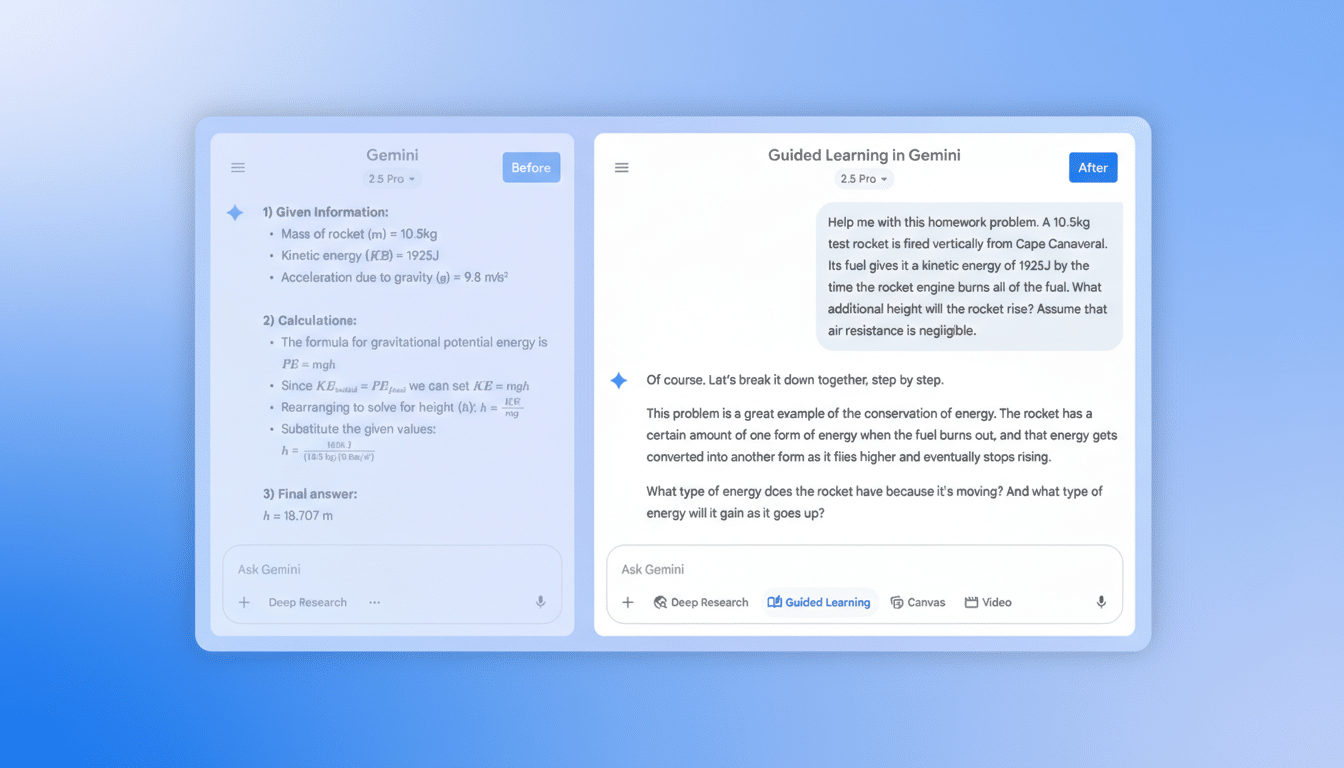
Gemini’s Guided Learning is quietly reshaping how marketers upskill, trading one-size-fits-all courses for adaptive, on-demand curricula. In practice, it feels like a private tutor that builds a lesson plan around your goals, your gaps, and the assets you already have — and it’s been the most productive learning shift I’ve experienced in years.
Instead of hunting across platforms for the “right” course, I type a specific objective — say, “grow activation for a freemium app” — and Gemini assembles a structured path with milestones, quizzes, and practical exercises. It doesn’t just summarize concepts; it scaffolds the work, turning theory into repeatable playbooks I can actually run.
Why Guided Learning Matters For Marketers
Marketing changes faster than most formal coursework can keep up. New ad formats, privacy shifts, LLM-driven tools, and channel algorithms turn over constantly. McKinsey estimates generative AI could contribute up to $4.4 trillion in annual value across functions, with marketing and sales among the biggest beneficiaries. That scale makes continuous learning a competitive edge rather than a nice-to-have.
Guided Learning reduces the friction between “I should learn this” and “I can deploy this.” It strips away platform-hopping and pulls you into focused sprints: define the target, learn the frameworks, build the artifacts, test, iterate. Instead of a static video series, it behaves like a dynamic syllabus that updates based on your inputs and results.
Personalization That Actually Moves The Needle
Where it shines is context. Coming from a journalism background, I asked Gemini to help me translate storytelling strengths into growth marketing. It reframed core topics — positioning, ICPs, and messaging hierarchies — through a reporter’s lens: interviews become customer discovery, headlines become value propositions, and beats become lifecycle stages. The result wasn’t generic advice; it was a bridge from my current skills to the next ones.
Quizzes and knowledge checks are built in, but they’re not hoops to jump through. When I propose a segmentation model, it pushes back on my variables, asks for real-world constraints (sample size, attribution windows, data availability), and recalibrates the lesson. Get it right and it extends the example; miss the mark and it explains why with targeted follow-ups. That adaptivity keeps you honest.
From Learning To Doing In a Single Workspace
The most tangible gains come from the “learn then build” loop. A typical sprint looks like this:
- Strategy: Define the ICP and Jobs-to-be-Done, then craft a messaging matrix mapped to funnel stages.
- Execution: Draft a landing page brief in Docs, generate headline variants, and outline an onboarding email sequence that ladders up to the same promise.
- Measurement: Spin up a Sheets template for cohort analysis, specify GA4 events, and list KPIs with thresholds for “ship vs. iterate.”
- Experimentation: Propose A/B test designs, power considerations, and guardrails to avoid peeking bias; then convert the plan into a project checklist.
Because it lives inside the same ecosystem, handoffs feel natural — briefs to Docs, models to Sheets, outreach drafts to Gmail. It’s not just learning in theory; it compiles directly into operational artifacts you can share with a team.
Real-World Results And Practical Benchmarks
On a recent campaign, Guided Learning helped me cut the time to a testable landing page from a week to two days, mostly by standardizing the steps I usually improvise. It also pushed me to formalize my activation metrics up front, which meant the post-launch review was about outcomes rather than opinions.
This lines up with broader industry direction. Gartner’s CMO research has repeatedly highlighted underutilized martech stacks and measurement gaps; Guided Learning leans into both, nudging you to define instrumentation and success criteria before creative decisions harden. Meanwhile, the State of Marketing reports from firms like HubSpot emphasize faster experimentation cycles — exactly the cadence an adaptive tutor supports.
What Still Needs Work In Guided Learning Today
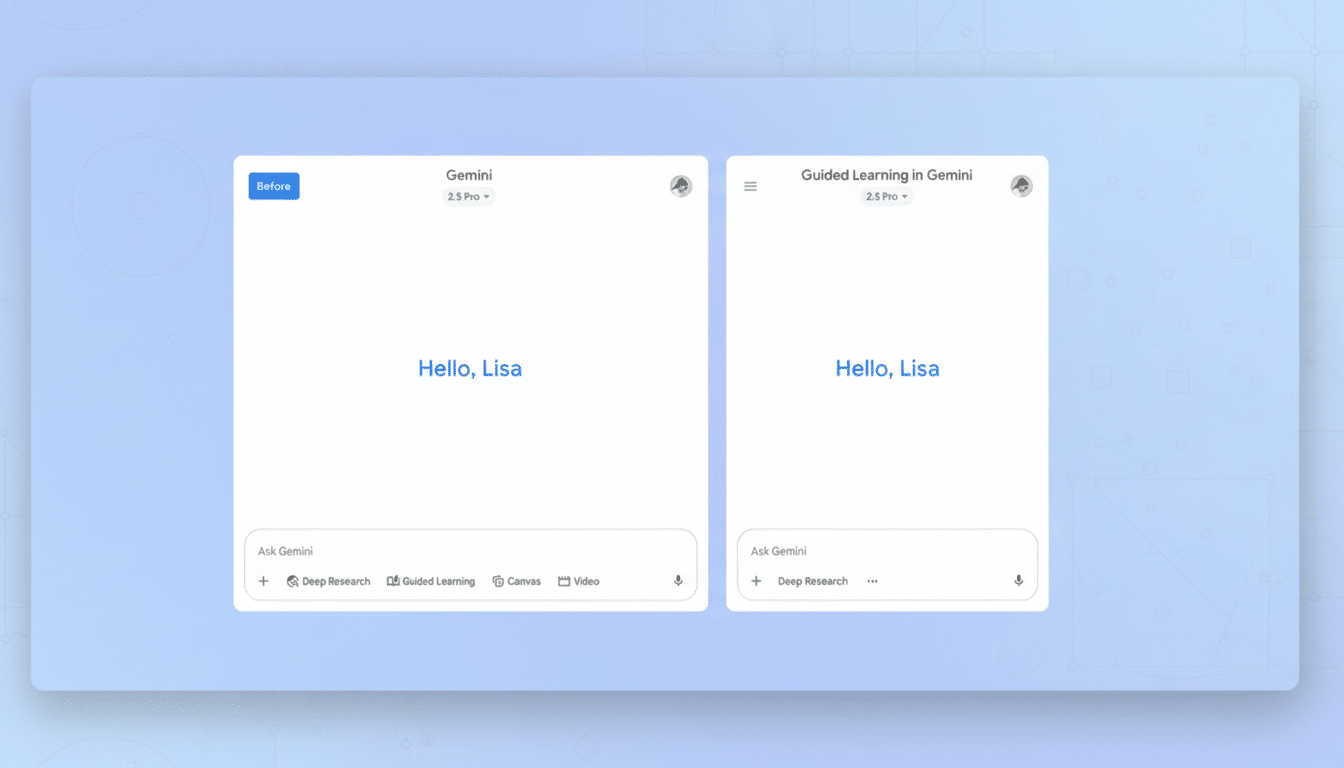
For all its strengths, it’s still text-forward. Long sessions can fatigue even disciplined learners. Two integrations would be transformative: first, automatic retrieval of high-quality, relevant YouTube lectures or walkthroughs to break up dense modules; second, one-click handoff to NotebookLM to generate audio summaries or simple concept videos from your in-progress course. A left-hand outline with progress tracking and spaced repetition prompts would further reduce cognitive load on longer paths.
Accuracy and privacy also matter. As with any LLM, you need to verify claims and treat outputs as drafts. Sensitive data should stay anonymized. The upside is that marketing is rich with public best practices, so you can keep the model grounded by asking it to cite recognized frameworks and label assumptions explicitly.
The Bottom Line For Marketers Using Guided Learning
Guided Learning is more than a clever chatbot feature; it’s a new way to acquire skills while doing meaningful work. It compresses the gap between knowledge and deployment, tailors the path to your background, and leaves you with assets you can ship. With tighter video and knowledge-tool integrations, it could pressure every major learning platform — and help marketers learn faster than the market shifts.
If your goal is to become a sharper marketer this quarter, start with a specific outcome, bring your real constraints, and let Gemini build the course around you. The result feels less like study hall and more like a working session — which, for marketers, is exactly the point.