


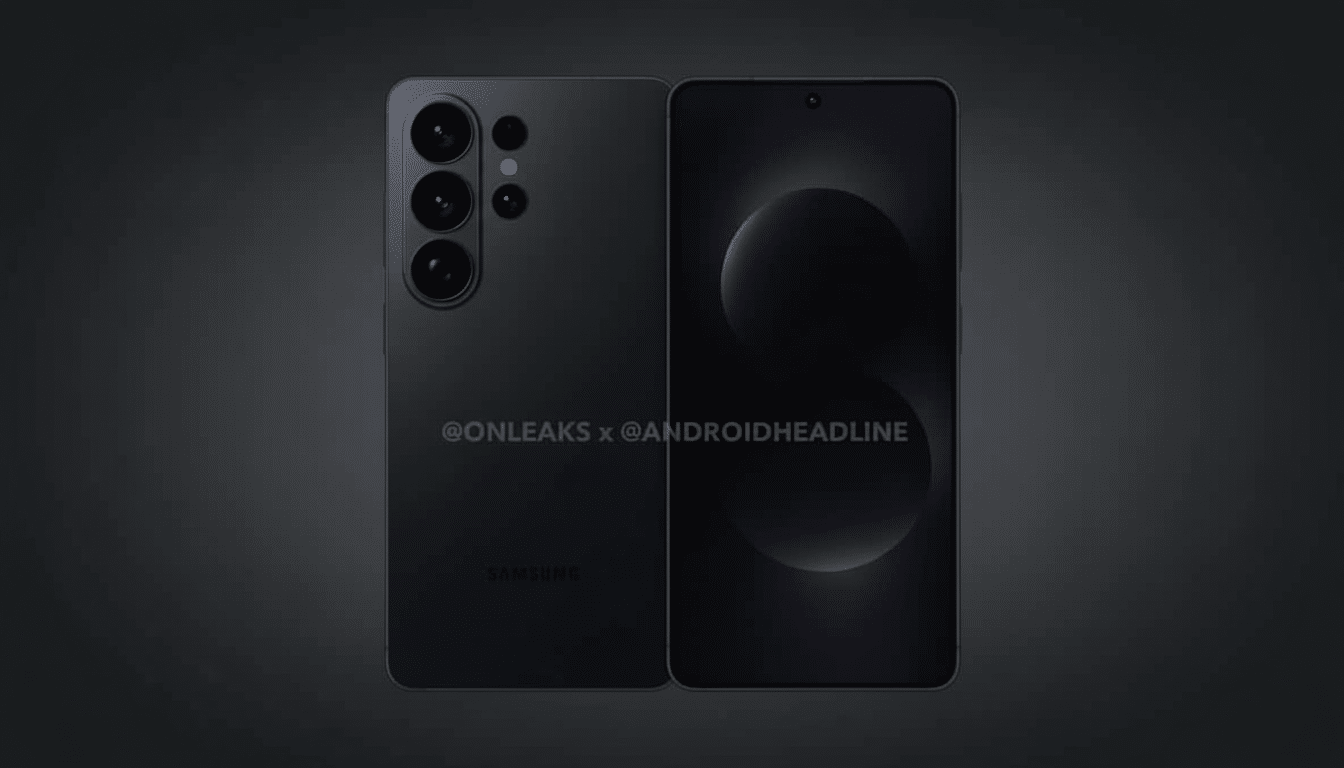
Samsung’s next Ultra might finally fix its weakest long-lens link in a chain. The Galaxy S26 Ultra’s 50MP 5x periscope camera is reportedly switching from an f/3.4 to f/2.9 aperture, according to leaker Ice Universe. On paper that’s a small change; in the real world, it’s the kind of upgrade that can lively-up low-light zoom, eliminate blur and bring true-to-life portrait compression at 5x.
Why a Faster Aperture at 5x is Important
Aperture at the same focal length controls the amount of light reaching the sensor. f/3.4 to f/2.9 will bring in about 37% more light, or almost 1/2 a stop. As it turns out, that extra light allows the camera to operate at faster shutter speeds, or at a lower ISO. Indoors, where 5x modules falter, that can be the difference between a soft, noisy shot at 1/20s and a cleaner-looking frame at 1/30–1/40s.

Telephoto sensors in phones are already struggling against physics. Sub-millimeter pixels, folded optics and long focal lengths equal less light per pixel and a greater risk of handshake. A brighter aperture means that you’ll be able to provide the image pipeline with more headroom, so multi-frame fusion and noise reduction don’t need to work quite so hard. Oh, you can even anticipate cleaner detail retention and a little less watercolor texture in low-light environments if this pans out.
Depth of field gets a bit shallower as well. You’re not going to get DSLR-blur from a compact sensor, but at 115–120mm equivalent lens, f/2.9 should be what’s needed for a more convincing optical background separation. That limits the reliance on segmentation masks that can cut off hair or miss fine edges.
How Does it Compare to Today’s Tele Champs
The other competitive brands have been pressing brighter telephoto glass for some time. In the iPhone 15 Pro Max, Apple is using a 5x “tetraprism” lens that opens to f/2.8. Google’s Pixel 8 Pro also sports a 5x f/2.8 periscope lens. Huawei took things a step further with the P60 Pro’s 3.5x unit at an incredibly bright f/2.1, while vivo’s X100 Pro has a particularly fast mid-tele at f/2.5 to boast. Against that kind of backdrop, Samsung’s new 5x at f/3.4 seemed conservative — and dim.
That’s what independent lab testing and real-world reviews have continued to find: Long-zoom performance is where many flagships separate themselves at night. In controlled telephoto tests by various publications and by camera benchmarking corporate entities, brighter lenses even keep color and micro-contrast more effectively after denoising. Closing the S26 Ultra’s 5x gap to f/2.8 territory seems like a smart catch-up that dovetails with wider trends in industry optics.
Portraits at true 5x: More squeeze, less fakery
Photographers adore 85–135mm for portraits due to flattering compression and natural subject isolation. On a ~24mm main, a 5x camera means about 120mm—perfect. At f2.9, the S26 Ultra should also offer more genuine looking background blur without having to lock on high-intensity edge detection. Anticipate cleaner separation around glasses, hair and textured clothing, and smoother highlight roll-off in bokeh balls.
It has a knock-on benefit for autofocus, too. More light is definitely good as it helps the phase-detect AF modules lock faster and more confidently in low light, a huge deal when you’re photographing people at telephoto where the slightest focus error is painfully obvious.
What to watch for outside the f-number
Aperture is only one lever. How much we gain in the real world will depend on sensor size, pixel design, optical stabilization and image processing. And if Samsung combines f/2.9 with a strong OIS system and some further polished multi-frame stacking, we may end up with sharper handheld 5x photos at night that are less haunted and preserve color better.
There are trade-offs. A more open lens can also show more optical aberrations – such as edge softness, chromatic fringing and vignetting – unless the lens group and coatings are improved. ISP tuning is critical to preventing over aggressive noise reduction that removes the extra detail a brighter lens can capture.
Lastly, keep in mind that this is a leak, and not a spec sheet. Ice Universe has form with Samsung optics, but final hardware may change ahead of launch. Watch for whether the 5x module’s sensor size gets altered, how close-up focus is treated (many periscopes, like has been used thus far, suck at short distances), and if computational features like a long-zoom Night mode or 5x Portrait see any special improvements.
If the shift to f/2.9 actually materializes, it would be a solution to one of the most consistent complaints about the Ultra line – poor low-light reach. It’s not about to rewrite physics, but it could finally make Samsung’s 5x the strength, not the asterisk — especially for indoor portraits and evening cityscapes, where the old lens too often fell behind its brighter rivals.