


A fresh leak suggests the Samsung Galaxy S26 Ultra will keep its selfie hardware largely unchanged from its predecessor, save for one small but telling tweak. If accurate, the front camera’s field of view is getting a nudge wider—enough to make eagle-eyed fans play spot the difference while hinting at practical gains for group shots and video.
The details come from well-known tipster Ice Universe on X, who claims the S26 Ultra’s selfie unit remains a 12MP sensor with a 1/3.2-inch size, 1.12μm pixels, and an f/2.2 lens—essentially mirroring the S25 Ultra’s specs. The standout change is an 85° field of view versus the prior model’s official 80°, a roughly 6% expansion that subtly shifts how much the camera can capture in a frame.
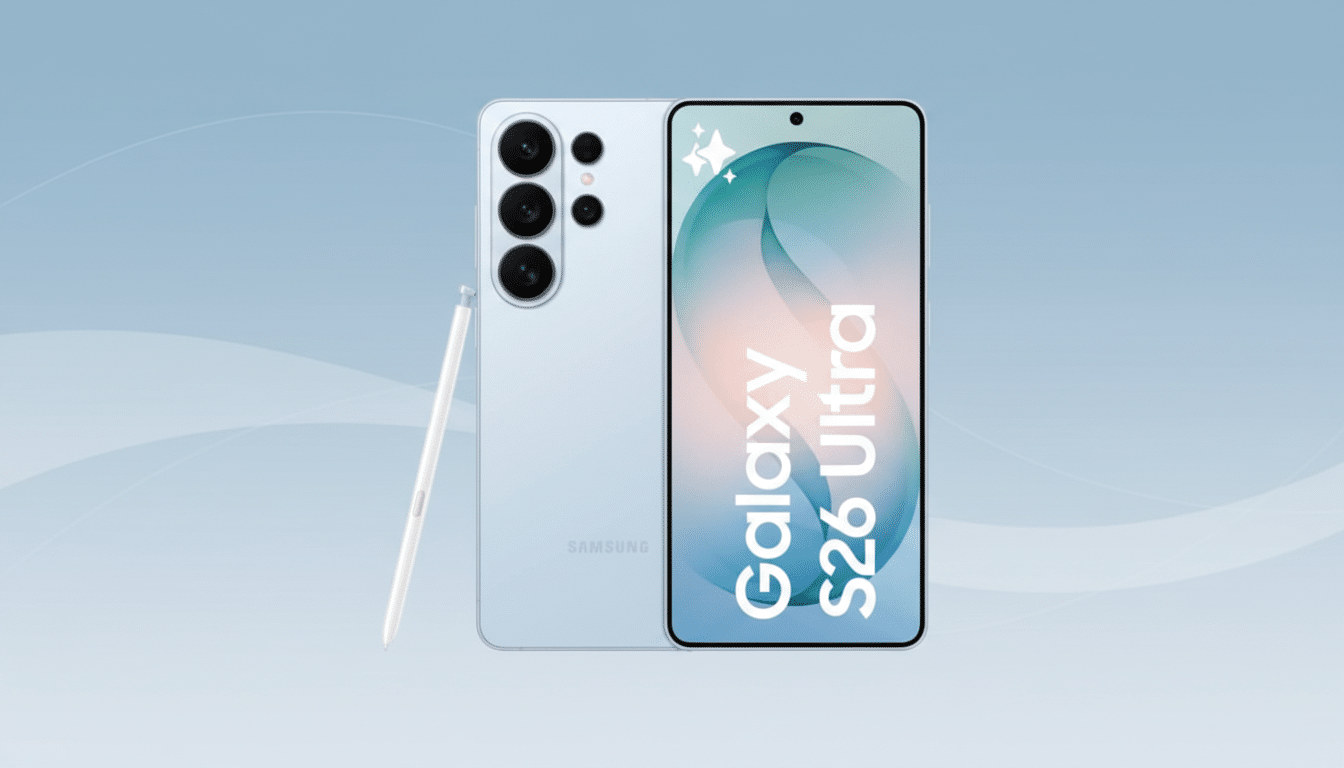
What the Galaxy S26 Ultra Selfie Camera Leak Claims
On paper: 12MP, 1/3.2-inch sensor, f/2.2 aperture, and 1.12μm pixels. The rumor points to an 85° FoV for selfies, up from 80° on the Galaxy S25 Ultra. That extra width may feel incremental, but it can be the difference between squeezing in one more friend or chopping off shoulders at arm’s length. It also offers more “headroom” for electronic stabilization, which often crops the image to keep footage steady.
If Samsung maintains autofocus on the front camera—a feature that has become a defining convenience for premium phones—the wider angle could also help keep more faces acceptably sharp without forcing users to step back. The combination plays well with short-form video and live streaming, where creators frequently juggle multiple subjects and shifting backgrounds.
Why an 85° Selfie Camera Angle on S26 Ultra Matters
Most modern flagships target a broad-but-not-fisheye perspective on the front camera, typically between about 78° and 90°. Moving to 85° is a gentle push toward inclusivity—more scene, more people, fewer selfie sticks. That wider view can also mitigate the need to switch to an ultra-wide selfie mode (often with reduced detail), helping maintain consistent image quality across scenarios.
The trade-offs are manageable. Wider lenses can introduce edge stretching, which can make faces at the frame’s periphery look slightly elongated. Samsung has historically leaned on facial geometry correction and lens profiling to counter that effect, and a small jump like 80° to 85° should be well within software’s comfort zone.
Rear Camera Hints Point To Brighter Glass
While the core rumor centers on the selfie shooter, companion leaks suggest modest upgrades on the rear: largely similar hardware to the S25 Ultra but with wider apertures. The 200MP main camera is tipped to move from f/1.7 to f/1.4, which would increase light intake by about 47% ((1.7/1.4)²). The 50MP 5x periscope is rumored to shift from f/3.4 to f/2.9—roughly a 37% bump in light ((3.4/2.9)²).
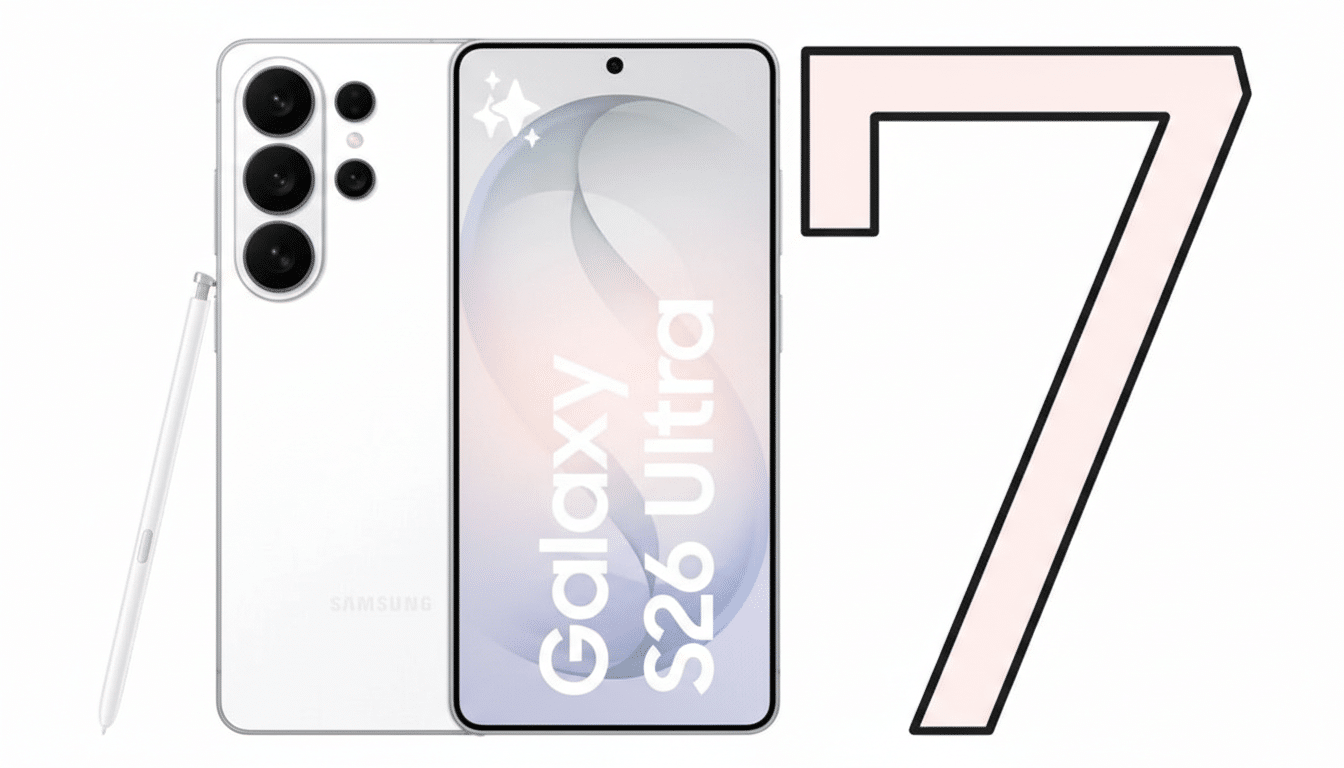
Brighter lenses can pay off in low light with faster shutter speeds, lower ISO noise, and slightly shallower depth of field for more natural subject separation. If sensors and focal lengths stay the same, these aperture gains could deliver more visible improvements than a megapixel shuffle would, especially in night portraits and 5x zoom situations where light is at a premium.
Software Will Likely Do The Heavy Lifting
With camera hardware nearing a plateau across the industry, software is increasingly the differentiator. Samsung has leaned into multi-frame fusion, semantic segmentation, and AI-driven sharpening to improve clarity without blowing out textures. If the S26 Ultra arrives with a Galaxy-tuned Snapdragon 8 Elite Gen 5, expect a bigger NPU to accelerate on-device denoising, skin tone mapping, and video stabilization.
Market watchers such as Counterpoint Research have highlighted a slowdown in headline hardware leaps as brands pivot to computational photography. That context makes a steady-spec selfie camera with a slightly wider FoV plausible: it gives Samsung more canvas for its processing pipeline without upending the module’s design or power draw.
What to Watch Next for Galaxy S26 Ultra Camera Leaks
Three questions loom.
- First, will the front camera maintain reliable autofocus and 4K video across frame rates while leveraging the wider FoV for steadier clips?
- Second, can Samsung’s tuning balance skin tones and detail retention in backlit and low-light selfies more consistently than last year?
- Third, will the rumored brighter telephoto lens translate into crisper 5x night shots without aggressive noise smoothing?
Outside the camera, whispers point to an OLED with privacy-focused display tech, 60W wired charging, and an unchanged 5,000 mAh battery—conservative moves as some Chinese rivals push bigger cells and faster charging. Still, imaging remains the marquee battleground, and even a 6% FoV expansion could be a quiet win for creators and group selfie fans.
As always, treat leaks cautiously until official specs land. But if this picture holds, the S26 Ultra’s selfie story is evolution, not revolution: the same sensor, a touch more scene, and the hope that smarter processing turns small hardware tweaks into big everyday gains.