


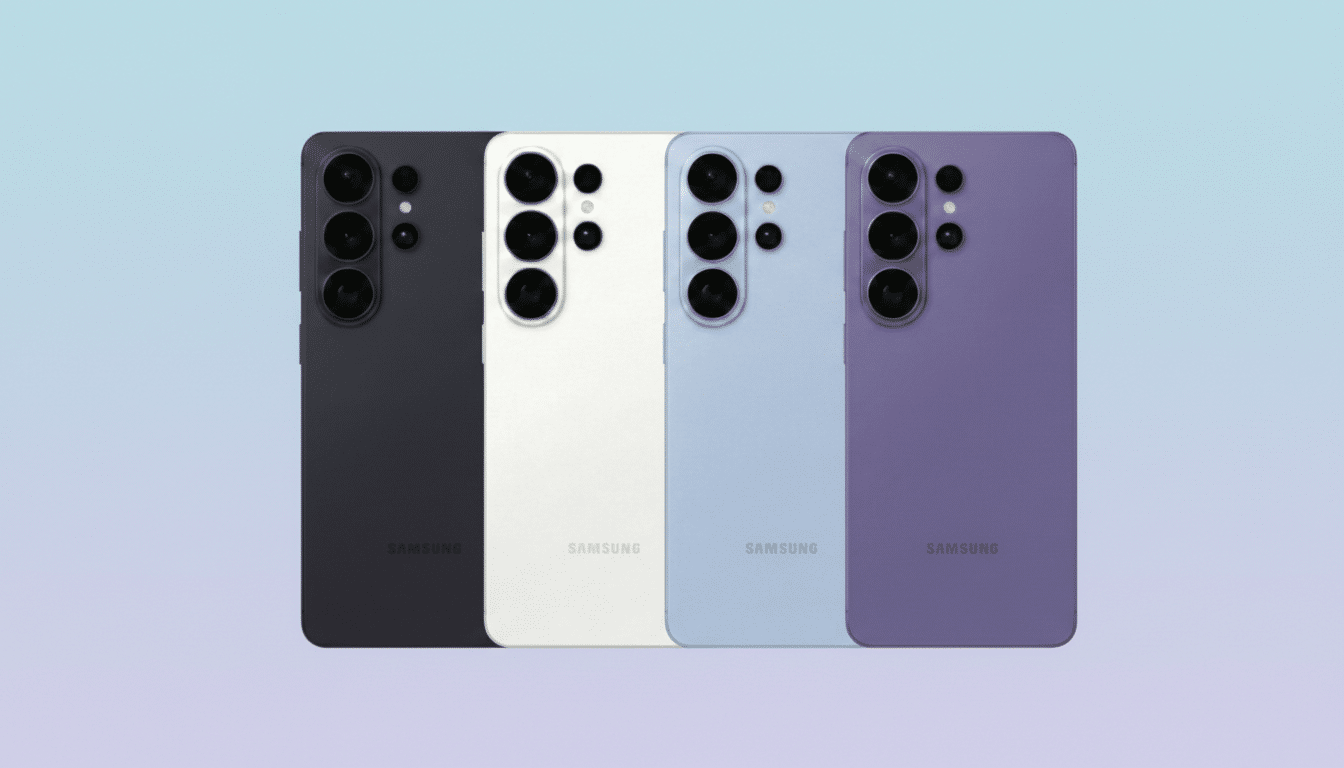
Google’s AI-powered Scam Detection feature, long a calling card for Pixel phones, appears headed to Samsung’s upcoming Galaxy S26 lineup. Code strings discovered inside the latest Google Phone app reference model numbers tied to the S26 family, pointing to a potential end to the feature’s Pixel exclusivity. If accurate, the move would give Samsung’s next flagships a built-in defense against phone and messaging scams — though key questions remain about how Google will deliver it on Galaxy devices.
What the code reveals about Galaxy S26 scam detection
In a recent teardown of the Phone by Google app, researchers found explicit mentions of SM-S942, SM-S947, and SM-S948 — identifiers widely associated with the Galaxy S26, S26 Plus, and S26 Ultra. Those references sit alongside Pixel 9 and Pixel 10 device codenames in strings tied to “Sharpie,” Google’s internal codename for Scam Detection. The pairing suggests Google is whitelisting Samsung’s next flagships for the same in-call AI that currently lives on Pixels.

Google has historically gated dialer innovations — from Call Screen to Hold for Me — behind device checks, enabling them first (and sometimes only) on Pixels. Seeing Galaxy-specific model numbers in those same code paths is a strong signal that non-Pixel support is being prepared, even if neither company has formally confirmed the plan.
How scam detection works on Pixel phones today
Scam Detection listens for high-risk patterns during calls and surfaces real-time warnings when it detects likely fraud. It also analyzes signals from SMS and popular chat apps to flag suspect messages. On the Pixel 9 generation and newer in regions including Australia, Canada, India, Ireland, the UK, and the US, the feature runs on-device via Gemini Nano delivered through AI Core. On Pixel 6 and later devices in the US, Google uses other on-device machine learning models to power similar protection.
The key is that analysis happens locally on the phone, minimizing data leaving the device while still catching common scam tactics — think urgent payment pressure, requests for gift cards or crypto, and social engineering cues. That on-device approach is central to both privacy and latency; warnings show up as you talk, not after the fact.
Will it run on Samsung’s dialer or require Google’s app
There’s a practical hurdle: Samsung ships its own Phone app as the default dialer. The Google Phone app can be installed from the Play Store on Galaxy devices, but deep call-screening features often require the default call-screening role and, in some cases, system-level privileges to access the audio stream and display inline prompts. The code doesn’t clarify whether Samsung will preload Google’s dialer on the S26 or whether Google will integrate Scam Detection hooks directly into Samsung’s Phone app.
There is precedent for closer Google–Samsung app alignment. Samsung recently shifted to Google Messages as the default SMS/RCS client to standardize RCS via Google’s Jibe platform. Replacing the dialer is a bigger leap — carriers and OEMs treat it as core — but the promise of exclusive AI safety features on day one could be the incentive. Another path is a hybrid approach where Google enables Scam Detection through Play services, notification access, and the Android Call Screening API without fully swapping the dialer, though in-call analysis is usually tighter when the dialer is Google’s.
Why this matters for Galaxy S26 users and Android security
Scam calls and messages are a global cost. Recent data from the Federal Trade Commission shows consumers report more than $10 billion in annual fraud losses, with imposter scams leading the charts and phone calls among the costliest contact methods by median loss. Independent reports from firms like Truecaller repeatedly rank the US, India, and parts of Latin America among the most spam-call-heavy markets. Bringing robust, on-device defenses to one of the world’s best-selling Android flagships could move the needle for millions of users.
There’s also a broader industry trend at play: on-device AI. Samsung has leaned into on-device processing for its Galaxy AI features, and the S26 family is expected to ship with next-gen NPUs capable of running more complex models locally. If Google is readying Gemini Nano–powered scam protection for these devices, it underscores a shared direction where privacy, latency, and resilience don’t depend on a network round-trip.
What to watch next as Google and Samsung finalize plans
Two decisions will shape the rollout: whether the Galaxy S26 ships with the Google Phone app preinstalled or keeps Samsung’s dialer, and whether Google limits Scam Detection to the S26 series or opens it to other high-end Galaxy models. Regional availability is another open question; Pixel eligibility varies by country, so any Galaxy launch will likely follow a staged, market-by-market approach.
Neither Google nor Samsung has announced the feature. Still, the telltale model numbers inside Google’s own dialer are hard to ignore. If they translate into shipping software, the Galaxy S26 could become the first non-Pixel to offer Google’s real-time Scam Detection — a meaningful safety upgrade and a sign that some of Pixel’s smartest protections are starting to cross the aisle.