


A sweeping new leak claims to spill the entire spec sheet for Samsung’s upcoming Galaxy S26 lineup, outlining processor choices, camera tweaks, battery capacities, and even SIM configurations. If accurate, the trio appears to follow a familiar strategy with sharper edges: a silicon split by region, subtle but telling camera adjustments, and steady batteries aided by efficiency gains.
The information, attributed to reporting from WinFuture, suggests Samsung is leaning into differentiated hardware to balance performance, cost, and supply. It also points to software debuting with the next iteration of Samsung’s skin, which could carry new on-device AI features as the company doubles down on generative tools across its portfolio.
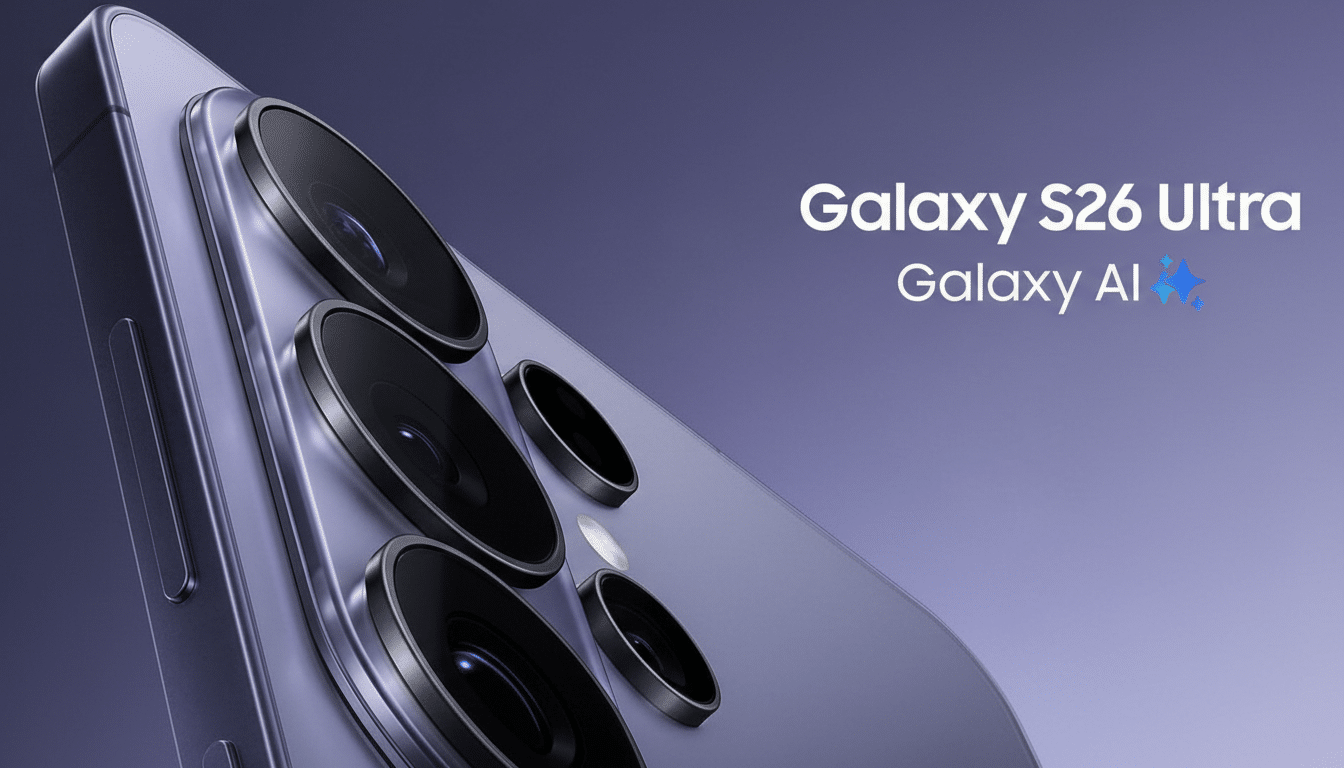
Chipsets and software plans for the Galaxy S26 lineup
According to the leak, the Galaxy S26 and S26 Plus in Europe will be powered by Samsung’s Exynos 2600, while the Galaxy S26 Ultra will use Qualcomm’s Snapdragon 8 Elite. That echoes Samsung’s recent playbook of mixing Exynos and Snapdragon depending on model and market, a decision that has historically sparked debate among enthusiasts over CPU, GPU, and modem differences.
The Exynos 2600 is expected to be built on an advanced 3nm process and to emphasize AI acceleration, mirroring broader industry moves. Qualcomm’s top-tier Snapdragon 8 Elite, likewise rumored on a 3nm node, should bring big per-watt efficiency jumps and higher sustained performance. If last cycle’s measurements are any guide—where independent lab tests showed double-digit efficiency improvements generation over generation—battery life and sustained thermals could benefit without ballooning cell sizes.
All three devices are tipped to ship with One UI 8.5. Expect tighter system optimization, refinements to camera processing, and expanded on-device AI. Samsung has telegraphed a long-term bet on local AI tasks for privacy and latency reasons, and the S26 series looks set to push that narrative further.
Camera hardware shifts across the Galaxy S26 range
The leak points to near-identical rear camera stacks on the S26 and S26 Plus: a 50MP main, 10MP telephoto, and 12MP ultrawide. However, both secondary lenses reportedly move to smaller maximum apertures than their predecessors. In plain terms, that means slightly less light per shot—potentially counterbalanced by improved sensors, sharper optics, or heavier computational lifting in low light.
The S26 Ultra, conversely, is said to gain wider apertures across its cameras. That could translate into better low-light performance, faster shutter speeds, and cleaner indoor photos, especially at longer focal lengths where Samsung has competed aggressively with hybrid zoom. The trade-off for wider glass is often tighter depth-of-field and the need for precise stabilization—areas where Samsung’s OIS and multi-frame processing have steadily matured.
It’s a pragmatic spread: the mainstream models lean on software optimization to hold the line, while the Ultra doubles down on premium optics to court enthusiasts who value reach and night performance. This mirrors strategies seen in recent cycles from Apple and Google, where hardware nuance is increasingly amplified by computational photography.
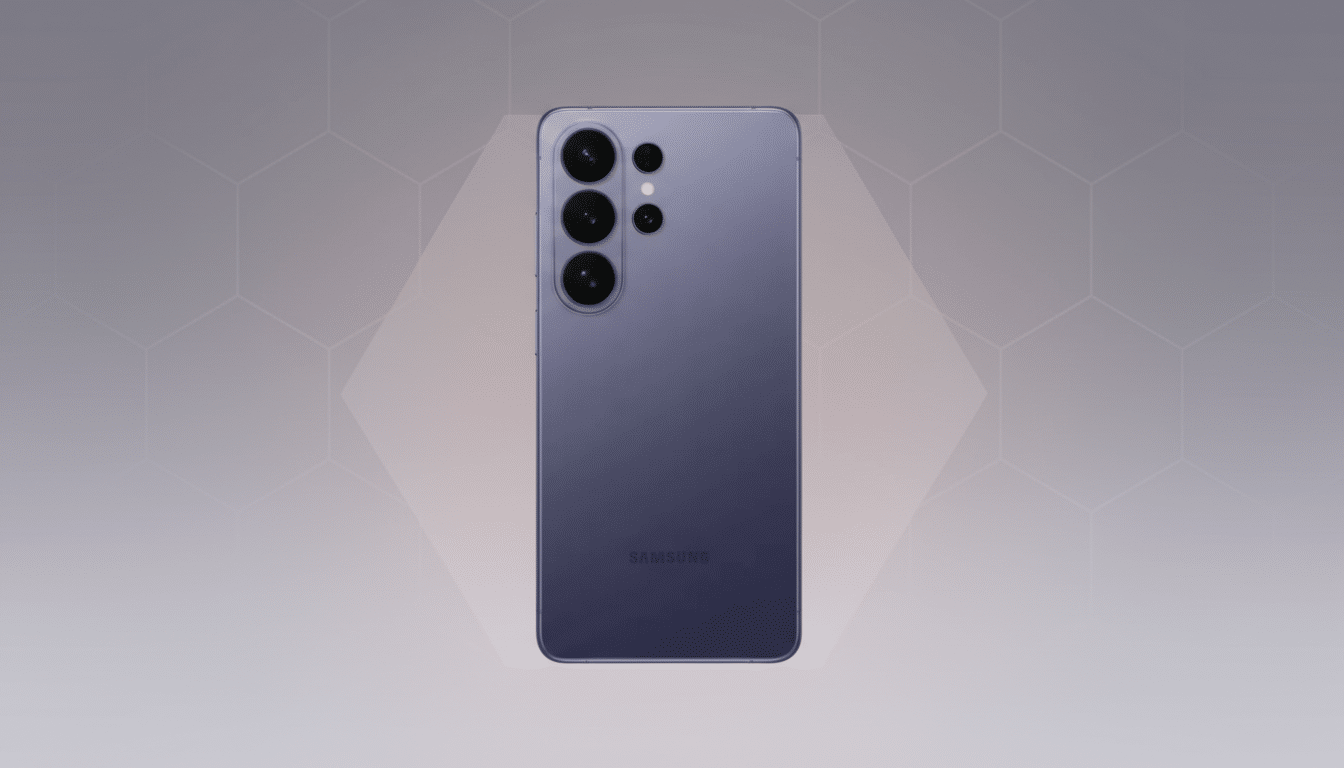
Battery and charging outlook for the Galaxy S26 series
Battery capacities reportedly remain steady for the S26 Ultra and S26 Plus, with the base S26 receiving a welcome bump from 4,000mAh to 4,300mAh. While some rivals have raced to larger cells, Samsung’s consistency suggests confidence in efficiency gains from newer silicon and software. In past flagship generations, independent testing frequently showed substantial real-world endurance improvements driven by chip and display efficiency rather than raw milliamp-hours alone.
If One UI 8.5 tightens background task handling and adaptive refresh rates keep displays in low-power states more often, the S26 family could deliver longer screen-on times without chasing the biggest numbers on the spec sheet.
SIM and connectivity notes for Samsung’s Galaxy S26
The European S26 Ultra is tipped to include two physical nano-SIM slots, a flexibility win for frequent travelers and users who juggle work and personal lines. The S26 and S26 Plus are said to support dual SIM as well, but with the second line limited to eSIM. As carriers worldwide expand eSIM adoption, this split gives the Ultra broader backward compatibility while maintaining modern convenience across the range.
Expect the usual flagship connectivity suite: advanced 5G modems, Wi-Fi 7 on higher trims, and UWB on at least the Ultra. Samsung has leaned on these features for ecosystem integrations such as smart tags and seamless device finding, and the S26 lineup should continue that push.
What to watch next as the Galaxy S26 launch approaches
As always, treat pre-launch specs with caution, but the pattern here is consistent with Samsung’s recent strategy. A Europe-first Exynos for the standard models, a Snapdragon-led Ultra, camera changes tailored to each audience, and batteries that rely on smarter software and 3nm efficiency to punch above their capacity numbers.
If these details hold, buyers weighing the S26 lineup should focus on three decision points: chipset preferences by region, the Ultra’s brighter camera proposition, and whether the base model’s larger 4,300mAh cell closes the endurance gap. With market leaders increasingly judged on AI and efficiency rather than raw hardware leaps, the S26 family looks positioned to compete on the metrics that matter day to day.