


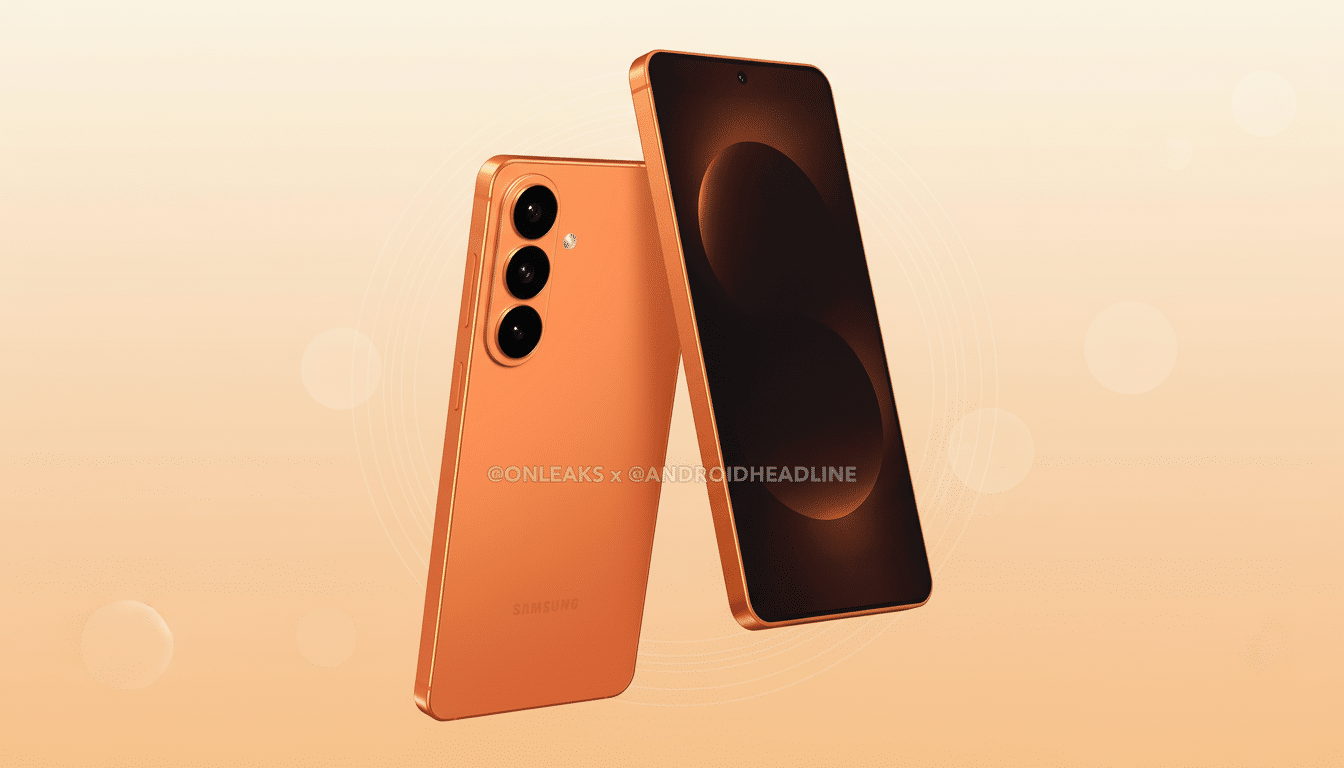
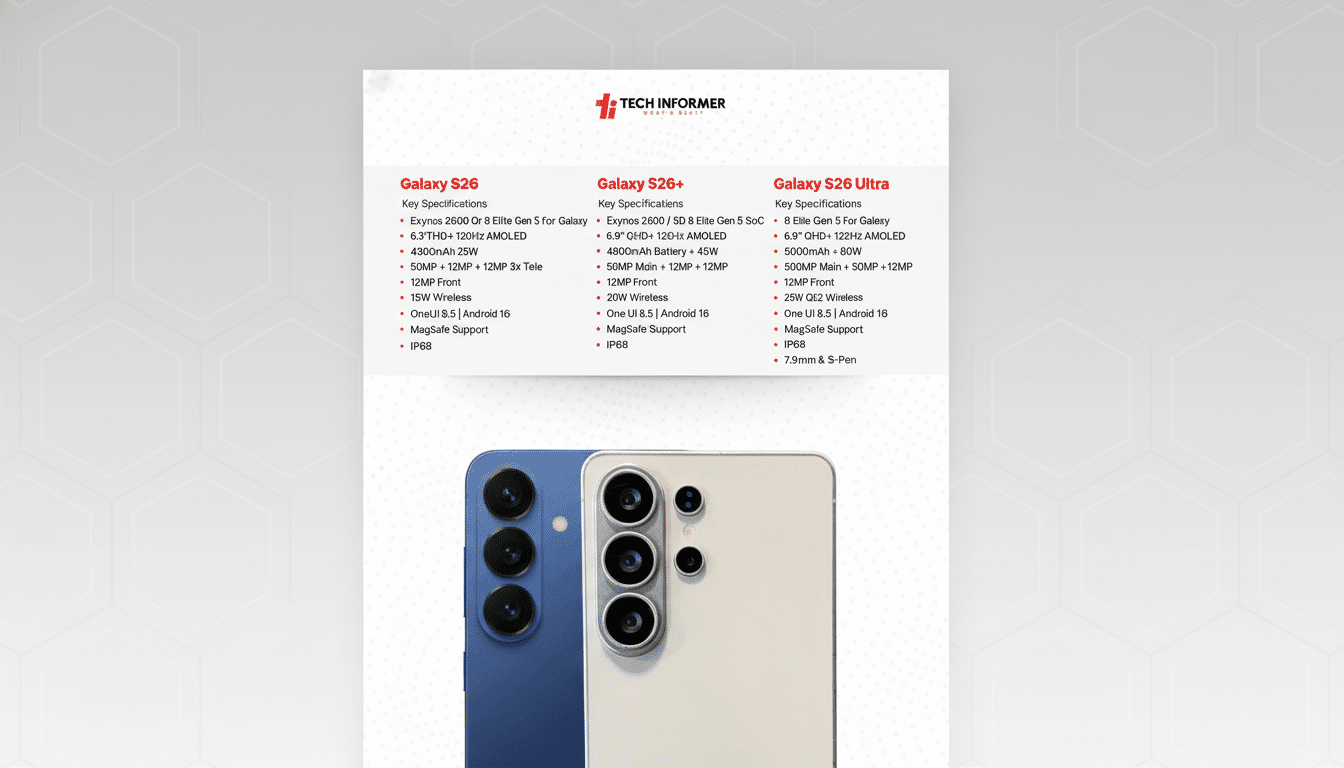
The next midsize Galaxy flagship could keep the power in check. A fresh TÜV certification for a device that is referred to as the Galaxy S26 Plus points to its 4,755 mAh battery and new support for 45W wired charging — that last one sounds better than it actually is, because both figures are unchanged in reality when compared to the previous model. As a result, we probably won’t see any headline-grabbing changes in terms of battery capacity this time around.
The listing spotted by The Tech Outlook on the TÜV Rheinland database points to a model number SM-S947B/DS, which has been previously leaked for the S26 Plus. It references a 4,755 mAh lithium-ion cell, which is also the rating associated with the S25 Plus. If it is the “typical” capacity, then Samsung will market this figure slightly higher — it’ll be a familiar 4,900 mAh marketing number if that’s true.
Charging also appears unchanged. The certification specifies 45W over USB-C with USB Power Delivery PPS, again suggesting Samsung is erring on the side of caution when it comes to fast charging compared to its Chinese rivals who go as high as 80W to 150W and beyond. For Samsung, the upside of this stance has historically been thermal stability and slower long-term battery wear.
What the TÜV Certification Reveals About the S26 Plus
The chemistry is lithium-ion in the TÜV filing, not one of the newer chemistries like silicon-heavy anodes or LMFP blends. That’s not surprising — energy density improvements in the batteries in your average phone have been too incremental as of late, usually single-digit jumps per generation, and most companies keep more experimental chemistries for limited runs or larger sizes.
A wireless charging spec is conspicuously missing from the certification. The buzz from the industry has been growing stronger on this front, pointing toward the Galaxy S26 family adopting the magnetic charging standard — the tried-and-tested Qi2 as approved by the Wireless Power Consortium. A magnet-arrayed accessory named on the WPC database contributes to that pivot. The open question, if magnets come along, is speed: Qi2 targets 15W for now — a higher-power profile of 25W is in the works — and Samsung’s implementation will matter as much as the raw wattage.
Real-World Impact Without a Larger Battery Cell
Battery life isn’t just about capacity. Efficiency improvements in next-gen chipsets, pruned display drivers, and better modem power management or software scheduling can lead to longer runtimes even as milliamp-hours remain flat. Recent generations of the Galaxy have already provided a clear endurance boost from platform optimisation alone, as can be seen in independent testing by publications such as GSMArena and Notebookcheck.
Even if the S26 Plus combines an improved processor, better thermal design, and adaptive refresh controls, enough energy-saving features might be in place to keep it ahead of its predecessor for battery life. That’s even more true if Samsung keeps improving how the handset software handles background tasks in One UI, and can lean harder on adaptive power-saving features.
Why Charging Speeds Remain Conservative for Samsung
Sticking with 45W dovetails with a long-time Samsung philosophy: safety and heat management, and the belief that aggressive charging can harm cell life more than it helps compared to novel wattage. The company depends on an industry-standard USB PD PPS instead of vendor-specific voltage profiles. It’s not that far behind those brands that claim triple-digit wattage. The ability to perform consistently across temperatures and compatibility with most chargers are practical advantages for many users.
Short of wireless power changes, then, whether there are Qi2 magnets may prove to be the charging story. Magnetically coupled alignment eliminates power-consuming misalignments, enhancing effectiveness and preventing heat during wireless charging. At a given nominal wattage, that can mean fewer thermal throttling instances and more consistent top-ups on stands or in the car.
Why Samsung Will Likely Not Increase Its Capacity
In a svelte body, each cubic millimeter is already spoken for, with camera modules, antennas, haptics, and now perhaps magnetic rings all vying for space. More battery capacity adds weight and can make heat dissipation more difficult, especially with a denser camera stack. As energy density improvements arrive in small increments and safety requirements continue to tighten, it can seem like the least risky path to maintain the same capacity even as performance gets better elsewhere.
Industry roadmaps from battery suppliers suggest transformative technologies to enable mass-market products, like solid-state cells, are still on the horizon rather than pocketable flagships today. In the meantime, marginal improvements and smarter power management will carry most of the load.
Other Models Suggest A Consistent Charging Strategy
Two more Samsung phones were listed in TÜV filings, according to the report: the Galaxy A37 5G with a rated 4,905 mAh cell and 45W charging, and the Galaxy A57 5G with indicated but undisclosed 45W charging. If that pans out, it means Samsung could broadly adopt 45W across multiple tiers of devices, making its charging ecosystem simpler.
If you’re curious: the TÜV listing suggests that the Galaxy S26 Plus will retain a 4,900 mAh typical battery and 45W wired charging. If that holds, the story moves from raw capacity to what’s most efficient: thermals and possibly even adding Qi2 magnets. For people paying the bills, though, what matters is day-to-day battery life and how fast and consistently the phone refills itself — areas where smart engineering can still make a modest spec sheet feel surprisingly modern.