


The Federal Trade Commission has opened public comment on a proposed enforcement policy addressing personalized pricing, putting retailers, travel companies, delivery platforms, rideshare businesses and pricing-technology vendors on notice about how consumer data is used to set individual prices.
The action, announced Aug. 19, does not ban personalized pricing or create an immediately effective disclosure rule. Instead, the FTC is outlining circumstances in which it believes concealed use of personal data to determine what a particular consumer will pay could violate existing consumer-protection law. The distinction is consequential for companies whose pricing systems draw on large pools of behavioral, location and transaction data.

What the FTC is targeting
In its announcement, the FTC defined personalized pricing as setting a price from personal data based on a company’s estimate of what an individual is willing to spend. That can differ from broadly available prices that change with supply, demand, inventory, time of day or competitors’ prices, even when those market-wide changes are fast and algorithmically managed.
The agency’s concern is not simply that two shoppers might see different offers. Its proposed position focuses on whether a company tells consumers that the price is individualized, explains the basis for personalization and identifies the types of data used. The FTC said a retailer can risk misleading customers if it represents or implies a price is static while the price actually varies by individual.
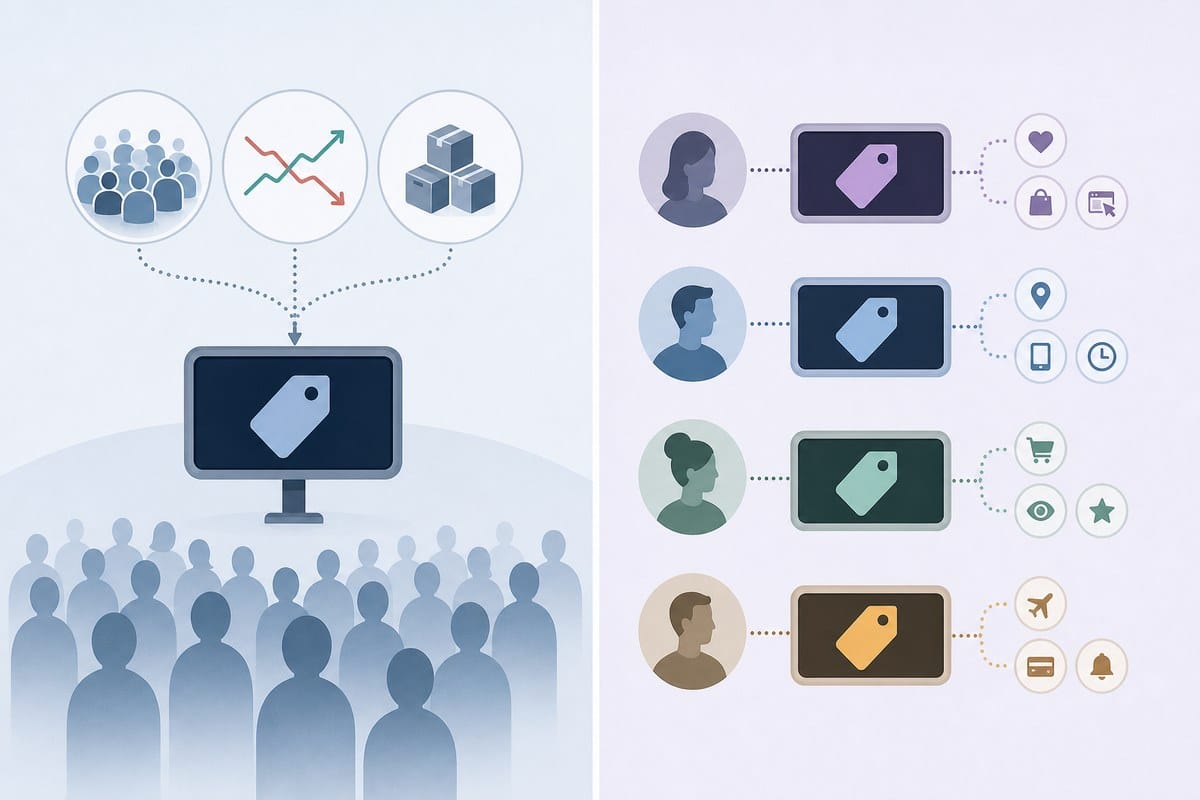
That framing places data collection alongside price presentation. A merchant that collects browsing activity, purchase patterns, geographic signals or other information may face a different FTC question if those inputs help estimate a consumer’s willingness to pay and the consumer is not adequately informed of that use. The FTC said a business that fails to tell customers how their data is being used to set a price may violate the FTC Act and other laws it enforces.
A policy statement, not a blanket prohibition
The proposal is best understood as an enforcement marker rather than a new pricing code. FTC Chairman Andrew Ferguson said the agency lacks authority to prohibit personalized pricing in every circumstance. The Commission voted 2-0 to authorize publication of the Federal Register notice and request public input.
That means companies should not treat the Aug. 19 announcement as an enacted mandate requiring a particular new disclosure on a particular date. A finalized enforcement policy statement would communicate how the agency may apply existing law; it would not itself carry the force of a statute or a formal legislative rule, according to a Paul, Weiss legal analysis.
The practical consequence is still substantial. An agency policy statement can shape investigation priorities, settlement risk and the way companies document their pricing practices. Businesses using customer-level targeting now have reason to examine whether their consumer-facing language matches the role data plays in price determination, particularly where the same product may be offered at materially different prices to different people.
The discount question could define the debate
The most difficult boundary may involve loyalty programs, targeted coupons and individualized promotions. Retailers have long used membership pricing, coupons and segmented marketing to offer discounts. Industry groups argue that treating all such practices as personalized pricing could blur the line between an inducement that lowers a price and a system designed to raise the amount a particular shopper pays.
Consumer Reports reported that representatives of the National Retail Federation and Chamber of Progress raised concerns that a sweeping disclosure approach could turn routine offers into dense fine print and draw discounts into a framework aimed at individualized price increases. Consumer advocates, meanwhile, have argued that consumers may be unable to determine when personal information is affecting the price displayed to them.
The FTC’s language does not eliminate that dispute. Its definition turns on the use of personal data to estimate willingness to spend, rather than on whether the resulting price is higher or lower than another consumer’s. In practice, comments may test how the commission should distinguish a broadly advertised loyalty benefit from a data-derived offer that is unavailable to other shoppers for reasons they cannot see.
Pricing technology inquiry supplies the backdrop
The proposed policy follows the FTC’s earlier examination of companies that supply or use pricing technology. In July 2024, the agency ordered eight businesses involved in pricing tools to provide information about their data practices, according to Fortune. Reporting on that inquiry said the FTC’s subsequent findings examined intermediaries’ potential use of information including location, browser history, shopping behavior and mouse movements to tailor prices or promotions.
Those prior inquiries help explain why the present proposal reaches beyond a retailer’s website checkout page. Pricing intermediaries can combine data sources, build customer segments and supply recommendations to merchants, making it harder for a consumer to identify who is using which signal and for what purpose. The FTC has not accused any named company in its Aug. 19 announcement of violating the law.
The Federal Register publication started the formal comment period. Consumer Reports said comments are due Sept. 18, consistent with the FTC’s notice that it would accept comments for 30 days after publication. The record developed in that period will help determine whether the commission retains its proposed emphasis on disclosure, narrows its treatment of promotions or clarifies how its enforcement theory applies to the growing market for algorithmic pricing services.