


Key Takeaways
Friction stir welding (FSW) represents a non-fusion welding method that connects materials while keeping their fundamental properties intact, making it a frontrunner in precision manufacturing.
FSW technology stands out in sectors such as aerospace and automotive, consistently delivering quality, minimizing distortions, and boosting the mechanical strength of welded joints.
- Key Takeaways
- Revolutionizing Production: The Role of FSW Technology in Modern Manufacturing
- Why Precision Matters: A Look at FSW’s Impact on Quality
- Reducing Costs without Sacrificing Integrity: FSW’s Economic Advantage
- Materials that Matter: The Perfect Candidates for Friction Stir Welding
- Aluminum and Beyond: Exploring Versatile FSW Applications
- How Material Properties Enhance Performance in Precision Manufacturing
- Innovative Techniques: Understanding the Mechanics of FSW
- Breaking Down the Process: FSW vs. Traditional Welding Methods
- The Science of Rotation: Power and Precision in Action
- Future Trends: What’s Next for FSW and Vacuum Coating Technologies?
- Emerging Applications in Aerospace and Automotive Industries
- Integrating Advanced Manufacturing: FSW and Industry 4.0 Synergies
- FAQ
- What industries are currently benefiting the most from FSW technology?
- How does FSW technology compare to other modern welding methods?
- Can FSW be applied to thermoplastics or only metals?
- How does FSW contribute to sustainability in manufacturing?
- What advancements are anticipated in FSW technology moving forward?
- What role do tool design and rotation speed play in FSW effectiveness?
- Are there limitations to the types of metals that can be joined using FSW?
- How can businesses implement FSW technology in their processes?
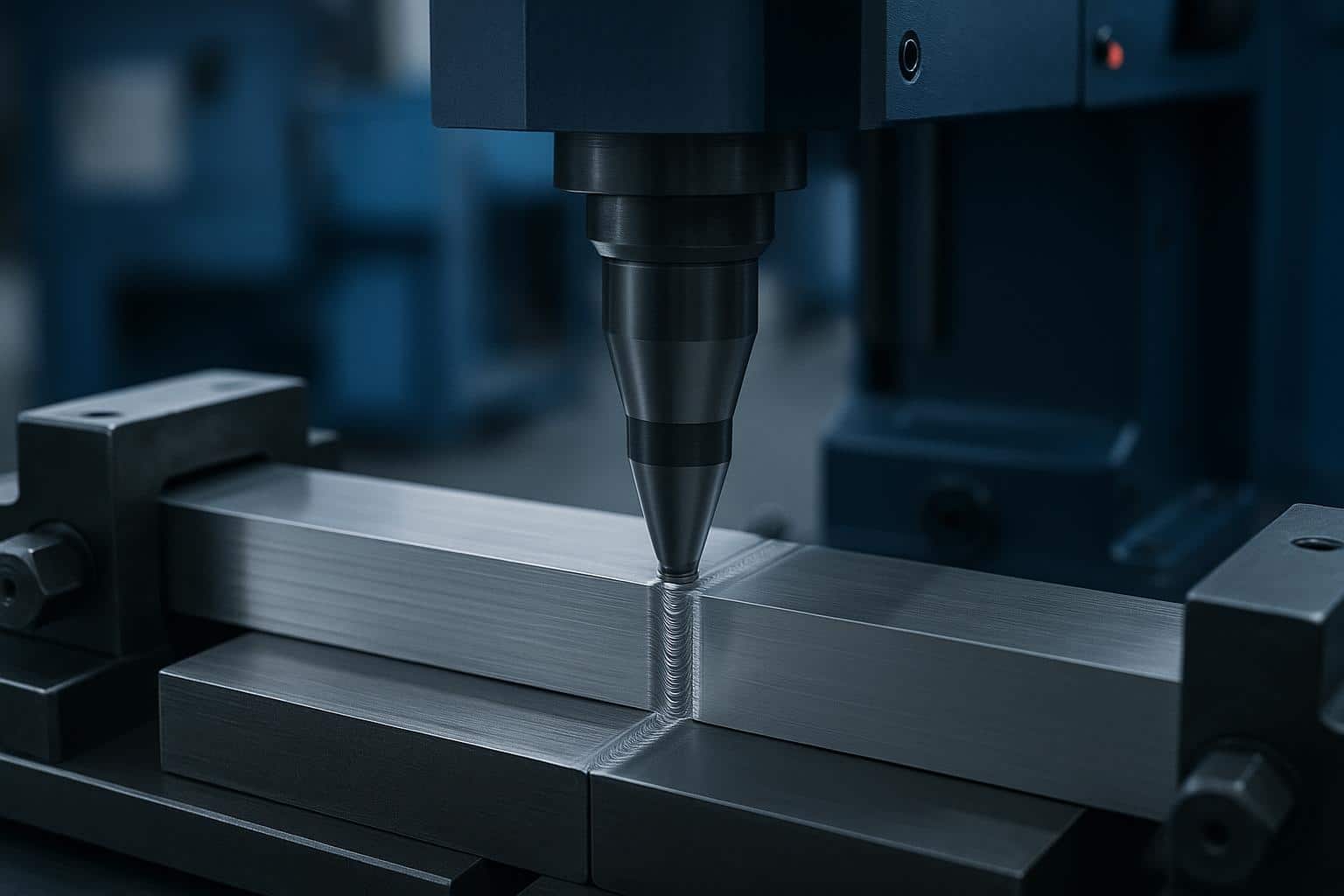
This process effectively reduces heat-affected zones, preventing material distortion and preserving the original characteristics of base materials.
Moreover, FSW provides economic benefits by lowering operational costs due to reduced material waste and energy use, in addition to negating the need for filler materials.
While aluminum alloys are often the materials of choice for FSW due to their workability, this technology also proves effective with metals like magnesium and copper.
The friction generated by the rotating FSW tool produces heat, enabling the bonding of materials without melting. This results in a stronger metallurgical connection compared to conventional welding practices.
Additionally, integrating FSW with Industry 4.0 technologies amplifies manufacturing capabilities through automation, real-time insights, and improved supply chain efficiency.
Revolutionizing Production: The Role of FSW Technology in Modern Manufacturing
Friction stir welding (FSW) technology is now a driving force in the manufacturing landscape. Its capacity to fuse materials while preserving optimal properties distinguishes it as a leader in precision welding solutions. Characterized by experts, FSW acts as a non-fusion welding technique utilizing a rotating shoulder and tool pin to produce heat via friction, which allows materials to attain a plastic state. By steering clear of fusion processes that often compromise material integrity, FSW stands out significantly.
But why is precision so critical? In a rapidly changing industry, the quality of products manufactured is essential. With FSW technology, components retain their intrinsic qualities, assuring both consistency and dependability. This method shines across multiple industries, including aerospace, automotive, and shipbuilding, where precision cannot be overlooked. A notable insight from industry specialists reveals that deploying FSW considerably enhances an organization’s end product, establishing a benchmark for excellence.
Why Precision Matters: A Look at FSW’s Impact on Quality
Businesses continuously strive for high-quality manufacturing processes. Professionals advocate for FSW due to its ability to provide remarkable mechanical properties in welded joints. In contrast, traditional welding methods often diminish material characteristics owing to excessive heat. In contrast, FSW manages temperatures effectively, maintaining a controlled thermal cycle to safeguard the base material’s properties.
- Reduced Distortion: FSW significantly minimizes the heat-affected zone (HAZ), resulting in less distortion in components.
- Improved Strength: The welding process yields joints with tensile strength that can surpass the original materials.
- Consistent Results: FSW guarantees repeatable and predictable outcomes, vital for production lines aiming for exactitude.
This translates into practical applications within industries. Many experience increased throughput while simultaneously reducing scrap rates. By adopting FSW, manufacturers adeptly meet quality demands, ensuring products not only comply but exceed expectations.
Reducing Costs without Sacrificing Integrity: FSW’s Economic Advantage
Every organization aims to decrease operational costs without compromising quality. FSW technology excels at striking this balance. The workflows associated with FSW are not only efficient but also resource-aware. Lower material waste and minimized need for rework mean projects naturally encounter lower costs.
- Lower Energy Consumption: The energy-heavy nature of traditional welding significantly decreases with FSW.
- Fewer Consumables: FSW eliminates the requirement for filler materials, promoting savings on secondary components.
- Reduced Labor Costs: Automation within FSW processes streamlines labor needs, ultimately cutting down manpower expenses.
Business leaders often indicate that embracing FSW technology frequently leads to improved return on investment (ROI). This observation is not just anecdotal; multiple case studies showcase tangible benefits in manufacturing efficiency and shorter lead times.
Materials that Matter: The Perfect Candidates for Friction Stir Welding
The adaptability of FSW technology is indeed impressive, allowing for a diverse range of materials. In particular, aluminum alloys exhibit remarkable compatibility with FSW, thanks to their workability and effective performance under strain. Recognizing which materials yield optimal results can significantly elevate production quality.
Aluminum and Beyond: Exploring Versatile FSW Applications
Aluminum generally takes the spotlight, yet FSW has unlocked potential for other metals like magnesium and copper. Each material boasts its own set of beneficial properties.
- Aluminum Alloys: Frequently employed in aerospace and automotive sectors, aluminum alloys deliver lightweight and robust performance.
- Magnesium: Particularly advantageous in scenarios demanding weight reduction.
- Copper: Preferred in electrical applications due to its superb conductivity.
Understanding the right material choices can pave the way for peak performance across diverse applications. While each option carries its own challenges, they also present incredible advantages when navigated properly.
How Material Properties Enhance Performance in Precision Manufacturing
Utilizing different materials can lead to distinct results when exposed to FSW, and comprehending their properties can be pivotal. For example, aluminum’s thermal conductivity supports rapid temperature regulation, while magnesium’s lightweight nature is beneficial in aerospace designs.
- Heat Resistance: Materials showcasing higher heat resistance perform more effectively under FSW conditions.
- Mechanical Qualities: The innate tensile strength of the base material often dictates joint performance.
- Corrosion Resistance: Choosing materials with excellent corrosion resistance helps ensure durability and longevity.
Manufacturers operating in precision-oriented environments often meticulously examine material characteristics. This careful assessment drives quality and economic efficiencies, leading to optimal results.
Innovative Techniques: Understanding the Mechanics of FSW
The mechanics behind friction stir welding often goes unnoticed. However, grasping these nuances can yield considerable advantages in operational control. At its core, FSW operates on a distinctive interaction between the rotating tool and the workpiece. The underlying science is straightforward yet effective.
Breaking Down the Process: FSW vs. Traditional Welding Methods
Unlike conventional welding approaches, FSW circumvents the liquefaction phase. This critical distinction ensures that material properties are preserved while creating robust, durable welds. Efficiency and integrity are hallmarks of FSW technology, granting it an edge over traditional alternatives.
- Speed: FSW typically outpaces traditional welding methods in terms of speed, significantly minimizing cycle times.
- Quality Control: The precise nature of FSW results in reduced defects, bolstering overall product quality.
- Environmentally Friendly: Lower emissions and energy requirements render FSW a more sustainable option than traditional methods.
Many welding techniques leave users grappling with warpage, but FSW manages stress proficiently. Precision manufacturing increasingly embraces these advantages, capitalizing on mechanics that guarantee optimal outcomes.
The Science of Rotation: Power and Precision in Action
Rotation’s role within FSW technology proves essential. The tool’s rotation generates frictional heat, which is crucial for maintaining the necessary temperatures for effective welding. This mechanical phenomenon essentially ‘stirs’ the materials together, enabling them to bond without reaching the melting point.
“FSW technology is proof that innovation can fundamentally change how we approach manufacturing.”
This stirring process results in a stronger metallurgical bond than many conventional techniques offer. The impact of tool design and rotation speed is significant in determining quality. Professionals who understand how adjustments influence results can achieve superior performance.
- Tool Geometry: Variations in tool design can affect heat distribution and welding quality.
- Speed Settings: Optimizing rotational and travel speeds can enhance material plasticity and joint strength.
- Pressure Control: Appropriate tool pressure is vital for ensuring the correct compression during the weld process.
Insights within these mechanics can lead to breakthroughs in product development, helping to distinguish a company in a competitive market.
Future Trends: What’s Next for FSW and Vacuum Coating Technologies?
As advancements in manufacturing technology continue, FSW stands ready for developments that could further enhance its functionality. The integration of intelligent technologies and automation is expected to transform applications across numerous sectors.
Emerging Applications in Aerospace and Automotive Industries
The aerospace and automotive sectors find themselves on the verge of transformation driven by FSW technology. Given the rising need for lightweight and durable components, the capability to join materials efficiently demands innovative solutions.
- Aircraft Components: FSW is increasingly favored for fuselage and wing structures, boosting both performance and safety.
- Automotive Chassis: Lightweight body components through FSW significantly reduce vehicle weight without sacrificing strength.
- Electric Vehicles: The electric vehicle industry benefits from FSW’s ability to join battery sections and structural components efficiently.
Experts anticipate that the applications of FSW will multiply as industries work to achieve enhanced performance alongside sustainable practices. This shift is not just an improvement; it’s an essential alignment with global environmental standards.
Integrating Advanced Manufacturing: FSW and Industry 4.0 Synergies
This discussion extends beyond welding technology; it explores how FSW can fit seamlessly within the Industry 4.0 ecosystem. This trend centers on automation, data exchange, and smart manufacturing—elements that drive efficiency and spur innovation.
- Smart Sensors: Implementing sensors in the FSW process could provide real-time feedback and adaptive controls.
- Data Analytics: Employing machine learning and analytics may predict maintenance requirements, thus minimizing downtime.
- Supply Chain Integration: Advanced manufacturing promotes seamless interactions between production and logistics.
The potential outcomes of merging FSW with Industry 4.0 are profound. It promises not only enhanced quality and efficiency but also opens doors to cost reductions and faster development timelines. The future of precision manufacturing shines bright, fueled by advancements in FSW technology.
FAQ
What industries are currently benefiting the most from FSW technology?
The aerospace and automotive industries are the primary beneficiaries of FSW technology. The capability to produce lightweight, durable components boosts performance and meets strict industry standards.
How does FSW technology compare to other modern welding methods?
Unlike traditional techniques that may generate high heat, leading to material distortion, FSW operates at significantly lower temperatures. The result is superior mechanical properties and fewer defects, making FSW the preferred choice for high-precision applications.
Can FSW be applied to thermoplastics or only metals?
Currently, FSW primarily targets metallic materials. However, ongoing research is exploring FSW applications for thermoplastics, hinting at promising potential advancements in the field.
How does FSW contribute to sustainability in manufacturing?
With lower energy consumption and fewer emissions during the FSW process, it significantly furthers sustainability goals. By minimizing waste and avoiding the need for filler materials, manufacturers can adopt eco-friendly practices while ensuring efficiency.
What advancements are anticipated in FSW technology moving forward?
Future advancements are expected to feature heightened automation and integration with smart technologies. Merging FSW with Industry 4.0 principles is likely to enhance efficiency, precision, and adaptability within manufacturing processes.
What role do tool design and rotation speed play in FSW effectiveness?
Both tool design and rotation speed have a direct impact on heat distribution and the quality of joints created. Adjustments in these factors can optimize material plasticity and bolster the overall strength of produced welds.
Are there limitations to the types of metals that can be joined using FSW?
While FSW is versatile, certain metals may present challenges due to their unique properties. Nevertheless, its effectiveness remains well recognized with aluminum alloys, magnesium, and copper, with ongoing research probing additional possibilities.
How can businesses implement FSW technology in their processes?
Businesses can begin by evaluating their current manufacturing requirements and exploring partnerships with FSW technology providers. Investing in training and gaining an understanding of operational needs will ensure the successful integration of FSW into existing workflows.