


A new leak today is adding even more heat to the long-simmering rumor that Apple’s first foldable iPhone isn’t a figment of the imagination. Not just real, the hotly anticipated device may be close to launching. High-profile leaker Jon Prosser has revealed detailed renders and supposed specs which, if correct, outline Apple’s most significant hardware pivot since the first iPhone.
What the new leak alleges about Apple’s foldable
Prosser’s new video shows a clamshell-style device with a 5.5-inch cover display and a 7.8-inch interior panel that unfolds into something closer to an iPad mini experience than an oversized phone. It’s about 9mm when closed and closer to 4.5mm when open, he says, and features four cameras.

The most enticing claim addresses the bugaboo of early foldables: the crease. Prosser says Apple is employing a rigid metal plate to spread stress throughout the display and its spring-loaded hinge, which, according to Prosser, contains “liquid metal” that stores and manages any twist while easing localized pressure for a flatter inner panel. It is in line with a group of Apple patents covering pressure-distribution plates, specialized hinge geometries, and amorphous metal alloys for repeated bending.
He also claims Apple is aiming to launch alongside the iPhone 18 Pro range, so this further suggests that this foldable phone will be a flagship, not just an experiment in a fringe part of the market.
How plausible this leak and launch timing really are
On credibility, the messages are mixed but significant. Apple is in advanced development of a foldable phone, according to reports from Bloomberg’s Mark Gurman and analyst Ming-Chi Kuo — with mass manufacturing being a key challenge. There have been reports, too, that Apple sued Prosser over some of his previous whistleblowing, and it’s a reminder that while he may not always hit the bull’s-eye with his scoops, Prosser’s sourcing can be seriously good quality.
But beyond personalities, the supply-chain breadcrumbs are real. Apple has submitted numerous foldable patents, and panel makers such as Samsung Display and LG Display have been experimenting with ultra-thin glass and “teardrop” hinges to minimize panel stress. If Apple can get panels with more svelte bend radii and exceptionally low crease visibility (both gating factors to its quality bar), then the rumored spec is within bounds.
What the hinge design and crease rumors tell us
Crease depth and durability are not purely cosmetic. A well-defined crease is a sign of stress concentration, micro-cracking, and visible artifacts appearing as time passes. The approach, an industry trend that’s materialized in products like the OnePlus Open and several recent foldables from Huawei, involves expanding hinge radii and integrating multi-link mechanisms (and layering in assists like backplates) to distribute force. That Apple could be using a pressure-diffusion plate along with high-strength amorphous metals would fit right in, then, and help keep peak strain down and touch uniform.
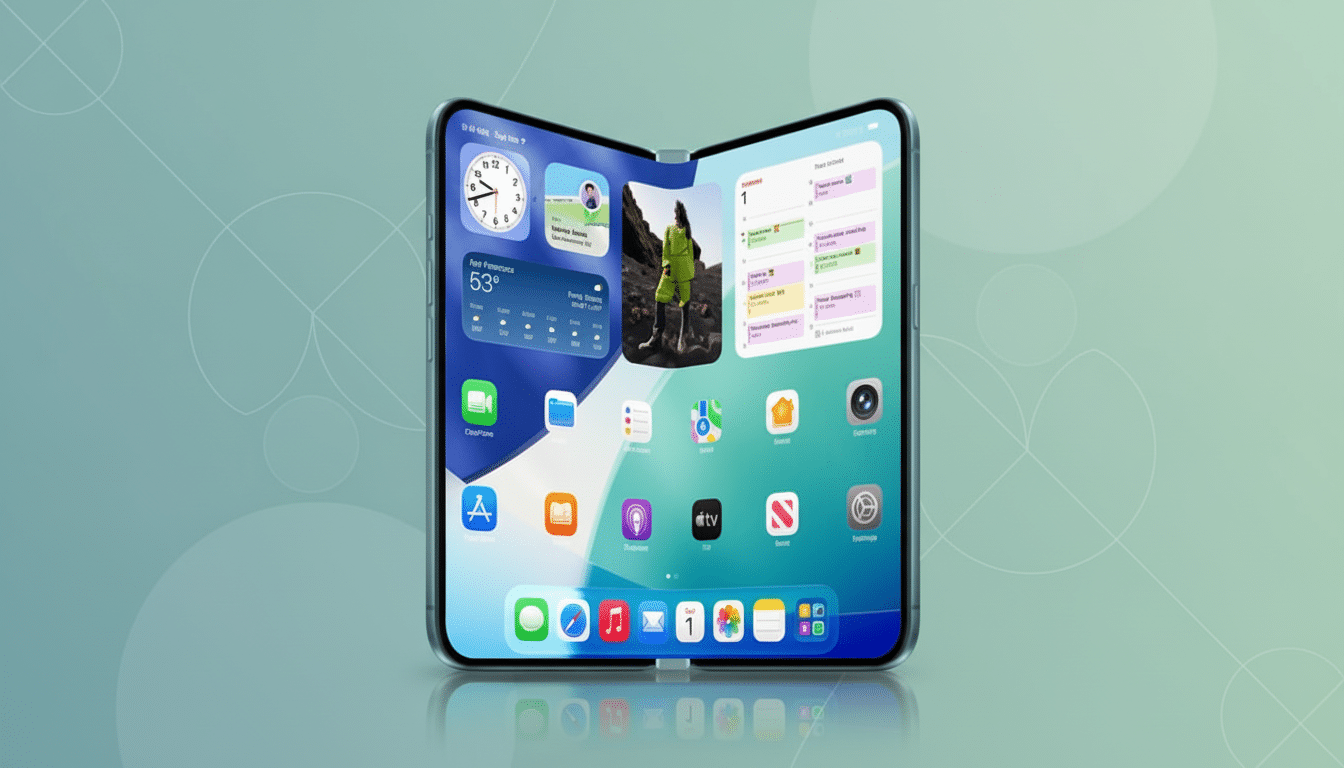
Thinness targets matter, too. Sitting around the 4.5mm mark open, that implies an ultra-thin glass stack with fierce backplane engineering and minimal bezel, while a closed depth of some 9mm would at least undercut much (but not all) of the competition in terms of book-style foldables. That suggests a vote of confidence in hinge packaging, battery cell stacking, and thermal dissipation — places where Apple’s integration has traditionally given it an upper hand.
Market stakes for a foldable iPhone and Apple’s plans
Foldables still remain a small part of the smartphone pie, but that pie is growing. Global foldable shipments reached an estimated 16 million units recently, or about 33% over last year’s total — though still under 2% of all smartphone volumes — according to Counterpoint Research. But even with that relatively small addressable market, foldables command a premium average selling price and mindshare that reframes expectations of what a phone can be at the high end.
Apple, which controls premium smartphone market revenue, has every reason to wait until durability, weight, and battery meet its own standards. A 7.8-inch internal screen could step on the iPad mini, prompting the same old cannibalization question. But Apple has long treated ecosystem expansion as the priority over strict product silos — AirPods didn’t kill high-end headphones, and Pro Max models didn’t clean out the iPad. A foldable that can be a true replacement for both your phone and your small tablet for a number of power users could increase the total addressable base at the high end.
What to watch next as rumors point to 2026 launch
The route from render to retail involves reliability testing, panel yield counts, hinge life cycles, and drop tests. Follow the lead of established suppliers forecasting orders at panel scale, mentions of that ultra-thin glass becoming an order of magnitude more durable, and a bit of chatter about hinge-cycle certifications hitting six digits without visible creasing.
For the leak itself, treat the dimensions and materials as directional until parts start leaking out of the supply chain. Yet, with several seasoned Apple watchers and specific spec leaks now homing in on a launch window, the foldable iPhone has never felt less hypothetical. If Apple has indeed whipped the crease into shape to its liking, then perhaps everything else can finally fall into place — apps that properly, if less usefully, format themselves to the hardware; cameras that are not compromised in any way, shape, or form; battery life that holds up.