


U.S. flu season is opening against a changed legal backdrop for the millions of workers who will call in sick over the coming months. Two of the country’s largest labor markets, California and New York City, now restrict when an employer can require medical documentation for a sick day, and federal agencies have kept in place guidance that limits what employers may ask about an employee’s health. For workers, the practical question this winter is less whether they will get sick than what their employer can ask for when they do.
The Centers for Disease Control and Prevention estimates that flu has caused between 9.4 million and 51 million illnesses, 120,000 to 710,000 hospitalizations, and 6,300 to 52,000 deaths a year in the United States between 2010 and 2025, according to its flu burden estimates. Flu activity typically peaks between December and February, and the agency recommends a flu vaccine every season for everyone six months and older, with rare exceptions.
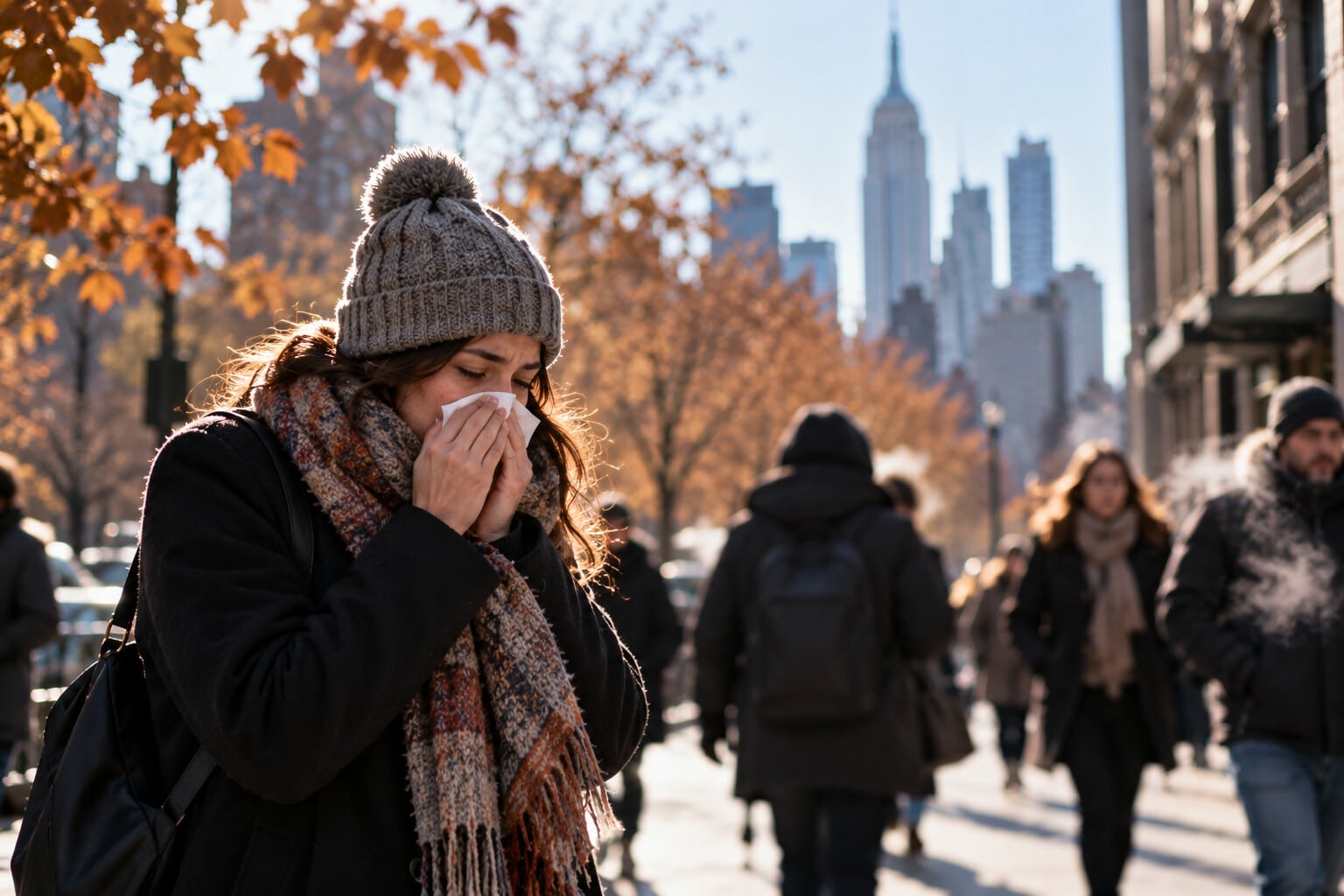
Paid sick leave remains uneven across industries
There is no federal requirement for paid sick leave, the Department of Labor notes, and the Family and Medical Leave Act guarantees only unpaid leave of up to 12 weeks for qualifying conditions at covered employers. The Bureau of Labor Statistics’ 2025 benefits survey found that access to paid sick leave among private-sector workers ranged from 55% in leisure and hospitality to 97% in information and in finance and insurance. Documentation rules matter most in the industries at the low end of that range, where an unpaid absence and a demand for proof can arrive on the same day.
Workers in those industries increasingly obtain documentation through telehealth rather than a clinic visit. Services such as SickSlip provide a doctors note for work after a licensed physician reviews the patient’s symptoms online and determines that documentation is medically appropriate, with a verification code an employer can check. The shift has reduced the time a sick worker spends traveling to prove an illness, though it has not changed what an employer is entitled to ask for.
California bars conditioning paid sick leave on a note
California’s paid sick leave law, expanded in January 2024 to at least five days or 40 hours a year, does not permit employers to make that leave contingent on a medical certification. Guidance from the state Labor Commissioner’s Office, updated in December 2025, states that an employer may not deny paid sick leave based solely on a lack of certification from a health care provider, and that leave is available on an employee’s oral or written request. The guidance allows a documentation request only where the employer has information indicating the leave is not being used for a valid purpose, and it bars employers from requiring workers to find a replacement or from disciplining them for using accrued leave.
New York City sets a three-day threshold
New York City takes a different approach with a similar effect. Under the city’s Protected Time Off Law, the renamed Earned Safe and Sick Time Act, an employer may require documentation only when an employee uses more than three consecutive workdays of protected time off, and only if that requirement appears in a written policy the employee received in advance. The city’s guidance gives the employee at least seven days after returning to work to submit the documentation and requires the employer to reimburse any fee a provider charges for it. Employers may not require the employee or the provider to disclose the reason for the absence.
Federal rules limit what a note can be asked to reveal
Outside the states and cities with their own statutes, two federal standards shape what employers may request. The Equal Employment Opportunity Commission’s guidance on disability-related inquiries holds that medical questions and examinations of employees must be job-related and consistent with business necessity, a standard that a note confirming absence dates meets and a demand for a diagnosis generally does not. Where the FMLA applies, the Department of Labor requires employers to allow at least 15 calendar days for an employee to obtain a medical certification and to identify what is missing if the certification is incomplete.
What the rules mean for the season ahead
Taken together, the changes leave a patchwork. A worker in Fresno cannot be denied a protected sick day for lack of a note. A worker in Brooklyn cannot be asked for one until a fourth consecutive day. A worker in a state without its own statute remains subject to the employer’s policy, bounded by the EEOC’s limits on medical inquiries. For multistate employers, a single documentation rule can be lawful in one location and a violation in another, which makes the weeks before the December peak the practical window for reviewing attendance policies.
The CDC’s guidance for respiratory illness, meanwhile, has not changed: stay home while sick, return once symptoms have improved for at least 24 hours with no fever and no fever-reducing medication, and take added precautions for five days afterward. For employers, the emerging consensus among the agencies is that confirming the dates of an absence is reasonable, and learning the diagnosis behind it is not.