


Concerned about data-mining and rising subscription bills, more people are asking if they can run the services they need at home or in the office — and keep their data off public clouds. That shift mirrors Europe’s digital sovereignty push following the EU’s Schrems II ruling and initiatives like Gaia-X. With public cloud spending forecast by Gartner to surge past $679B globally, free Linux server platforms are hitting maturity at just the right time for privacy-focused users.
FreedomBox: Your Private Hub for Self-Hosted Services
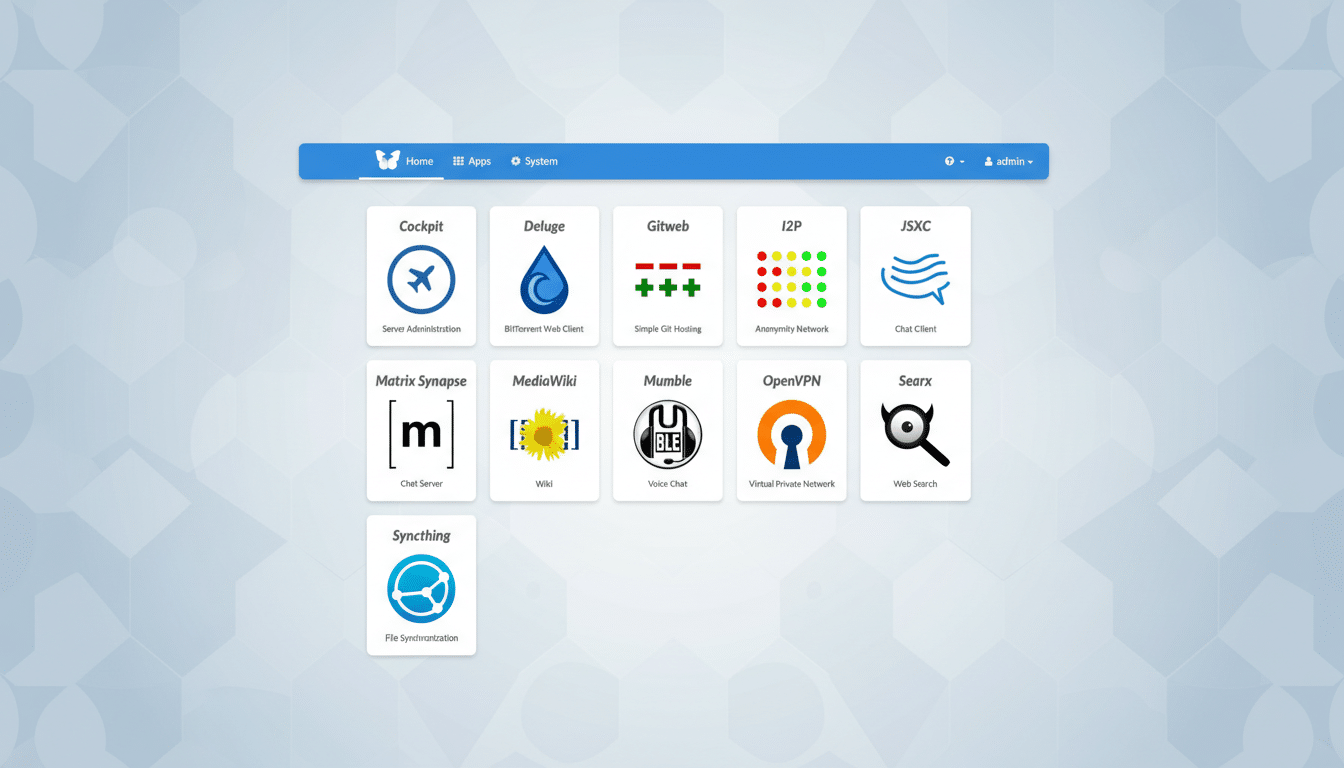
FreedomBox, conceived by legal scholar Eben Moglen and now an official Debian Blend, turns nearly any device into a self-hosted server with a web console called Plinth. It bundles privacy-first tools: Nextcloud for files and collaboration, Ejabberd for XMPP chat, Matrix Synapse for rooms, Mumble for voice, Janus for video, plus WordPress for publishing. Built-in OpenVPN and WireGuard let you connect securely from anywhere, and optional Tor and Privoxy add anonymity.
All services run in managed containers with automatic updates, and the hardware requirements are modest — a Raspberry Pi 2 or an old x86 box is enough. The approach aligns with public-sector moves to open platforms: France’s government runs a Matrix-based messaging system for civil servants, and the European Data Protection Supervisor adopted self-hosted Nextcloud and Collabora to keep files under EU jurisdiction.
YunoHost: App-Powered Self-Hosting Made Simple
YunoHost aims to “make self-hosting boring” by layering a friendly admin portal and single sign-on over Debian. It ships with Nginx as a reverse proxy, SSOwat for unified logins, Let’s Encrypt for TLS, and Fail2ban for intrusion blocking. From its app catalog you can one-click deploy Jitsi Meet, OnlyOffice, Mastodon, GitLab, and dozens more.
It’s a superb fit for households and small teams, but it isn’t meant to scale to hundreds of concurrent users. You can add an email stack (Postfix, Dovecot, Rspamd with DKIM), yet running mail on today’s internet is unforgiving: expect to manage DNS, SPF, DKIM, and DMARC to avoid blacklists. For everything else — websites, chat, wikis, Kanban, photo galleries — YunoHost offers a polished path to private SaaS.
TrueNAS SCALE for Bulletproof Storage and Apps
When data integrity is the priority, TrueNAS’s free editions stand out. TrueNAS CORE is FreeBSD-based, while TrueNAS SCALE rides on Debian; both center on OpenZFS, which brings copy-on-write snapshots, end-to-end checksums, self-healing, and robust RAID. SCALE adds Linux containers and Kubernetes, so you can pin Jellyfin, Nextcloud, or databases next to your shares.
For home labs and small offices, TrueNAS is a dependable NAS for SMB/NFS shares, backups, and media libraries. Many admins choose OpenZFS specifically to prevent silent corruption — its scrubs and checksums catch bit rot that traditional filesystems miss. Enterprises can buy high-availability appliances from iXsystems, but the community editions remain free and feature-rich for private deployments.
Rockstor Btrfs Flexibility on Modest Hardware
Rockstor takes a lighter-weight route using Btrfs on top of openSUSE. You still get snapshotting, transparent compression, and built-in RAID, but with simpler administration and strong performance on small boxes, including ARM64 boards like Raspberry Pi 4. Rock-ons — its Docker-based add-ons — let you host common apps without leaving the web UI.
The core platform is free; a low-cost Stable Channel subscription helps those running business workloads. If you want a personal cloud or backup server that’s easier on hardware and power, Rockstor is an appealing alternative to ZFS-centric stacks.
Zentyal A Familiar Path Off Windows Server
For teams steeped in Windows domains, Zentyal offers a pragmatic off-ramp. Based on Ubuntu LTS and powered by Samba 4, it provides native Active Directory compatibility for users, groups, and domain joins. File and printer sharing, DNS, DHCP, and optional mail and gateway services align with small-business needs without Microsoft licensing.
The free Development Edition is suitable for labs and skilled admins; paid subscriptions add support. Organizations replacing legacy domain controllers or setting up greenfield offices can preserve AD workflows while regaining local control of identities and data.
How to Choose and What to Expect from These Servers
- Pick FreedomBox if privacy and easy remote access come first; it’s the fastest way to self-host chat, files, and blogs with strong defaults.
- Choose YunoHost when you want the broadest app catalog and quick, unified logins for a small group.
- Select TrueNAS SCALE to anchor your stack with ZFS-grade storage, snapshots, and containers.
- Opt for Rockstor for Btrfs simplicity on modest hardware.
- Use Zentyal when you need AD semantics without Windows Server.
All five are free to deploy, but plan for essentials:
- a domain name
- dynamic DNS or a static IP
- automatic updates
- on-site backups plus off-site copies
- a modest UPS to ride out power blips
For VPNs, WireGuard’s lean design has tested faster and simpler to manage than older options in benchmarks by industry engineers, making it an excellent first add-on for secure access.
The bigger trend is clear. Governments and enterprises — from the European Data Protection Supervisor to German states rolling out Nextcloud and Matrix — are proving that self-hosting at scale is workable. For individuals and small businesses, these Linux servers bring that same sovereignty home, trading a few evenings of setup for lasting privacy and control.