


Most injection molding companies can quote a CAD file. That does not mean they are equally prepared to take the part through tooling, trial runs, repeat production, finishing, and assembly.
The differences usually become clear after the project starts. One manufacturer may catch a tooling risk during DFM, while another discovers it at T1. One may handle post-molding work within the same production program, while another stops once the parts leave the press. Finding the right manufacturer means looking at the whole production path, not just the molding machine.
Project Requirements and Supplier Fit
Before building a supplier list, define what the factory will actually be responsible for. A simple internal bracket has very different manufacturing requirements from an electronic enclosure with a cosmetic surface, threaded inserts, PCB mounting features, and final assembly.
A useful project brief should cover:
- 3D CAD files and 2D drawings
- Resin or material requirements
- Expected order quantity and annual volume
- Critical dimensions and tolerances
- Surface texture, color, printing, or coating
- Inserts, welding, or assembly work
- Target tooling and production schedule
These details narrow the search quickly. If the project requires only an export mold, a specialist toolmaker may be enough. If finished parts are expected, engineering support, repeat production, inspection, and downstream operations become much more important.
Engineering and Tooling Support
DFM and Part Feasibility
Good engineering support should do more than confirm that a part is moldable. Before steel is cut, the manufacturer should review wall thickness, draft, ribs, bosses, undercuts, gate position, material behavior, tolerance risk, and any features that could create problems during assembly.
This is also a useful way to judge how a company works. A quote that arrives with no questions may look efficient, but it can leave important assumptions unresolved. A manufacturer that points out a difficult shutoff, an overly tight tolerance, or a likely sink area is giving you information that may prevent a much more expensive tooling change later.
Tooling and Molding Coordination
Tooling decisions continue to affect the part long after the mold is finished. If a T1 sample shows warpage, flash, poor filling, or an assembly problem, the mold design and molding process often need to be reviewed together.
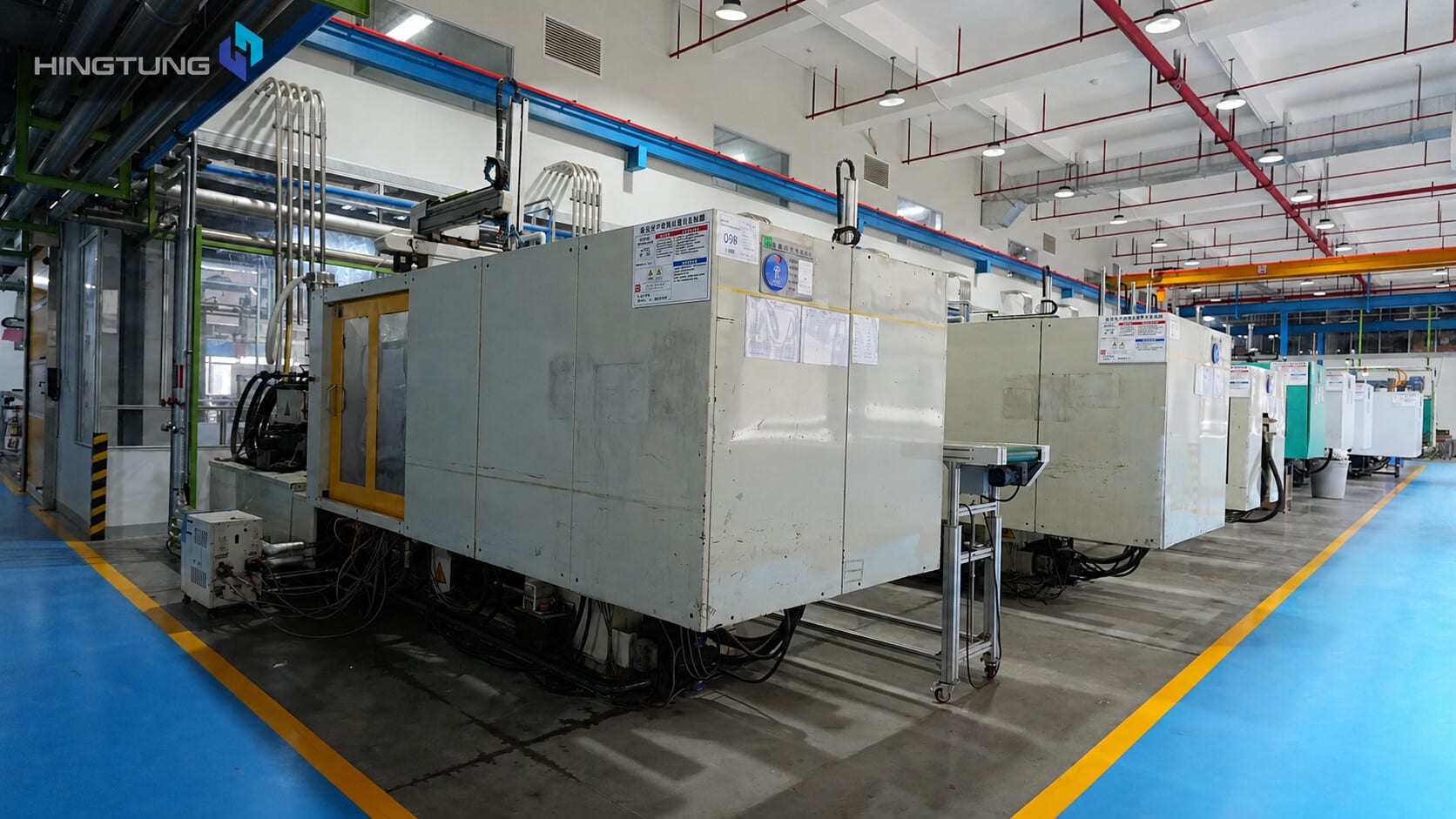
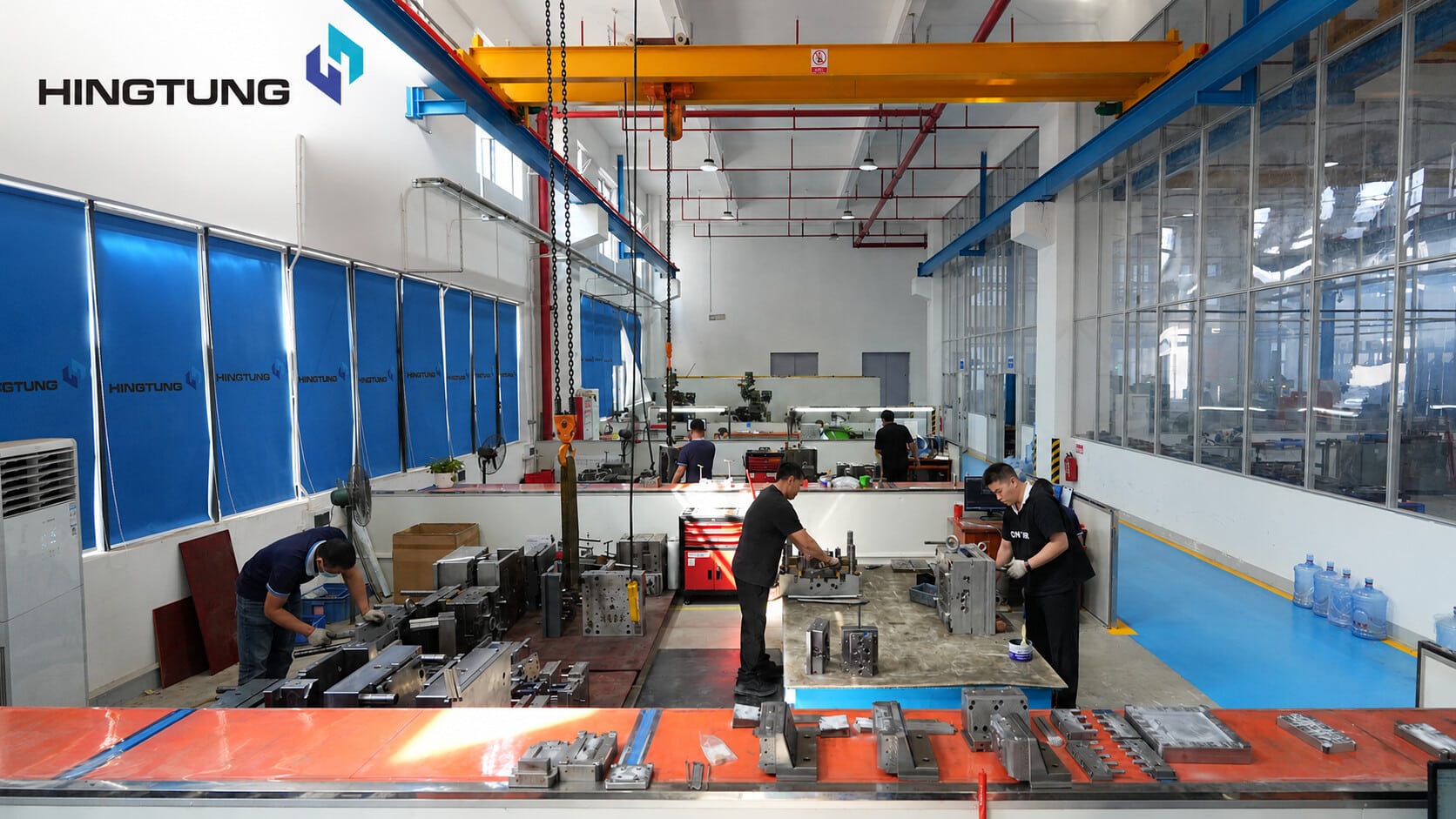
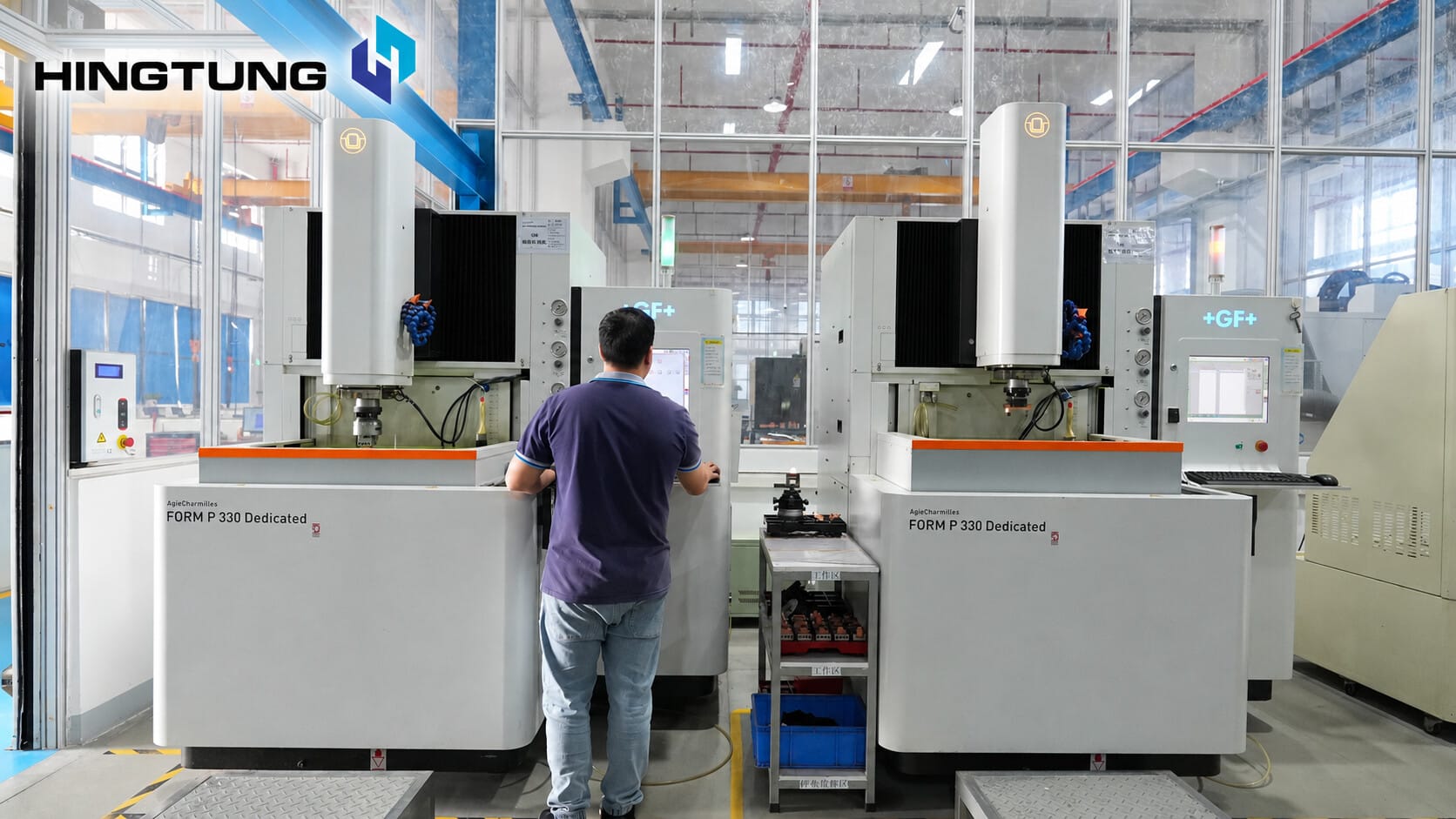
For OEM projects that need this continuity, working with a HingTung injection molding manufacturer can keep DFM, mold design, tool manufacturing, and injection molding within the same production program. HingTung operates more than 300 manufacturing and inspection machines, with injection molding capacity up to 750 tons, so the project can move from tooling into repeat production without handing the technical history to a separate molding supplier.
That becomes especially useful when a design revision affects both the tool and the finished part. The same engineering team can follow the change through mold modification, molding trials, inspection, and later production instead of restarting the discussion at each stage.
Industry Experience and Product Fit
Industry experience matters most when it reflects the problems your product is likely to face. An electronics housing may need good cosmetic control, PCB alignment, snap-fit performance, and consistent bosses. Telecom and security products may add sealing or durability requirements. Automotive parts often place more emphasis on material performance, dimensional consistency, and repeat production.
This is where the type of work a manufacturer already handles becomes useful. HingTung supports projects in consumer electronics, telecom, security and surveillance, automotive, and other industrial applications. Its advantage is not simply having a long industry list. The same operation can connect product-specific DFM requirements with tooling, molding, finishing, inspection, and assembly, which is more valuable when the molded component has to work as part of a finished product.
Production Capacity and Quality Control
Capacity for Repeat Production
Machine tonnage alone says little about whether a factory fits a project. The better question is whether its equipment and production setup match the part size, tooling plan, expected volume, and order pattern.
A manufacturer that performs well on initial samples should also be able to support repeat orders without constantly changing the production approach. For longer OEM programs, mold maintenance, scheduling, process records, and enough molding capacity to absorb future demand become part of the supplier decision. HingTung’s equipment range and production scale are useful here because the same project can continue beyond trial molding into ongoing production rather than being treated as a one-off tooling job.
Quality Beyond First Samples
A good T1 sample is encouraging, but it only proves that acceptable parts were produced during one trial. Long-term quality depends on whether critical dimensions, resin, processing conditions, mold condition, and inspection remain controlled from batch to batch.
Look at how the manufacturer handles incoming materials, in-process checks, dimensional inspection, final inspection, and engineering changes. Quality systems such as ISO 9001 provide a useful framework, but the important question is how that system is applied to the actual part and its critical features.
Secondary Operations and Assembly
Injection molding may produce the basic component, but many OEM parts still need inserts, printing, painting, ultrasonic welding, inspection, assembly, or packaging. These steps are easy to overlook when the first quotation is focused almost entirely on the mold and piece price.
The issue is not simply the inconvenience of managing more vendors. Problems often cross process boundaries. A boss position can affect an insert, a mating component, and final assembly at the same time. HingTung’s broader manufacturing model is useful in these situations because molding does not have to be the final handoff. Tooling, molded parts, secondary processing, inspection, and assembly can be coordinated around the final deliverable rather than purchased as unrelated jobs.
Quotes, Samples, and Terms
Complete Cost Comparison
Two mold quotations can differ by several thousand dollars and still be difficult to compare properly. One may include a better tool specification, more inspection, spare components, or downstream work that the other leaves out.
Compare the full production scope: tooling, resin, molded part price, inspection, finishing, inserts, assembly, packaging, and likely engineering-change costs. A lower mold price loses much of its appeal if three more suppliers are required before the part is ready to ship. For an OEM project, the delivered part cost is usually more meaningful than the mold price alone.
Samples and Mold Ownership
Before approving the supplier, confirm how samples will be reviewed and what happens after the first trial. Ask how engineering changes are quoted, how the mold is maintained, who owns it after payment, and what happens if the tool eventually needs to be transferred.
These details may feel secondary during the RFQ stage, but they matter once the project has been running for several years. Clear expectations at the beginning make later production decisions much easier.
Conclusion
The right injection molding manufacturer should match the full scope of the project, not just the molding step. For OEM parts that also involve tooling, finishing, inspection, or assembly, HingTung offers a more integrated production route. Send your drawings, material, expected volume, key tolerances, and finish requirements for an engineering review and quotation.