


The Food and Drug Administration has approved Mimrylo, known generically as rusfertide, for adults with polycythemia vera, making it the first U.S.-approved treatment for the condition designed to mimic hepcidin, a hormone that regulates iron. The FDA announced the decision on Aug. 28, granting approval to Takeda Pharmaceuticals America Inc.
For people with polycythemia vera who continue to need frequent blood removal, or phlebotomy, despite standard care, the drug offers a new way to control the excess red-blood-cell production that defines the disease. The pivotal trial showed a substantial reduction in participants meeting the study’s criteria for phlebotomy. But the available trial findings do not establish whether rusfertide prevents blood clots, strokes, heart attacks or death, complications associated with the condition.

Trial measured phlebotomy eligibility, not cardiovascular outcomes
Polycythemia vera is a chronic myeloproliferative neoplasm, a type of blood cancer in which the bone marrow produces too many blood cells, especially red blood cells. The resulting increase in red-cell mass can make blood more concentrated and is associated with a higher risk of clotting-related complications. The FDA referred to it more broadly as a rare blood disorder; the descriptions are compatible, reflecting different ways of characterizing the same disease.
A principal goal of treatment is keeping hematocrit, the proportion of blood made up of red cells, below a target level. Patients may undergo repeated phlebotomy to lower hematocrit. They can also receive therapies intended to reduce blood-cell production, but some still require phlebotomy frequently.
The FDA based its decision on VERIFY, a multicenter phase 3 trial that enrolled 293 adults with polycythemia vera who needed frequent phlebotomies despite ongoing standard treatment. Participants were randomly assigned in equal numbers to weekly under-the-skin injections of rusfertide or placebo for a 32-week blinded period, while continuing standard care. Rusfertide began at 19 milligrams weekly and was adjusted to keep hematocrit below 45%.
Between weeks 20 and 32, 76.9% of participants assigned to rusfertide did not meet the protocol’s criteria for phlebotomy, compared with 32.9% of those assigned to placebo, according to the FDA. The randomized, double-blind design means that difference supports a treatment effect on the study’s specified measure in this selected group of patients.
The endpoint needs careful interpretation. It evaluated whether participants became eligible for phlebotomy during a defined part of the trial; it was not a direct count of strokes, heart attacks, venous blood clots or deaths. Better hematocrit control is clinically relevant in polycythemia vera, but the reported 32-week comparison alone cannot show that the medicine lowers those longer-term risks. Nor does the finding mean that the same proportion of all people with polycythemia vera will avoid phlebotomy.
VERIFY enrolled patients with a particular treatment burden: they remained phlebotomy-dependent despite standard care. Its results may therefore not apply to people whose disease is controlled without frequent phlebotomy. Takeda said an open-label extension of the study is continuing. Such follow-up can add information about longer-term use, but without the blinded placebo comparison it is less suited to determining comparative effects.
Iron regulation offers a different treatment approach
Rusfertide works by imitating hepcidin, a hormone made mainly by the liver that helps control how much iron enters circulation. Iron is necessary to make hemoglobin and red blood cells. By restricting iron availability, a hepcidin mimetic is intended to limit the raw material available for the excessive red-blood-cell production of polycythemia vera.
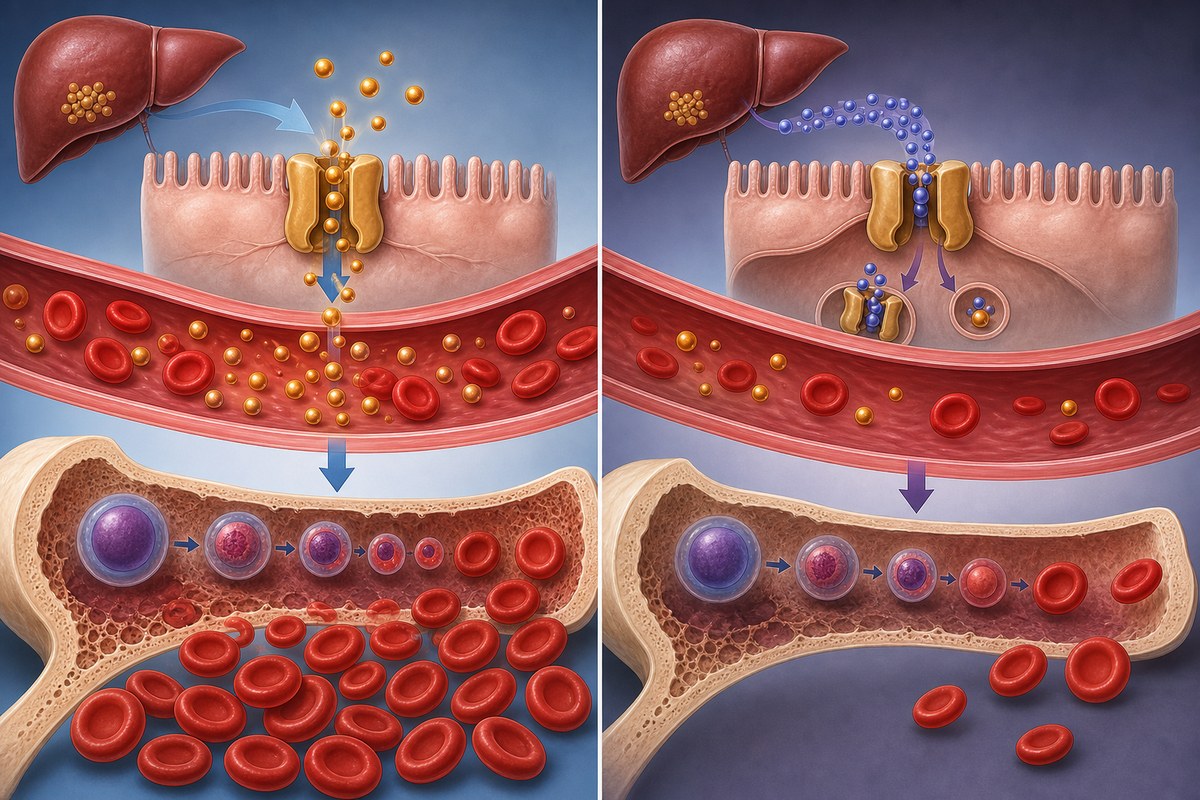
This mechanism differs from simply removing blood or using therapies that directly suppress marrow cell production. It also explains why the medicine is aimed at hematocrit control and reducing the need for phlebotomy, rather than serving as a proven treatment for an acute clotting event.
In its announcement of the approval, Takeda described Mimrylo as a first-in-class option and said about 90,000 people in the United States have polycythemia vera, citing sources in the company release. The FDA granted the product priority review, a designation used for applications involving treatments that may offer significant advances in care or address unmet needs.
Like other medicines that alter blood production, rusfertide carries safety considerations. The FDA identified injection-site reactions and anemia as the most common adverse reactions. Takeda reported injection-site reactions in 56% of patients and anemia in 16% and said the prescribing information includes warnings about new or worsening thrombocytosis, meaning elevated platelet counts, and embryo-fetal toxicity.
Those risks make monitoring part of the treatment decision, particularly because platelet elevations can themselves be relevant in a disease already associated with abnormal blood-cell production. Patients who are pregnant or may become pregnant need to discuss embryo-fetal risk with their clinicians. The approval does not replace individualized assessment of a person’s hematocrit, symptoms, other medications, clotting history and treatment goals.
The FDA’s Aug. 28 announcement is the regulatory date for the U.S. approval; later coverage, including an Aug. 31 report by CancerNetwork, described the same decision and trial results. Mimrylo is approved for adults whose polycythemia vera has not been adequately controlled with existing therapies, adding an iron-regulation strategy to a condition long managed in part through recurring phlebotomy.